
Patrice Caine, Chairman and CEO of Thales, highlighted Artificial Intelligence as both a major cybersecurity challenge, accelerating attack speed and autonomy, and a crucial tool for defenders. He also warned about quantum computing's future threat to encrypted data. Thales introduced new AI-powered solutions like Luna 8 and CipherTrust DSPM at its Cyber Summit 2026 to combat these evolving threats.
French aerospace and defence major Thales views India as a highly dynamic market for avionics, with significant growth potential as Indian airlines expand their fleets. The company, which has a substantial presence and MRO facilities in India, is also exploring opportunities to replicate India-developed solutions globally and sees increased use of AI in development.
French aerospace major Thales Group is eyeing major expansion in India. The group has started planning to set up a maintenance, repair, and overhaul (MRO) organisation in India to support Indian airlines - many of which are its customers for avionics support. "We are looking to set up an MRO, so that they don't have to travel to West Asia or Singapore. "Final decision is yet to be taken, but this is a clear intent showing the growth potential in India that we are looking to set up a sub-centre here," said Yannick Assouad, executive vice-president, avionics at Thales, who was on her maiden visit to the group's India office at Bengaluru since taking charge.

Nibe Space (NSPL), a subsidiary of Nibe, announced its vision to establish India's first multi-sensor, all-weather, high-revisit Earth observation satellite constellation. Aiming to strengthen India's self-reliance in the strategically crucial defence-space sector, NSPL signed memoranda of agreement with Indian and global partners, including Larsen & Toubro, Centum, AgniKul, Skyroot Aerospace, SpaceFields, SISIR Radar, CYRAN AI Solutions, and Thales Alenia Space as a technology partner.

Tata Consultancy Services (TCS) has bagged -- from the Ministry of External Affairs -- the contract for delivering electronic passports (e-passports), according to sources. This deal is in addition to the second phase of implementing the Passport Seva Program, which the company got from the ministry. Players such as Thales India and HP participated in this deal, which is expected to be of Rs 1,000-1,200 crore.

While the Saudi drone strike has put the focus back on anti-drone measures, caution also stems from the fact that India has a number of large oil refining assets close to India-Pakistan border.
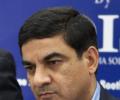
Arms dealer Sanjay Bhandari, who is under the scanner of multiple investigating agencies, may have fled the country, a media report claimed on Thursday.

The Tata group may have to deploy upwards of $1 billion to improve the airline's passenger reservation system, upgrade and refurbish Air India's fleet, primarily the wide-body aircraft which are the mainstay for the airline's international operations, people in the know said. While the group has not yet decided on how it intends to integrate Air India with its existing airlines AirAsia India and Vistara, sources said the first task will be to refinance Air India's existing loans, upgrade its aircraft gradually, and rewrite multiple business contracts with vendors and suppliers. "They will have to do 100 things to stabilise the airline and will have to put in a lot of money," DIPAM secretary Tuhin Kanta Pandey said, confirming that many aircraft are grounded.

'India placed the order, primarily due to the IAF's 'critical operational necessity'.' 'The complexity of the IAF's requirements delayed the process for months.' 'It is these requirements which cannot be made public.' 'Can you image Indian politicians publicly discussing the pros and the cons of such military equipment?' 'It would provide India's enemies with indications about the IAF's tactical plans in case of a conflict.' 'It is crucial that they should remain secret to protect India's defence preparedness,' explains Claude Arpi.

With the Rafale fighter deal stuck over price negotiations, can the prime minister step in and find a way out for both countries?

How will the navy's six Scorpenes fight, when their primary weapon -- the Black Shark torpedo -- is blocked by a ministry of defence ban on the company chosen to supply these? This gloomy scenario provides a heaven-sent opportunity to revisit the navy's torpedo purchase plan, handled without strategic vision and economic foresight.
