
India, on Wednesday, successfully test fired a version of nuclear-capable 'Prithvi-II' ballistic missile with a range of 350 kms from the Integrated Test Range at Chandipur,off the Orissa coast.

Designed to be a quick reaction missile, it has a strike range of 25 km to 30 km.
The Indian Space Research Organisation is gearing up to turn on several probes, a day after the box carrying the Moon Impact Probe, armed with the tricolour, crash-landed on the lunar surface to mark India's presence on the moon.Scientists at ISRO told rediff.com that the groundwork to detach eight other payloads from Chandrayaan-1, in order to conduct further studies on the moon, was underway.

The Prithvi-II missile is capable of carrying 500 kg to 1,000 kg of warheads and is thrusted by liquid propulsion twin engines.

An ISRO official said: "Unless and until everything is intact (lander), it's very difficult (to re-establish contact). Chances are less. Only if it had soft-landing, and if all systems functioned, then only communication can be restored. Things are bleak as of now."

The Vikram Moon Lander, named after the father of India's space mission Vikram Sarabhai on his birth centenary year, is scheduled to touch the lunar surface near its south pole on September 7 about 1.55 am.

All spacecraft parameters are normal, the Bengaluru headquartered space agency said after the maneuver on the spacecraft.
There will be two more orbit manoeuvres to make the spacecraft enter into its final orbit passing over the lunar poles at a distance of about 100 km from the Moon's surface.

All spacecraft parameters are normal, the Bengaluru headquartered space agency said after the maneuver.

The missiles were randomly chosen from the production stock and the entire launch activities were carried out by the specially formed strategic force command and monitored by the scientists of Defence Research and Development Organisation as part of training exercise, a defence scientist said.

India became the fourth country to make its mark on the moon when Chandrayaan-I's MIP landed on the moon's surface on Friday, at approximately 8.30 pm IST.The MIP, proudly bearing the Indian tricolour, crash landed on the moon's surface after being detached by Chandrayaan-1.The Indian Space Research Organisation's command room has confirmed that it has received its first signal from the MIP.
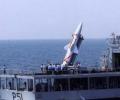
India on Thursday successfully test-fired its nuclear-capable Dhanush ballistic missile with a strike range of 350 km

The state-of-the-art indigenous missile targeting an UAV 'Banshee', was fired from the launch complex-III of the Integrated Test Range at Chandipur near Balasore on Tuesday afternoon.

The missile is capable of intercepting incoming targets at an altitude of 15 to 25 km was launched against multiple simulated targets of 1,500 km class ballistic missile.

The surface-to-surface missile, powered by solid propellants, was test-fired from a mobile launcher at 10.10 am from launch pad-4 of the Integrated Test Range at Abdul Kalam Island (Wheeler Island), defence officials said.

Vikram (with rover 'Pragyan' housed inside) is expected to touch down on the lunar surface on September 7, between 1.30 am and 2.30 am.

Indian Space Research Organisation's plan to soft land Chandrayaan-2's Vikram module on the Lunar surface did not go as per script in the early hours of Saturday, with the lander losing communication with ground stations during its final descent.

The conversion facilitated range enhancement and improvement in Pinaka's accuracy.

The New York Times, The Washington Post, The BBC and The Guardian, among many other leading foreign media outlets, all carried stories on Chandrayaan-2, India's landmark moon mission.
'We hope one of these days we will get a message that can make us feel very relieved,' Krishna said.

India on Monday successfully test-fired its indigenously built nuclear-capable intermediate range Agni-I ballistic missile, capable of hitting a target 700 km away, from a test range off Odisha coast as part of a user trial by the Army.

The missile test was carried out from a mobile launcher from launch complex-3 of the Integrated Test Range at about 10 am, defence officials said.

The Renault Kwid Climber concept is set to be the precursor for an off-roader based on the popular hatchback.

India successfully test-fired its indigenously developed nuclear capable sub-sonic cruise missile 'Nirbhay', which can strike targets more than 700 kms away, from a test range at Chandipur near Balasore in Odisha on Friday.
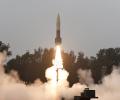
India on Saturday successfully test-fired its interceptor missile off the Odisha coast, achieving a significant milestone in the direction of developing a two-layered Ballistic Missile Defence system.
Agni-I missile is equipped with sophisticated navigation system which ensures it reaches the target with a high degree of accuracy and precision.

The surface-to-surface Prithvi-II missile is capable of carrying 500 kilogram to 1,000 kg of warheads and is thrusted by liquid propulsion twine engines

Hours before Chandrayaan-2's 'Vikram' module's proposed soft landing on the Lunar surface, Indian Space Research Organisation chairman K Sivan said on Friday things are progressing as per plan for the much-awaited event.
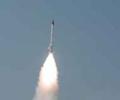
India on Sunday successfully test-fired a new interceptor missile capable of neutralising any incoming long-range missile at higher altitude.
The Chandrayaan-2 spacecraft is expected to reach the moon's orbit on August 20 and land on lunar surface on September 7.

The ISRO team worked tirelessly to make the Mars mission a success

Triple world champion Lewis Hamilton said he still has "the utmost respect" for Formula One title rival Sebastian Vettel after accepting a public apology from the Ferrari driver on Thursday.
India on Thursday successfully test-fired its indigenously developed nuclear capable Prithvi-II surface-to-surface missile with a strike range of 350 km as part of a user trial by the army from a test range at Chandipur in Odisha.

Inducted into Indian armed forces in 2003, the nine-metre-tall, single-stage liquid-fueled Prithvi II is the first missile to be developed by DRDO under India's prestigious Integrated Guided Missile Development Program.

Marussia expressed shock and anger on Wednesday at media allegations that French driver Jules Bianchi had ignored warning flags and been told to go faster by the Formula One team before he crashed and suffered critical head injuries in Japan.
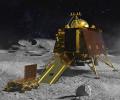
ISRO chairman K Sivan said the proposed soft-landing was going to be a 'terrifying' moment.

It was the third user trial in the Agni-III series carried out to establish the repeatability of the missile's performance.
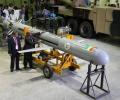
This was the fifth experimental test of the homegrown missile system.
 © 2026 Rediff.com - Investor Information - Advertise with us - Disclaimer - Privacy Policy - Sitemap - Feedback - About us - Terms of use - Grievances