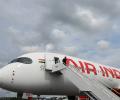
The Tata Group has begun scouting for a suitable candidate to head Air India, as the tenure of the incumbent, Campbell Wilson, will end next year, sources have said. Meanwhile, the Group is also looking to appoint a new managing director for its low-cost subsidiary Air India Express.

In a December 2012 interview, Ratan Tata, then preparing to step down as chairman of Tata Sons, expressed doubts about the Tata group re-entering the aviation sector, calling it a space plagued by "destructive competition". But beneath that frustration lay nearly two decades of failed attempts to conquer the Indian skies. In 1994, Tata, along with Singapore Airlines, had plans to launch a joint venture (JV) airline in India.
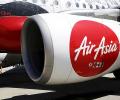
Air India Express and AirAsia India have moved to a unified reservation system, whereby passengers can make bookings for both airlines through an integrated website. The move is part of the ongoing process of merging AirAsia India with Air India Express. The combined entity will focus on leisure-oriented and price-sensitive markets.

It was touted as a game changer but big-ticket privatisation has been a mixed bag as the government faces unanticipated challenges of lukewarm investor response, employee union agitation and legal hurdles. Prime Minister Narendra Modi's often-repeated statement 'the government has no business to be in business' guided the drawing up of an ambitious privatisation pipeline. While Air India sale succeeded, Bharat Petroleum Corporation Ltd (BPCL) divestment failed.
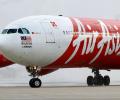
Tata Sons is all set to acquire a residual stake of 16.33 per cent in AirAsia India from its joint venture (JV) partner AirAsia Berhad for $19 million (or Rs 142 crore) by early next year. The valuation is in accordance with the previous transaction under which AirAsia Berhad had sold its 32.6 per cent stake, said a banking source. Tata Group had increased its stake in AirAsia India at a valuation of $115 million.

More than 1,600 employees of Air India, the former state-run carrier now owned by the Tata group, have opted for voluntary retirement under a scheme announced on June 1. These employees comprise 22 per cent of permanent staff (around 7,000). The airline has a total employee strength of around 10,800, including those on contract.

The Competition Commission of India has approved Tatas' proposal to acquire up to 64.3 per cent stake in BigBasket, a deal that will provide the diversified group a strong foothold in the fast-growing online grocery market.

BigBasket co-founder Abhinay Choudhari has exited the company, and in his next entrepreneurial journey, he is looking to "solve another equally painful chore for many Indian households" after grocery shopping. The Tata group acquired a majority stake in the online grocery store in May. And when the deal happened, Choudhari decided he won't continue to be part of the management team.

Dubai Holding, an investment firm of the Dubai government, has threatened to come out with an open offer for Orient-Express Hotels if the Tata group acquires a significant stake in the hotel chain. This comes exactly a month after the Tata group's Indian Hotels Company bought 10 per cent and expressed interest in striking a deal which was turned down by Orient-Express.
The change in the way the world views India now is a reflection of how Indian industry has re-engineered itself over the past decade.

Bangalore-born Bhattacharyya, an alumnus of Indian Institute of Technology (IIT) Kharagpur, was awarded the Padma Bhushan in 2002 for his services to science and technology and made a life peer in the UK's House of Lords in 2004.

Ratan Tata was the first one to realise that Indian companies had become a prisoner to tradition and needed to radically innovate.
 © 2026 Rediff.com - Investor Information - Advertise with us - Disclaimer - Privacy Policy - Sitemap - Feedback - About us - Terms of use - Grievances