
Automaker Toyota Kirloskar Motor (TKM) on Tuesday said it will increase prices of its entire model range by up to 2 per cent with effect from October 1 in order to partially offset the impact of rise in input costs. The company, which is a joint venture between Japan's Toyota Motor Company and Kirloskar Group, sells a range of vehicles including Innova Crysta and Fortuner in the domestic market. The company will realign the prices of its models, with effect from October 1, 2021, TKM said in a statement.

The global semiconductor shortage hit passenger vehicle sales in September, with major manufacturers like Maruti Suzuki, Hyundai and Mahindra & Mahindra reporting a decline in sales on Friday. Kia India and Honda Cars also reported a dip in wholesales last month as compared with the year-ago period. Carmakers like Tata Motors, Toyota Kirloskar Motor, Nissan and Skoda, however, reported an increase in passenger vehicle dispatches last month despite supply chain issues.

The company further said once the situation was brought to its attention, it made the distributor acutely aware of the "inappropriateness of the action".

These bikes were all the craze on Day 1 of Auto Expo 2018's media exclusive.
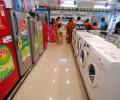
Automotive (auto) and consumer appliance companies are hoping for a bounty from the harvest season after two consecutive dry spells in 2020 and 2021. The season, which also marks the beginning of the regional New Year, kicked in across the country from April 1 - Gudi Padwa in Maharashtra; Ugadi in Karnataka, Telangana, and Andhra Pradesh; Bihu in the Northeast; and Chaitra Navratri in the North. Manufacturers and retailers of cars, two-wheelers, and consumer appliances said they have seen demand pick up year-on-year (YoY) at a brisk pace across categories.
Maruti Suzuki, SBI, HDFC, Hero MotoCorp and Infosys too gained up to 2.55 per cent.

Morgan Stanley Sales & Trading, US, believes the stock is better value for money than others and has a upside as high as 73 per cent. A slowdown in the economy has hit demand and led to a fall in overall consumption in an auto market which till recently was one of the fastest growing in the world.

Recently, TPEM's first born electric concept, Avinya broke cover. The model promises a minimum range of 500 kilometres and advanced technology features, aimed at buyers in India and outside. TPEM, the newly formed entity may also consider a separate dedicated sales channel for the EVs with a distinctive corporate identity once the volumes reach a critical mass and throughput is large enough for the dealers to be profitable, said Chandra. Elaborating further on the hiring strategy he said, "We will hire from everywhere-wherever the talent of the required competency is available."
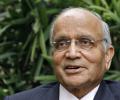
Company managements need to "curtail the kind of expenditures on themselves personally" with the COVID-19 pandemic highlighting the need to build internal resources with a frugal style of functioning, Maruti Suzuki India chairman R C Bhargava said on Tuesday. Addressing shareholders in the company's annual general meeting held virtually, he also termed as "a good development for the whole of industry" recent shareholder actions that did not approve expenditures by management on themselves, without specifying details. In the wake of the pandemic, building internal resources has to become a priority of industry and companies.

Size matters on the road. Small is not dominating India's car market any more. The share of cars priced up to Rs 5 lakh in the passenger vehicle market has fallen to 10.5 per cent in the first 11 months of 2021-22, compared with 26 per cent in 2018-19 (FY19), the lowest in four years, according to data from industry sources. Even the share of those in the price range between Rs 5 lakh and Rs 7.5 lakh has dropped to 32.4 per cent in the same period, from 34.9 per cent.

The company had launched the Yaris in May 2018 at a price range of Rs 8.75 lakh and Rs 14.07 lakh (ex-showroom), competing with the likes of Honda City, Hyundai Verna and Maruti Suzuki Ciaz. However, it didn't have a robust response in the market, clocking a cumulative wholesales of around 19,800 units.

Passenger vehicle market leaders Maruti Suzuki and Hyundai on Saturday reported a decline in wholesales in December 2021, although homegrown majors Tata Motors and Mahindra & Mahindra reported growth, amid semiconductor shortage continuing to impact production. Other manufacturers Nissan and Skoda also reported an increase in December 2021 sales although Honda Cars India witnessed a decline last month. The country's largest carmaker Maruti Suzuki India (MSI) reported a 4 per cent fall in wholesales to 153,149 units in December 2021 as against 160,226 units a year ago.

The country's first ever carmaker, Hindustan Motors, is looking at a second coming. Talks are on for a joint venture with a European auto company focused on the electric vehicle (EV) space. A memorandum of understanding (MoU) has been signed and due diligence is expected to start shortly and will take 2-3 months to conclude.

Market leader Maruti Suzuki is putting finishing touches to its plan of finding its feet in what is being hailed as a battle of epic proportions in India's fastest-growing passenger vehicle segment, reports Arindam Majumder.

Tata Motors, Ford, Nissan, Maruti Suzuki, Toyota Kirloskar, BMW, Renault and Isuzu have also announced price hike from next month citing impact of increase in commodity prices and foreign exchange rates.

Maruti Suzukisaid it was trying to offer more factory-fitted CNG cars to address environmental concerns

The company is voluntarily undertaking a recall for WagonR (1 litre) manufactured between November 15, 2018, and October 15, 2019, and Baleno (petrol) manufactured between January 8, 2019, and November 4, 2019, MSI said in a regulatory filing.
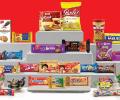
Indian consumers are likely to get respite from rising prices just before the festival season. Some consumer companies, including automakers, have indicated that they are planning to pause price hikes just before demand picks up in August, while keeping a close eye on volatile raw material prices.

The muted expectation of dealers come at a time when vehicle manufacturers such as Maruti Suzuki, Hyundai Motor, Mahindra & Mahindra and others reported a double-digit fall in wholesale dispatches to dealerships in July and August.
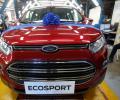
Ford, which had announced to quit the Indian market last year, said it was exploring the possibility of using one of its plants in India to produce electric cars for exports.

On the Sensex chart, Bharti Airtel was the biggest loser with nearly 3 per cent drop in its share price. It was followed by IndusInd Bank, Maruti Suzuki, HeroMoto Corp and Tata Steel.

HDFC Bank was the top gainer in the Sensex pack, rallying nearly 4 per cent, Infosys jumped over 3 per cent. Sun Pharma, NTPC, HCL Tech, Tech Mahindra, HDFC, RIL and TCS also closed with gains. On the other hand, Axis Bank was the top laggard, followed by ITC, ICICI Bank, IndusInd Bank and Maruti Suzuki.

Watch the flash mob that take over Auto Expo 2018.

Among the Sensex constituents, Tata Motors was the biggest loser with 6.52 per cent fall, followed by Vedanta 5.09 per cent, Bajaj Auto 4.99 per cent, Maruti Suzuki 4.26 per cent and Tata Steel 2.65 per cent.
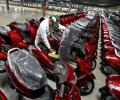
What has hit sentiment further is a draft proposal by the government to increase vehicle insurance premiums for financial year 2022-23 (FY23). Third-party motor insurance premiums have not been increased over the last two years and if this is approved, insurance costs for specific segments could rise by a fifth. The worst impacted is the 350cc and above two-wheeler segment, where premiums are up 21 per cent. Royal Enfield (Eicher Motor) is the market leader in the segment. The premiums in the 150-350cc two-wheeler category are also being inc

Every week, we bring you fascinating videos, chosen by you, through your likes.

The company, which sells every second car in the domestic market, said it expected production and sales to grow between 4 per cent and 8 per cent for the financial year started in April.
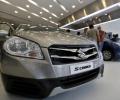
The carmaker has sought 1,292 acres at Industrial Model Township, Sohna, 25km from Gurugram.

Consumer stocks remain the biggest laggard on the bourses. The Nify50 weighting of FMCG stocks declined to a decade low of 9.9 per cent at the end of March this year, down 150 basis points from 11.4 per cent a year ago. At their peak in March 2013, major FMCG stocks, such as Hindustan Unilever, ITC, and Asian Paints, together accounted for 15 per cent of the Nifty50. But now together with automobile stocks, the consumer goods sector accounts for only 14.7 per cent of the index, down 200 basis points in the past 12 months and 37 per cent from the record high weighting of 23.4 per cent at the end of March 2014.
In percentage terms, IndusInd Bank, SBI, HDFC, ICICI Bank and L&T were among the top losers. On the contrary, Bharti Airtel, Reliance, Sun Pharma, HCL Tech and Maruti Suzuki emerged as major gainers.

In four days, Sensex has fallen by 5,815.25 points. From the 30-share pack, 22 companies closed the day lower, led by Bajaj Finance, Maruti Suzuki India, Axis Bank, M&M, Tech Mahindra and ONGC, plunging up to 10.24 per cent.

While the Slavia comes in eight different variants, it's the base model that starts at around Rs 10.7 lakh that is most likely to take a bite out of the market share of its competitors, says Pavan Lall.

Other major gainers were Tata Steel, Yes bank, Axis Bank, Maruti Suzuki, Tech Mahindra and TCS -- rising as much as 7.09 per cent.

While the latest, fourth-generation Swift makes no pretence of being a performance car or the last word in luxury, what it does stand for is amply evident, notes Pavan Lall.

The torchbearer's face will likely be seen by hundreds of millions of people watching around the world.

The economy segment of India's car market is unlikely to revive soon term as inflation and prices prompt buyers to defer purchases. The share of entry-level cars in the passenger vehicle market dropped to the lowest in seven years at the end of the Financial Year 2021-22 (FY22). A recovery in the segment will be largely driven by the overall economic growth, improvement in income levels, and easing of semiconductor shortage, say carmakers and analysts.

Several carmakers, including car market leader Maruti Suzuki India pulled the plug on diesel models citing higher costs for BSVI variants leaving buyers with limited options.
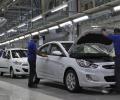
Major automobile manufacturers like Maruti Suzuki, Hyundai, Mahindra & Mahindra, Tata Motors and Toyota Kirloskar on Tuesday reported decline in domestic passenger vehicle sales in May compared to the previous month as a spike in COVID-19 cases and lockdowns across various states hit production and dispatches. The country's largest carmaker Maruti Suzuki India (MSI), which shut production from May 1 to May 16 so as to divert oxygen from industrial use for medical purposes, reported domestic dispatches to dealers at 35,293 units last month, down 75 per cent from 142,454 units in April. The company said sales of its mini cars, comprising Alto and S-Presso, declined by 81 per cent to 4,760 units in May as against 25,041 units in April this year.

Equity benchmark Sensex ended 127 points higher on Friday, primarily led by gains in auto, metal and power sector stocks amid positive cues from global markets.
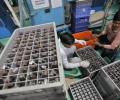
The strike, however, had no impact on production of auto majors Maruti Suzuki India, Hero MotoCorp, Honda Cars India, Mahindra & Mahindra, Tata Motors and Hyundai Motors India as their plants in various parts of the country functioned normally.
