
A major priority on the agenda of United States Under Secretary of State for Political Affairs, William J Burns --- who will be the first senior US official to visit India after the Lok Sabha polls -- will be to begin discussions with senior Indian officials about operationalising the India-US civilian nuclear deal.US business and industry, which lobbied feverishly to push through the deal, have been urging the administration to move quickly on this front.
Foreign Secretary Shiv Shankar Menon arrived in the United States on two-day visit to the US with a series of scheduled meetings including with officials at the State Department, the Under Secretary of State for Political Affairs William Burns.
Inderfurth, currently professor of international relations at George Washington University and, according to insiders, either the Under Secretary of State for Political Affairs in the next administration or the next United States ambassador to India, says too much is being read into Obama's recent remarks on Kashmir.
Former foreign secretary Shyam Saran, who was the original Indian interlocutor of the US-India civilian nuclear deal negotiations with erstwhile US Under Secretary of State for Political Affairs Nicholas Burns, is unapologetic about his recent remarks at the India Habitat Centre lecture series in New Delhi which left many foreign policy experts both in India and the US puzzled.
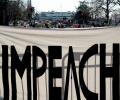
What is the guarantee that another Trump will not arise and reach out to the American people directly? The fact of the matter is that Trump's support base remains the envy of any American politician, notes Ambassador M K Bhadrakumar.
Burns was responding to the opening remarks by Senator John F Kerry, Massachusetts Democrat, who said it was imperative that the United States "...must consider Pakistan's relationship with India, especially when it comes to Kashmir."
'This nuclear agreement is a sign for the rest of the world of the great American respect for India,' says US Under Secretary of State R Nicholas Burns.
Both sides, however, refused to provide a timeline.
US Under Secretary of State for Political Affairs Nicholas Burns -- the chief interlocutor of the US-India civilian nuclear deal -- who will resign in March, has said he is elated that India has asked its Ambassador to Washington Ronen Sen to stay on for another year, describing it as "good karma".
"I think that a totally loony idea is to put US forces into the frontier areas of Pakistan," former under secretary of state for political affairs Thomas Pickering said.
Part of the focus of the current discussions is also on the "next steps" that are involved in the civilian nuclear initiative such as status of India's negotiations with the International Atomic Energy Agency on India-specific safeguards and the NSG
According to sources in the Ministry of External Affairs, the text will be simultaneously released in Washington and New Delhi.
Burns said, "We'll continue to watch India's relations with Iran, and we'll obviously respond very respectfully to any concerns by members of our own Congress as we should do."
The Post report noted that US officials are saying that 'India has made unrealistic demands, such as retaining the right to test nuclear weapons.'
White House Deputy Press Secretary Tony Fratto was asked in his briefing as to where the two sides stand on the accord, given that Washington's pointsman for the deal, Under Secretary of State for Political Affairs Nicholas Burns, is scheduled to depart the State Department by the end of March. "We'll continue our cooperation in order to achieve that goal of getting the agreement completed," Fratto said.
In what diplomatic observers have described as "a make or break" round of negotiations, senior US and Indian officials held several hours of intense discussions at the State Department on Tuesday in an attempt to seal the 123 Agreement.
No dilution of language in the House and Senate bills is likely during the House-Senate conference that will meet on the United States-India civilian nuclear agreement when Congress reconvenes this week.
The two sides will seek to wind up the year-long negotiations ahead of the meeting between Prime Minister Manmohan Singh and US President George W Bush in Germany next week on the sidelines of the G-8 Summit.
Nicholas Burns noted that the Administration had been informed the Senate and House would meet in the early part of December to reconcile both bills.
Burns was speaking at a White House Diwali function.
Burns and other senior administration officials had hoped that the negotiations over the 123 Agreement last month in New Delhi would resolve any pending issues so it could be sent up to Congress for review.
Burns said from an American perspective, 'India and America have a common interest to thwart terrorism in our own regions and globally.'
When a media person asked why despite the affinity the United States had such a hard time endorsing India's bid for a permanent seat in the United Nations Security Council, Burns went into a spin.
On his first visit to Washington after taking over as foreign secretary, Menon on Wednesday had a three-hour-long discussion with Burns, who is the key negotiator for the nuclear deal.
Indian team led by foreign secretary will be back at the US State Department for negotiations early Friday and expect to be involved in some pretty intensive discussions, sources said.
Meetings with nuclear scientists likely.

A first look of the Foreign Secretary's meeting with Rice.
A top Bush Administration official has expressed hope that the civil nuclear deal with India will be done and that the Americans, in about twenty years, would be able to look at India as being one of its two or three most important partners.
Seeking to dispel their apprehensions, Saran is expected to highlight New Delhi's impeccable record on non-proliferation front.
Both need to tackle Kashmiri militants together, Nicholas Burns said.
Rejecting some critics' argument as to what message the US was sending to Iran by signing a nuclear energy deal with India, Burns said, "We don't see the connection between what Iran is doing and what India seeks to do."

United States President Donald Trump remarks on Monday that Prime Minister Narendra Modi sought his mediation on the Kashmir issue will "damage" the Indo-US relations, ex-diplomats said.

Saran and Burns will have deliberations on conceptual issues that have an impact and bearing on the negotiations on the agreement.
 © 2026 Rediff.com - Investor Information - Advertise with us - Disclaimer - Privacy Policy - Sitemap - Feedback - About us - Terms of use - Grievances