
Crossing a major milestone in the country's space history, ISRO's Mars Orbiter mission ventured out of Earth's sphere of influence for the first time in an attempt to reach the red planet's orbit

Rahul Pingla from Mumbai shares the thought behind Google's Children's Day doodle.

The picture of Moon was taken by Chandrayaan-2's LI4 Camera from an altitude of about 2,650 km from the lunar surface.

In a crucial manoeuvre ahead of India's Mars orbiter's entry into the final destination on September 24, the main liquid engine on the spacecraft was on Monday successfully test fired and its trajectory corrected.

NASA posted images clicked by its Lunar Reconnaissance Orbiter camera, showing the site's changes on the Moon and the impact point before and after the spacecraft had made a hard-landing on the lunar surface.
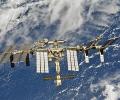
Once ISRO masters the technology to send humans into space, the next step will be experimenting with technologies allowing humans to live in space.

The Chandrayaan-2 will conduct the next level of scientific studies on the Moon, writes T E Narasimhan.
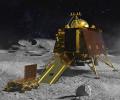
Most components of technology demonstration, including the launch, orbital critical maneuvers, lander separation, de-boost and rough braking phase were successfully accomplished.

A day after India successfully launched the Mars Orbiter in the Red Planet on its first attempt, it tweeted the first image it took and captioned it, 'the view is nice up here'.

A quick recap of the Mars Orbiter Mission's major milestones on the way to Mars

The 3,357-kg satellite, which was deployed from the lower passenger position of Ariane-5 launch vehicle (VA 251) into the geostationary transfer orbit, is configured on ISRO's enhanced I-3K Bus structure to provide communication services from Geostationary orbit in C and Ku bands.

NASA's Messenger spacecraft, the first ever to enter the orbit of Mercury, has fetched its first photo, the project's website said.

The first Trajectory Correction Manoeuvre of India's maiden mission to Mars was on Wednesday carried out successfully by Indian Space Research Organisation scientists on the spacecraft, which is presently travelling some 2.9 million km away from Earth.

India successfully placed its spacecraft in orbit around Mars, becoming the first country in the world to succeed in such an inter-planetary mission in the maiden attempt itself.

Scientists have recorded haunting sounds cast by Jupiter's auroras, captured by NASA's solar-powered Juno spacecraft during its first full orbit around the king of planets.

The Indian space agency is all set to embark on its most complex mission.

The landing on the moon near the South Pole, an uncharted territory so far, would be on September 6 or 7, Sivan told reporters, as the Indian space agency is all set to embark on its most complex mission.
.jpg)
India's maiden mission to Mars has traversed beyond the sphere of influence of Earth extending about 9,25,000 km in its 10-month long voyage to the red planet.

The precise location of the spacecraft in the lunar highlands has yet to be determined.
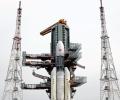
The Indian Space Research Organisation said that the countdown started at 6.51 am on Sunday.

ISRO has said once the Lunar night falls, there would be no sunlight for the lander to generate power for its working and also it was not designed to operate in the heavy cold temperature of Moon during the phase.

Indian Space Research Organisation's Mars Orbiter, which was placed in inter-Mars trajectory in the early hours on Sunday, has crossed Moon's orbit and is travelling beyond Earth's natural satellite.

India's launch preparations for the ambitious Rs 450 crore Mars orbiter mission achieved a major milestone with the successful thermo-vacuum test of the spacecraft with its payloads (scientific instruments).

Nervous and anxious for sure but the city-headquartered space agency is cautiously optimistic of "Vikram" module's soft-landing on the Lunar surface planned in the early hours of Saturday.

Packed with groundbreaking technology, the Mars 2020 mission launched July 30, 2020, from Cape Canaveral Space Force Station in Florida. The Perseverance rover mission marks an ambitious first step in the effort to collect Mars samples and return them to Earth, according to an official statement.

While New Jersey, US-based OrbitBeyond leads a consortium of subcontractors who have designed and developed hardware for deep space missions, Bengaluru-based Team Indus is leading OrbitBeyond's lander engineering, reports T E Narasimhan.

The successful orbiting of the satellites by the Polar Satellite Launch Vehicle PSLV C-40 comes four months after the Indian space Research Organisation's mission to launch backup navigation spacecraft IRNSS-1H onboard PSLV-39 ended in a rare failure.

The spacecraft is expected to reach Mars orbit in about 200 days from now and then begin its mission to study the Red Planet's atmosphere.

China's National Space Administration landed the Chang'e 4 lunar probe at 10:26 am Beijing time on Thursday, in the South Pole-Aitken Basin which is an impact crater, China Central Television reported.
A day after suffering a glitch during the fourth orbit raising operation on its Mars Orbiter Mission, the Indian Space Research Organisation on Tuesday successfully completed the supplementary manoeuvre, raising the spacecraft's apogee (farthest distance from Earth) to over 1,18,000 km.

The unmanned space telescope, which launched in 2009, leaves a legacy of more than 2,600 planet discoveries from outside our solar system
A National Aeronautics and Space Administration spacecraft has confirmed the presence of abundant 'icy' water along with other frozen volatile materials within 'burning hot' Mercury's permanently shadowed polar craters.

This is the first mission by the Indian Speace Research Organisation this year.

On Monday, ISRO scientists will run a test of the Mars orbiter satellite's main engine and make a small course correction. This is crucial because the engine has been idle for nearly 10 months. T E Narasimhan reports

Rediff.com takes a look at spacecraft that have successfully made it to Mars.

Thursday's launch is the last one of 2020 for ISRO.
The third of the total of five orbit raising manoeuvres of the Mars Orbiter spacecraft was performed early on Saturday, raising its apogee, the farthest point from Earth, to over 71,000 km.

India's ambitious space mission to explore planet Mars would be launched on November 5 from the spaceport of Sriharikota, ISRO announced on Tuesday.

The mission has been extended by another six months due to surplus fuel

Back in 1958, when the 31-year-old Parker suggested that the charged particles streamed continuously from the Sun and fill up the space, the scientific community refused to believe him.
