
Passenger vehicle dispatches from factories to dealers declined 13 per cent to the lowest level in five years in December last year as the industry continued to face production issues due to semiconductor shortage, auto industry body SIAM said on Friday. Passenger vehicle dispatches last month stood at 2,19,421 units compared to 2,52,998 units in December 2020. While acknowledging that the chip shortage situation is not expected to dramatically change in the short term, the industry body expressed hope that things will improve soon.

Two years after it hitched a ride with Hero MotoCorp (Hero), Harley-Davidson (Harley) and the Pawan Munjal-led firm are gearing up to ride into the middleweight (midweight) motorcycle segment (350-850cc) in the world's largest two-wheeler market.

Passenger vehicle wholesales in India declined by 10 per cent to 2,61,633 units last month as compared to March this year, as COVID-19-led restrictions across various states impacted demand, auto industry body SIAM said on Wednesday. Passenger vehicle sales in March 2021, stood at 290,939 units.

Maruti Suzuki India (MSIL) - the market leader in small cars - is eyeing the top spot in the sports utility vehicle (SUV) segment within a year - with a 33 per cent share of the pie. The company has been selling two SUVs - the Brezza and the Grand Vitara - and will start deliveries of the Jimny and the Fronx from March-end, and has set a target of growing its share from the current 11.5 per cent of the SUV market to 33 per cent by the end of 2023-24. The SUV segment is roughly about 42 per cent of the total passenger vehicle market, or around 1.3 million units.

Ahead of the Budget, Society of Indian Automobile Manufacturers on Tuesday asked the government to retain excise duty on small cars at the current level of 10 per cent even though the industry witnessed good growth this fiscal.

Passenger vehicle wholesales in India slipped to a 10-year low in the April-December this fiscal, and the industry will have to work hard to regain better volumes and business health, industry body SIAM said on Thursday.

Honda Motorcycle and Scooter India (HMSI), India's second-largest two-wheeler maker, on Wednesday revealed its electric vehicle (EV) roadmap, which includes setting up a dedicated EV factory, launching the first two EVs in 2023-24, and establishing 6,000 battery exchange points in the country. HMSI plans to establish a specialised unit for the manufacturing of electric vehicles (EVs), named 'Factory E', at its Narsapura plant located in Karnataka. Factory E will be created by converting an existing production line that currently manufactures internal combustion engine (ICE) vehicles, said Atsushi Ogata, HMSI managing director and chief executive officer.

Three business houses are likely to be in the final race to strike a deal with Germany's Metro AG for investing in its India unit -- Metro Cash & Carry. Industry sources in the know named Reliance, Adani Group, and Thailand's conglomerate Charoen Pokphand (CP) as potential frontrunners to acquire a partial or full stake in the Gurugram-headquartered Metro Cash & Carry, which has 31 stores and 5,000 direct employees. Around 20 companies, including strategic and private equity investors, were approached by the German chain, inviting them to bid for the Indian wholesale business, according to a source aware of the M&A developments.

Automobile exports from India recovered in the first quarter with all vehicle segments, including passenger vehicles and two-wheelers, witnessing growth following an improvement in the pandemic situation across various international markets. As per the latest SIAM data, total vehicle exports during the April-June quarter this fiscal stood at 14,19,430 units as compared with 436,500 units in the same period of 2020-21 which saw massive disruptions due to the COVID lockdowns across the country, hampering sales as well overseas shipments. SIAM director general Rajesh Menon told PTI that while two-wheeler shipments were better than previous three years, passenger vehicles, three-wheelers and commercial vehicles export numbers were yet to catch up with numbers in the first quarter of 2018-19 fiscal.

Passenger vehicle wholesale in India increased by 14.19 per cent to 3,10,294 units in October against 2,71,737 units in the same month last year as companies despatched more units to dealers to cater to enhanced demand in the festive season, auto industry body SIAM said on Wednesday. According to the latest data by the Society of Indian Automobile Manufacturers (SIAM), two-wheeler sales also rose 16.88 per cent to 20,53,814 units, compared with 17,57,180 units in the same month last year. Motorcycle sales were at 13,82,749 units as against 11,16,886 units in October 2019, up 23.8 per cent.

The Society of Indian Automobile Manufacturers had earlier revised the sales forecast for financial year 2012 downwards for the passenger cars at 10-12 per cent in July against 16-18 per cent announced at the beginning of the fiscal.
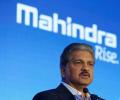
"I took some time to explore the contours of this initiative. I don't use the term 'game-changer' too often but it's apt in this case. For me, what's much more important than the mechanics of the scheme is the dramatic shift it signals in the attitude towards industry," Mahindra said in a tweet.

Passenger vehicle sales in India could hit a record of over 38 lakh units in FY23 but the strong growth momentum is not expected to carry over to 2023-24 with pent-up demand already been released, according to Tata Motors Passenger Vehicles managing director Shailesh Chandra.

With much sadness, so many of us woke up to the news that Vikram Kirloskar, vice-chairperson of Toyota Kirloskar Motor, had passed away late Tuesday. As I reminisce on the nearly 40 years I have known him, I can unequivocally say that he had such a rare and deep understanding and passion for automotive manufacturing that it would make Toyota, which pioneered the Toyota Way, proud. Many of us know Vikram as the man who brought the iconic Japanese carmaker Toyota to India. But few know the back story and hard work that went into creating a system of manufacturing that was everything Toyota could have hoped for and then some more because it was perfectly calibrated for manufacturing in India.
Domestic car sales were down 33.4 per cent to 1,31,281 units last month as against 1,97,124 units in September 2018, according to data released by the Society of Indian Automobile Manufacturers (SIAM) on Friday.

Reliance Industries Ltd will acquire German firm Metro AG's wholesale operations in India for Rs 2,850 crore as the conglomerate run by billionaire Mukesh Ambani seeks to strengthen its dominant position in India's mammoth retail sector. "Reliance Retail Ventures Limited (RRVL), a subsidiary of Reliance Industries Ltd, signed definitive agreements to acquire a 100 per cent equity stake in Metro Cash & Carry India for a total cash consideration of Rs 2,850 crore, subject to closing adjustments," said a joint statement. Through this acquisition, Reliance Retail will get access to a network of Metro India stores located in prime locations across key cities, along with a large base of registered kiranas and other institutional customers, and a strong supplier network.

However, notable absentees from the expo will be Honda, Toyota, Ford, BMW, Audi, Lexus, Volvo and Jaguar Land Rover along with two-wheeler majors Hero MotoCorp, Bajaj Auto and TVS Motor Co.

Domestic car sales were down 35.95 per cent at 1,22,956 units as against 1,91,979 units in July 2018, according to data released by the Society of Indian Automobile Manufacturers (SIAM) on Tuesday.

The industry is engaged in a dialogue with the Government of India on policy measures which could minimise the impact of COVID-19 on the Indian economy and especially the domestic automobile industry.
As per SIAM data, vehicle sales across categories, including passenger vehicles and two-wheelers and commercial vehicles stood at 18,21,490 units last month as against 23,82,436 units in August 2018, a fall of 23.55 per cent.

New participants included Chinese players such as Great Wall Motors and Haima Automobile along with Olectra.
The optimism stems from benign fuel prices, adequate and well distributed rainfall and the recent measures announced by the government to boost liquidity at banks and NBFCs.

It came on the back of tepid dispatches in the March quarter as consumer sentiment took a knocking, owing to uncertainty ahead of the general election.

The growth in the PV segment was primarily led by car market leader, Maruti Suzuki India, which saw its dispatches to dealers grow 4.4 per cent YoY to 144,277 units after 10 months of drop. It was driven by new launches, such as the S-Presso, a mini sport UV.

Domestic passenger vehicle sales dropped by 17.54 per cent to 2.25 lakh units in June from 2.73 lakh units in the same month of previous year, data released on Wednesday by an apex industry body showed.

In a rare face off, captains of the auto industry have hit out at the government for not walking the talk. At an industry event in the capital on Wednesday, R C Bhargava, chairman of India's largest carmaker Maruti Suzuki, and Venu Srinivasan, chairman of TVS Motor, questioned the government's intent to support the auto sector. Revenue secretary Tarun Bajaj sat in the audience listening, before his turn came to counter them.

Auto Expo's Twitter handle (@AEMotorShow), with a follower base of 16,000, is abuzz with activity. The Facebook page of Auto Expo has about 158,000 followers.

Domestic passenger vehicle sales declined 0.84 per cent to 2,63,773 units in November from 2,66,000 units in the year-ago period. Motorcycle sales, too, declined 14.87 per cent to 8,93,538 units. Vehicle sales across categories registered a decline of 12.05 per cent to 17,92,415 units from 20,38,007 units in November 2018.

The increase in PV sales in September was driven by festive season purchases, with SUV models like Maruti Suzuki's Brezza, Hyundai Creta, Mahindra Scorpio, Ford Ecosport and Honda W-RV witnessing good traction

Data issued by Siam shows sale of PVs (cars, vans and utility vehicles) grew 14.3 per cent to 275,417 vehicles.

"There were discussions and the ministry had received suggestions that petrol-diesel vehicles should be banned. I would like to clarify that the government does not intend to ban petrol and diesel vehicles. We are not going to do anything like that," Gadkari said, addressing a gathering at the Society of Indian Automobile Manufacturers (SIAM) annual convention, 2019.

Durable, automobile and real estate players have been lobbying hard for a tax cut, saying it will boost demand.
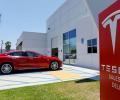
Making it clear that relaxations will not be provided to US-based electric vehicles major Tesla unless it participates in manufacturing activities in India, Union Minister Krishan Pal Gurjar on Tuesday said there cannot be a situation where the market is India but jobs are created in China. The minister of state for heavy industries also told the Lok Sabha during Question Hour that the company is yet to apply for schemes as per the government's policy. Last year, the Elon Musk-led company sought a reduction in import duties on electric vehicles (EVs) in India but the Ministry of Heavy Industries asked the firm to start manufacturing its iconic EVs in the country before any tax concessions can be considered.

The list clearly shows the dominance of Maruti and Hyundai in the Indian passenger vehicle market.
Vehicle sales across categories registered a decline of 8.62 per cent to 20,86,358 units from 22,83,262 units in May 2018.
The final Budget for the fiscal is likely to be tabled in July after formation of the new government.

While commercial vehicles are expected to benefit from strong replacement demand, the two-wheeler and tractor segments are expected to gain from a recovery in the rural economy.

Sales of commercial vehicles rose 5.30 per cent to 52,481 units in January this year, SIAM said.
The economy segment of India's car market is unlikely to revive soon term as inflation and prices prompt buyers to defer purchases. The share of entry-level cars in the passenger vehicle market dropped to the lowest in seven years at the end of the Financial Year 2021-22 (FY22). A recovery in the segment will be largely driven by the overall economic growth, improvement in income levels, and easing of semiconductor shortage, say carmakers and analysts.

First off the block will be a new multi-purpose vehicle which is being co-developed with Toyota - Suzuki's alliance partner. The model will also wear a Toyota badge.
