
Dr Ajay Kumar Sood will have to complete a task his predecessor started: Getting the government to sign off on a new Science, Technology, and Innovation Policy on which work was begun in 2020.

On Thursday, the prime minister is scheduled to hold one-on-one meetings with top five American CEOs. Two of them are Indian Americans -- Shantanu Narayen from Adobe and Vivek Lall from General Atomics. The three others are Cristiano E Amon from Qualcomm, Mark Widmar from First Solar, and Stephen A Schwarzman from Blackstone.

A hallmark of some new businesses today is that they seek to use the brute force of capital, combined with smart technology and operations, to create new needs that you didn't even know existed, the chairman of Aditya Birla group said in a blog post on the trends for the new year.
Shortages of chips will impact the car market
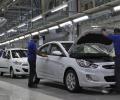
The country's leading automakers Maruti Suzuki and Hyundai Motor reported a decline in dispatches to dealers in March as shortage of electronic components impacted production. On the other hand, Tata Motors, Skoda and Kia India posted their highest ever monthly wholesales last month. Toyota Kirloskar Motor said its dispatches in March were the highest in the last five years while Mahindra & Mahindra also reported a robust increase in its passenger vehicle dispatches in March.

Passenger vehicle wholesales in India slipped to a 10-year low in the April-December this fiscal, and the industry will have to work hard to regain better volumes and business health, industry body SIAM said on Thursday.

The company said that while the first quarter numbers were at the pre-pandemic levels, it saw a growth of 34 per cent in sales compared to the April to June period of 2020.

Passenger vehicle (PV) retail sales rose to 184,134 units last month against 85,733 units in May this year as the COVID-19 situation improved across the country. According to the Federation of Automobile Dealers Associations (FADA), which collected vehicle registration data from 1,295 out of the 1,498 regional transport offices (RTOs), two-wheeler sales rose to 930,324 units last month as compared to 410,757 units in May.

India on Monday joined a US-led initiative to set up an Indo-Pacific Economic Framework to bind partner countries to achieve common goals, with Prime Minister Narendra Modi asserting that New Delhi will work with the stakeholders to make it an "inclusive and flexible" structure to pave the way for development, peace and prosperity in the region.
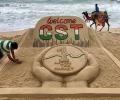
India's Goods and Services Tax (GST) collection surged to Rs 1.30 lakh crore in October, the second highest since its implementation in July 2017, indicating economic recovery from the COVID-19 pandemic and impact of festive demand, a finance ministry statement said on Monday. The highest GST collection of Rs 1.41 lakh crore was recorded in April 2021. This is the fourth time in a row when the GST collection was upwards of Rs 1 lakh crore. The collection from GST was Rs 1.17 lakh crore in September, 2021.

The deadly coronavirus has forced us to adopt new ways of life.

The state, a pioneer in the IT revolution of the country, is now exploring options like partnerships with fab manufacturing countries, research and development organisations and also with academic institutions to explore possibilities for the growth of semiconductor companies located in the state.

Prime Minister Narendra Modi began his engagements in the US on Thursday by meeting with leading American CEOs from five different key sectors and highlighted the economic opportunities in India.

Brinkmanship in the Taiwan Strait will not only be a recipe for disaster to both China and Taiwan, but also to international peace and stability, warns Rup Narayan Das.

Hemant Shivsaran lists the number of projects the Modi government has announced since August to woo Gujarat voters.

The Reserve Bank on Friday retained the GDP forecast for the current financial year at 9.5 per cent and flagged global semiconductor shortages, elevated commodity prices and potential global financial market volatility as downside risks to economic growth. In his address after the three-day meeting of the rate-setting panel, RBI Governor Shaktikanta Das said recovery in aggregate demand gathered pace in August-September, and it is reflected in high-frequency indicators, like railway freight traffic; port cargo; cement production; electricity demand; e-way bills; GST and toll collections. "The ebbing of infections, together with improving consumer confidence, has been supporting private consumption," he said, and added the pent-up demand and the festival season should give further fillip to urban demand in the second half of the financial year.


72 per cent of the revenue of Indian firms (India Inc) is derived from the domestic / home market - the sixth highest in percentage terms in the emerging market (EM) and the Asian region, said a recent report by Morgan Stanley. The balance, according to the report titled 'Global Exposure Guide 2021' co-authored by analysts led by Jonathan F Garner, their chief Asia and emerging market strategist, is split between the developed markets (DMs) and other EMs. The report is based on an analysis of 3,300 companies globally that have revenue exposure in 17 different regions.
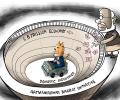
The Indian economy is on the path of a durable recovery on the back of conducive monetary and credit conditions, the global headwinds notwithstanding, said a Reserve Bank of India (RBI) article on the state of the economy. Domestically, there have been several positives on the COVID-19 front, in terms of reduced infections and faster vaccinations, the article published in the RBI Bulletin November 2021 added. The Indian economy, the article said, is clearly differentiating itself from the global situation, which is marred by supply disruptions, stubborn inflation and surges of infections in various parts of the world.

The Central government is likely to rule out upfront equity participation of 26 per cent in upcoming semiconductor units and other general incentives

Through a combination of local manufacture and imported CBU models, the company makes and sells four SUVs, one hatchback, and one sedan.

Even as the semiconductor shortage has limited the demand for new cars, the pre-owned car segment is seeing a surge. A preference for personal mobility, availability of multiple organised online platforms, including e-commerce channels, aggregators, and classifieds, have been fuelling growth. The growth rate of the pre-owned car market is expected to be 1.5x that of the new car market over the next five years.

The soaring prices of metals like lithium, nickel and cobalt, which are the primary constituents of the cell, as well as supply chain bottlenecks, are also pushing up the cost of batteries

For automakers, the festive season is about raking it in through ramped up sales and attractive consumer offers. However, despite the robust demand, what may spoil the party this year is a global shortage of semiconductors.
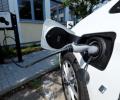
While traditional automakers in India are reeling under a global shortage of semiconductors, the country's electric vehicle (EV) makers, too, are now facing a shortage of lithium-ion batteries, a key raw material. The soaring prices of metals like lithium, nickel and cobalt, which are the primary constituents of the cell, as well as supply chain bottlenecks, are also pushing up the cost of batteries. Battery manufacturers say that prices have been increasing every quarter since the beginning of 2021.
With a US slump likely, semiconductor firms - particularly the global companies operating captive design centres in India - are expected to hire fewer engineers in the next financial year. More than 50 global companies, mostly from the US, operate captive design centres or offshore development centres, partnering Indian firms. More than 50 per cent of the Indian semiconductor firms are dependent on the US market for revenue. Hence, on-campus hiring will see general slowdown.
UK and Indian semiconductor industries share potential synergies in the areas of design, device and applications, according to a study by the India Semiconductor Association, a trade body representing the Indian semiconductor industry, the UK Trade & Investment, and Science & Innovation Network UK. ISA president Poornima Shenoy said, "ISA is focused on business support to its members and the Indian semicon community."

'Wherever in the world there is political instability, those countries are beset with severe crises today. But India is in a much better position than the rest of the world due to the decisions taken by my government in the national interest,' President Droupadi Murmu said in her address to both Houses of Parliament.

'For someone who wants to invest for the future or his family, diversification is necessary.' 'Diversify across asset classes -- equities, gold, real estate, fixed income, commodities, and even cryptocurrency.'

Tata Motors plans to have 10 new battery electric vehicles (BEVs) in its domestic product portfolio by 2025 as it looks to drive its business model towards sustainable mobility going ahead, as per Tata Motors chairman N Chandrasekaran. In his message to the shareholders, he noted that the auto major aims to be amongst the world leaders in sustainable mobility solutions and as part of that it is also exploring tie-ups in cell and battery manufacturing to secure supplies for its portfolio of green vehicles. "In India, EV penetration in our portfolio has now doubled to 2 per cent this year and we expect penetration to increase exponentially in the coming years. "Tata Motors will lead this change in the Indian market. By 2025, Tata Motors will have 10 new BEV vehicles and as a Group, we will invest proactively to set up charging infrastructure across the country," Chandrasekaran informed shareholders in the company's Annual Report for 2020-21.

"Throughout our history we've learned this lesson -- when dictators do not pay a price for their aggression, they cause more chaos. They keep moving. And, the costs and threats to America and the world keep rising," Biden said addressing the joint session of the Congress in his first State of the Union.

5G networks in India can be deployed in three months but in limited areas as the optical fibre based infrastructure to support the technology is not ready yet, telecom industry players said on Tuesday. Nokia India head of marketing and corporate affairs Amit Marwah said that India has to take a call on deployment of 5G services otherwise it will miss to take advantage of the next generation technology that it can bring for the economy.

Leading two-wheeler maker Hero MotoCorp is going full throttle to launch a Harley-Davidson model with retro styling as it looks to enter a very profitable segment in the premium motorcycle space, according to a senior company official. The alliance between Hero and Harley-Davidson fructified last year after the iconic US two-wheeler maker announced discontinuation of sales and manufacturing operations in India, a decade after it started selling its premium bikes in the country. "There are two legs to the Harley tie up strategy. One of course is that we are the sales distributors for Harley bikes in India.
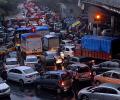
Automobile dealers' body FADA on Thursday said passenger vehicle (PV) retail sales in March witnessed a year-on-year growth of 28.39 per cent to 279,745 units, as compared to the year-ago period which saw disruptions in the market due to COVID-19 led lockdown. According to the Federation of Automobile Dealers Associations (FADA), which collected vehicle registration data from 1,277 out of the 1,482 regional transport offices (RTOs), PV sales stood at 217,879 units in March 2020. Two-wheeler sales, however, declined 35.26 per cent to 11,95,445 units last month, as compared to 18,46,613 units in March 2020. Commercial vehicle sales also declined 42.2 per cent to 67,372 units, as against 116,559 units a year ago.

Auto sales, particularly of two-wheelers, may not bounce back immediately and may take another two months to come back on track even as car bookings have started seeing an initial uptick. Various states started Unlock 2.0 on Monday, following a fall in the number of Covid-19 cases. Auto sales were hit in May following the impact of Covid-led lockdowns.
While it has yet to issue the full details, the appraisal committee has said that the interested investors will have to submit a proposal before it along with the feasibility report.
The new semiconductor plants will be up against India's age-old Achilles' heel, inadequate infrastructure

Threshold limit of investment may come down for setting up semiconductor fabrication plants.
Hindustan Semiconductor Manufacturing Corporation on Wednesday announced a $4 billion investment plan for setting up a fab city in India in partnership with German technology major Infineon.

IIT Roorkee has so far seen the highest domestic salary rise Rs 80 lakh, up by a third from Rs 60 lakh last year.
