
Avenue Supermarts, the operator of DMart retail chain, reported good results for the July-September quarter (Q2FY24) with strong earnings before interest before interest, taxes and depreciation (Ebitda) and profit before tax (PBT) growth, but lower PAT due to higher tax incidence. The operating margin improved, and like-to-like store sales growth was strong. Average bill value also increased though this may be a seasonal effect to some extent. Analysts are assuming this means the slowdown in retail may have bottomed out.

The decision to retain Opel in addition to restructuring its European operations was taken by the company's board of directors in the backdrop of "improving business environment," GM said.

Debt management is going to be a worry for the Vedanta group until FY25 at least. However, the restructuring of business divisions in Vedanta India could lead to an unlocking of values. The group structure is fairly complex. Anil Agarwal-led Vedanta Resources (VRL), which is London-listed, has a lot of debt on the balance sheet. It will have to repay $1 billion in secured bonds by January 2024 and at least another $300 million in calendar 2024.

Analysts say domestic banks' dependence on local depositors insulates them from the crisis.

In the March quarter analysts' presentation, the company had said it was targeting to raise a total of Rs 10,000 crore (Rs 100 billion) from non-core asset sales in the medium term.

The broader NSE Nifty managed to end higher for the second day at 10,426.85, up by 5.45 points or 0.05 per cent after shuttling between 10,478.60 and 10,377.85, intra-day.

Investors' wealth eroded by Rs 3.46 lakh crore on Wednesday as equity markets took a sharp tumble amid weak global trends and foreign fund outflows. The 30-share BSE Sensex fell by 676.53 points or 1.02 per cent to settle at 65,782.78. During the day, it plunged 1,027.63 points or 1.54 per cent to 65,431.68. In line with the weak trend in equities, the market capitalisation of BSE-listed firms eroded by Rs 3,46,947.54 crore to Rs 3,03,33,258.69 crore.
In anticipation of the IPOs of FCH and RPL, investors were seen off loading small and mid-cap stocks heavily.

Benchmark indices fell over 1 per cent each on Monday in sync with weak global markets and a sharp fall in IT stocks. The BSE benchmark Sensex tanked 861.25 points or 1.46 per cent to settle at 57,972.62. During the day, it tumbled 1,466.4 points or 2.49 per cent to 57,367.47. Similarly, the NSE Nifty fell 246 points or 1.4 per cent to 17,312.90.

Equity benchmark index Sensex buckled under selling pressure for the second straight session to close below the 65k mark on Friday, as investors offloaded IT, teck and metal stocks amid a bearish global trend. Besides, fresh foreign fund outflows also hit investor sentiments, traders said. In a volatile trade, the 30-share BSE Sensex declined 202.36 points or 0.31 per cent to settle at 64,948.66.
A company spokesperson said the operations in Queensland were small and not expected to make any significant impact in the company's performance.

Former Italian Prime Minister Silvio Berlusconi said on Saturday more time is needed to seal an accord over a sale of a stake in AC Milan with Thai businessman Bee Taechaubol but said he could retain control of the soccer club.

Besides, some PSUs that have remote locations are unable to communicate the public offer message to their employees and face various difficulties like opening demat accounts.

India's economy is in much better shape to weather tighter U.S. monetary policy.

Equity benchmarks Sensex and Nifty gave up early gains and ended lower by 1 per cent on Wednesday amid a largely weak trend in Asian markets and sell-off in index majors Reliance Industries, ICICI Bank and HDFC twins. The 30-share BSE benchmark Sensex tumbled 635.05 points or 1.03 per cent to settle at 61,067.24. During the day, it slumped 763.91 points or 1.23 per cent to 60,938.38. The broader NSE Nifty declined 186.20 points or 1.01 per cent to end at 18,199.10.

The value of foreign portfolio investment (FPI) in Indian equities was at $542 billion in the March quarter of 2023, a decline of 11 per cent from the preceding year, largely due to the exodus of foreign money from the domestic market, according to a Morningstar report. In comparison, the value of FPI in Indian equities was $612 billion in the January-March quarter of 2022. On a quarter-on-quarter basis, the value of FPI in Indian equities fell by 7 per cent from $584 billion recorded in the three months ended December 2022.

As dramatic as it gets, but a former Indian Information Service (IIS) officer kept hiding inside a store room for more than 10 hours after killing his wife even as police teams along with a dog squad searched his property.

The government has also decided that all unlisted CPSEs which have made profit in the past 3 years and have a positive networth should get listed on stock exchanges.

The Sensex jumped nearly 900 points and the Nifty rallied over 272 points on Friday, bouncing back from the previous day's fall, following a positive trend in global equities and fresh foreign fund inflows. The BSE Sensex rallied 899.62 points or 1.53 per cent to end at 59,808.97 after starting the trade on a positive note. During the day, it jumped 1,057.69 points or 1.79 per cent to 59,967.04.
State Bank of India was the biggest loser in the Sensex pack, shedding 1.69 per cent, followed by Asian Paints, Kotak Mahindra Bank, HCL Technologies, Reliance Industries, Wipro, IndusInd Bank, Infosys, Power Grid and HDFC twins. In contrast, Nestle, Maruti, Bharti Airtel, Tata Motors, ITC and Hindustan Unilever were among the gainers.

The commerce ministry has consented to 10 per cent disinvestment in MMTC that can fetch the government Rs 17,000 crore (Rs 170 billion)at present valuation.

Kotak Mahindra Bank was the biggest loser from the Sensex pack, skidding 1.83 per cent, followed by Axis Bank, NTPC, Hindustan Unilever, ICICI Bank, Bharti Airtel, Reliance Industries, HCL Technologies, IndusInd Bank and Nestle. In contrast, Bajaj Finance, Bajaj Finserv, Tech Mahindra, Tata Consultancy Services, Titan, Infosys, HDFC Bank, HDFC and ITC were the gainers.

Government believes privatisation would increase the airline's efficiency and make it profitable, enriching the value of the remaining stake with it.
The steel ministry has sent the proposal to sell 10 per cent of the government's holding in state-run Manganese Ore India Ltd to the Department of Disinvestment, Parliament was told on Friday.
Work on disinvesting government holdings may gather pace after the first week of August. Administrative ministries of around 15 Public Sector Undertakings have been asked to give feedback on the feasibility of coming out with initial public offers by then.

IndusInd Bank was the biggest loser in the Sensex pack, shedding 7.46 per cent, followed by SBI, Tata Motors, M&M, Bajaj Finserv, Axis Bank and Infosys. In contrast, Tech Mahindra was the only winner.

Gautam Adani was the world's third and Asia's richest man a month back but a damning report by a US firm triggered a massive sell-off in shares of his apples-to-airport group, plunging his own wealth by $80 billion and the tycoon slipping to No.30 on the world billionaire index. Adani's sprawling conglomerate, which spans from sea ports to airports, edible oil and commodities, energy, cement and data centres, is under attack by US short-seller Hindenburg Research, which successfully deflated electric-vehicle maker Nikola Motors in 2020. Hindenburg, which held short positions in unidentified shares of Adani Group firms through its US-traded debt and offshore derivatives, on January 24 accused the conglomerate of "brazen stock manipulation and accounting fraud" and using a number of offshore shell companies to inflate stock prices.

Among the Sensex firms, Bajaj Finserv, Tata Motors, Asian Paints, ITC, IndusInd Bank, State Bank of India, Tata Steel, Wipro, Infosys and Maruti were the major gainers. Tech Mahindra, HCL Technologies, Kotak Mahindra Bank, Titan and Larsen & Toubro were the major laggards.

The domestic stock market may face volatility amid the monthly derivatives expiry scheduled this week, while investors would mainly await the outcome of RBI's interest rate decision on Friday, said analysts. Global market movement would also continue to drive sentiment amid a bearish trend recently following rate hikes by the US Federal Reserve and other central banks. The Reserve Bank of India (RBI) may take cues from its global counterparts to raise interest rate for the fourth time in a row to control inflation.

With the markets scaling new highs, as many as 43 stocks from the Nifty50 index and 27 of the 30 scrips that are part of the S&P BSE Sensex are trading above their respective 200-day moving average (DMA). The 200-DMA is seen as one of the most relevant trend indicators by investors and traders, who believe that stocks and indices trading above this level possess strength and are likely to rally in the short to medium term, while the ones trading below this level are viewed as bearish and expected to see a sell-off. Wipro, UPL, Kotak Mahindra Bank, Hindalco, Infosys, Cipla, and Adani Enterprises are the only stocks from the Nifty50 pack that are still below their respective 200-DMA, the exchange data suggests.
Global trends and the Covid situation in China would drive the equity markets this week, which may also see volatility amid the scheduled derivatives expiry on Thursday, said analysts. According to analysts, investor sentiment remained subdued last week amid surging Covid cases in China and a few other nations. Also, stronger US growth data has cemented expectations of the Federal Reserve continuing with its hawkish stance, which added to the muted trend.

Actively-managed large-cap mutual fund (MF) schemes have managed to regain some lost sheen this year after faring poorly in the 2022 calendar year (CY22). At the end of the first six months (H1) of CY23, 78 per cent of the active large-cap schemes were ahead of the Nifty50 index funds as against just 26 per cent in 2022. When compared to the Sensex index funds, 61 per cent active funds have delivered better returns, shows an analysis of Value Research data.

Gold prices are struggling and are down 18 per cent from their March highs. But stock prices have fallen even more. As a result, the precious metal has begun to outperform equities - both in the domestic market and international markets. Gold prices are up 2.6 per cent in the domestic market in the current calendar year (CY22) so far, according to the World Gold Council (WGC), compared to a 1.7 per cent decline in the Sensex year-to-date (YTD).
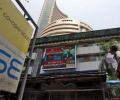
Equity benchmark indices Sensex and Nifty buckled under selling pressure after a nine-session rally on Monday, as massive sell-off in IT, tech and telecom counters unnerved investors.
Equity benchmarks fell sharply on Thursday in line with an extremely weak trend in the global markets, with the Sensex plunging 1,154.78 points in early trade. Persistent foreign fund outflows and a spurt in crude oil prices also dampened sentiment. The 30-share BSE benchmark was trading 1,154.78 points lower at 53,053.75. The broader NSE Nifty tumbled 335.65 points to 15,904.65.
Domestic equity investors' wealth eroded by more than Rs 4.43 lakh crore on Monday as fears of a financial contagion triggered by one of the biggest bank failures in the US roiled market sentiments. After a strong opening, Indian stocks went into a tailspin with the benchmark 30-share BSE Sensex tumbling nearly 900 points to close at 58,237.85 points -- sliding for the third straight trading session. The NSE Nifty too declined 258.60 points to end at 17,154.30 points.

A year ago, VHP international president Pravin Togadia had allegedly advised VHP members and other residents of that area to insult Muslims to make them vacate their properties in areas dominated by the majority community.
