
BlackRock has again reduced the valuation of its share in edtech firm Byju's - this time to about $1 billion, TechCrunch reported on Friday, citing disclosures made by the US-based asset manager. This is 95 per cent less than its peak valuation of $22 billion in 2022. The markdown comes at a time when the company is facing a multitude of challenges, including securing fresh capital, delays in financial reporting and legal disputes with lenders.

Capital markets regulator Sebi has kept in 'abeyance' the proposed initial share sale of securities depository NSDL. However, the Securities and Exchange Board of India (Sebi) did not clarify further. The National Securities Depository Ltd (NSDL) filed its preliminary papers with the capital markets regulator on July 7.

'To the believers of crypto regulations, I have only one question to ask, how will you regulate it?'
The Securities and Exchange Board of India (Sebi) plans to roll out a new regulatory framework for registrar and transfer agents (RTAs) - the market intermediaries responsible for the record-keeping of bondholders and shareholders after a company offers securities to the public. The markets regulator, sources said, is considering a multifold increase in net-worth requirement, a move that may dissuade companies from having in-house RTAs for record-keeping. At present, the minimum net worth required for RTAs is Rs 50 lakh and Rs 25 lakh in categories I and II, respectively.

The new Samvat 2080 is viewed as a year of hope for industrial and precious metals. A key reason is the expectation of US interest rates peaking, followed by a reduction in the coming months. Regarding crude oil, its trajectory depends more on how the situation unfolds in West Asia.

'...similar to the 2008 global financial crisis, the 2012 taper tantrum, or the 2018 midcap crash.' 'This could lead to a substantial decline in activity and revenues for the broking industry.' 'When this will happen is uncertain, but as brokers, we must be prepared for such a downturn.'

Fundraising via initial public offers (IPOs) dropped 52.2 per cent to $147.2 billion in the first eight months of calendar year 2023 (CY23), suggests a recent report by GlobalData, a London-based analytics and consulting company. At the country level, the report suggests, India topped the charts with 152 transactions worth $3.8 billion during this period, primarily due to a higher number of SME IPOs, followed by the US with 99 deals totaling $16 billion, while China ranked third with 88 transactions worth $32.3 billion. "An analysis of GlobalData's Deals Database reveals that there were 750 IPO listings registered with an aggregate deal value of $147.2 billion in the first eight months of 2023 on the stock exchanges worldwide.

Domestic mutual funds (MFs) have underpinned demand for most public floats this year, dominated by small- and mid-sized initial public offerings (IPOs). Of the 24 IPOs that have hit the market so far this financial year (2023-24, or FY24), MFs have played the role of 'anchor investors' in 20. They have subscribed to over 40 per cent, or Rs 2,850 crore, worth of shares of the Rs 6,900 crore on offer in the anchor category, according to data provided by PRIME Database, a firm that tracks primary market data.

The International Financial Services Centre Authority (IFSCA) plans to operationalise the framework for direct listing of companies at International Financial Services Centre (IFSC) exchanges by the end of the year, said Chairperson K Rajaraman. He added that the amendments would be notified within three months. Further, the GIFT City regulator is also considering the launch of separate payments system regulations - similar to that of the real time gross settlement (RTGS) for banking within a few months.

The medium-term scenario for oil marketing companies (OMCs) is high risk due to the surging crude and gas prices. Apart from OPEC-plus cutting production, the Hamas-Israel conflict has caused fears of supply disruption. The July-September quarter of 2023-24 (Q2FY24) saw positive surprises for OMCs. Strong gross refining margins (GRMs) more than offset weak marketing margins.

Mutual funds recorded Rs 7,600 crore net inflows into active equity schemes in July even as redemptions surged to a 30-month high of Rs 30,400 crore owing to profit booking, reveals data from the Association of Mutual Funds in India (Amfi). Equity net inflows were 13 per cent lower compared to the preceding month's tally. The inflows were supported by a strong flow from retail investors through the systematic investment plan (SIP) route.

SEBI has published data showing that more than 90 per cent of investors lose money in futures and options, explains Harsh Roongta.

The rumour verification process would now be triggered by changes in price or 'material price movements', as the paper defines it. What this means is that companies would need to verify rumours only if the share price moves significantly.

The Supreme Court on Friday said it has no reason to "discredit" SEBI, which probed allegations against the Adani group, as there was no material before it to doubt what the market regulator has done and the court does not have to treat what was set out in the Hindenburg report as a "true state of affairs".

While managing their finances, individuals can make it a rule to seek advice from an expert or feedback from a trusted colleague or friend.

Life Insurance Corporation (LIC) may require at least five more years to comply with the minimum public shareholding of 25 per cent beyond the current exempted timeline of 2027. Formal communication in this regard had been shared recently with the finance ministry, underlining LIC's roadmap, plans of further dilution of stake, current norms around public float, and challenges ahead, a government source familiar with the matter said. "Going forward, we will have to take a call, along with Sebi (Securities and Exchange Board of India) and the Department of Economic Affairs on the roadmap for minimum public shareholding (MPS).

The 2023-24 (FY24) July-September quarter (second quarter, or Q2) proved to be a mixed period for asset management companies (AMCs). While the two largest listed AMCs, HDFC and Nippon, reported robust growth in both revenue and profits, the other two, Aditya Birla Sun Life and UTI, experienced profit declines. HDFC AMC reported an 18 per cent year-on-year increase in Q2 revenue to Rs 765 crore, while Nippon's revenue rose 15 per cent to Rs 475 crore.

When billionaire Warren Buffet started his first fund in 1956 with eleven investors, he invested a token amount of $100 of his own money as "skin in the game". Buffet denies it but he is credited with coming up with the term describing those running a fund risk some of their own money in it. The mutual fund (MF) industry has more than Rs 81,200 crore riding on its schemes, shows a Business Standard analysis of data on sponsor and associate contributions from the Association of Mutual Funds in India (Amfi).

A new regulation concerning the disclosure of family arrangements by listed companies is exacerbating rifts between feuding shareholders. The latest example is Bengaluru-based TD Power Systems (TDPS), currently enmeshed in a legal dispute before the Karnataka high court over ownership of its 16 per cent equity. Vijay Kirloskar, who is asserting a claim over the 16 per cent stake held by Mohib Khericha (chairperson of TDPS) and Nikhil Kumar (managing director of TDPS and nephew of Kirloskar), has sent a letter to the market regulator, Securities and Exchange Board of India (Sebi), and stock exchanges. He accuses TDPS of insufficient disclosure concerning shareholder agreements.
Investor confidence in unlisted shares was shaken after recent developments that saw online drugstore PharmEasy issuing new shares in a rights issue at a 90 per cent discount to its previous valuations and Reliance Retail's move to buy back and cancel shares held by public investors. Both stocks were, at one time, very popular in the unlisted market, with canny investors cornering them with the objective of benefiting from their listing. "Since investors have suffered losses on both counts, they will be careful when it comes to dealing in shares of unlisted companies," observes a broker dealing in unlisted shares, adding that there will be some rationality to the pricing.

A plea has been filed in the Supreme Court for initiation of contempt proceedings against the Securities and Exchange Board of India (SEBI), alleging it has violated the timeline for completing the investigation and submitting its report on the allegations of stock price manipulation by the Adani group. An application has been filed by PIL petitioner Vishal Tiwari saying that despite the deadline given to the SEBI it has failed to comply with the direction of the court and has not submitted the final conclusion/report as was directed by the court. It said by the order dated May 17, 2023, the apex court directed SEBI to submit its report till August 14, 2023.
The International Financial Services Centres Authority (IFSCA) has proposed key exemptions to the current listing framework and measures for setting up holding companies (holdcos) and special purpose acquisition companies (SPACs) to encourage domestic startups list at GIFT City, the country's only international financial services centre (IFSC). Under the current framework, to be eligible to list on IFSC exchanges, an issuing company should have operating revenue of at least $20 million in the preceding financial year and average pre-tax profits of at least $1 million during the preceding three financial years. An expert committee has noted these conditions have acted as hurdles to listing new-age companies, and they need a relook.

The Supreme Court on Wednesday agreed to hear on February 17 a fresh plea of a Congress leader seeking investigation under the supervision of a sitting apex court judge against the Adani group of companies in light of the allegations made by the US-based Hindenburg Research.

India's leading commodity exchange, National Commodity and Derivatives Exchange (NCDEX), and private weather forecasting company Skymet took a significant step towards launching the country's first tradeable weather index on Monday (August 14) by entering into an agreement to deepen their understanding of the impact that weather has on agricultural commodities. The memorandum of understanding (MoU) between NCDEX and Skymet is a profound step in the direction of linking farmers with the weather in a scientific way, according to an official statement. Sources indicate that NCDEX and Skymet will conduct workshops and seminars across the country to educate farmers about how they can scientifically use weather forecasts to hedge risks.
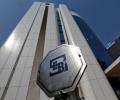
The Securities Appellate Tribunal (SAT) has stayed the ban imposed by the Securities and Exchange Board of India (Sebi) on Samir Jain, vice-chairman and managing director of Bennett, Coleman & Co (BCCL), his wife Meera Jain, and six others. BCCL owns news media organisations The Times of India, and The Economic Times. Last month, the regulator had refrained Jain from accessing the securities market for allegedly violating minimum public shareholding (MPS) norms in PNB Finance and Industries (PNBFIL) and Camac Commercial Company (CCIL), which are listed on the Calcutta Stock Exchange.

The shift to a shorter T+3 settlement cycle for initial public offerings (IPOs) will be a big test of the domestic market structure, requiring players in the ecosystem to work harder to meet the squeezed timelines, according to industry insiders. The Securities and Exchange Board of India (Sebi), has announced that the transition to the T+3 cycle will be voluntary starting next month and mandatory from December 1. The new mechanism will necessitate quicker confirmations from banks and speedy verification of permanent account numbers (PANs) for all applicants.

After the success of the National Highways Authority of India's (NHAI's) first infrastructure investment trust (InvIT) with foreign institutional investors, the Centre is working on a proposal to launch a fresh InvIT for national highways, where domestic retail investors can hold units of the trust

The National Company Law Tribunal (NCLT) has reserved its order on the merger of Zee Entertainment Enterprises and with Culver Max Entertainment (earlier known as Sony Pictures Networks India). The Mumbai bench of NCLT, comprising H V Subba Rao and Madhu Sinha, reserved the order on Monday, after hearing arguments from creditors who objected to the scheme including Axis Finance, JC Flower Asset Reconstruction Co, IDBI Bank, Imax Corp and IDBI Trusteeship. In December 2021, Zee Entertainment and Sony Pictures had agreed to merge their businesses.

Mutual funds (MFs) turned net sellers of equities in April amid a run up in stock prices on sustained inflows from foreign portfolio investors (FPI). The benchmark indices, Sensex and Nifty50, logged their biggest monthly advance since November last year, gaining 3.6 per cent and 4.1 per cent last month. Data from the Securities and Exchange Board of India (Sebi) shows that MFs sold equities worth over Rs 5,100 crore in April, the highest since February 2021.

"We will raise Rs 300 crore via bonds of two-, three- and five-year tenures. This will be our maiden bond issuance and is part of our effort to widen funding sources," says Vimal Bhandari, executive vice-chairman and chief executive officer (CEO), Arka Fincap. The firm, a subsidiary of Kirloskar Oil, is only five years old and small (assets of around Rs 5,000 crore with an "AA" rating), but the response to this float will be closely watched: It would be the first by a non-banking finance company (NBFC) after Mint Road upped the risk weights on bank exposures to them by 25 percentage points. The move by the Reserve Bank of India (RBI) has caught NBFCs off guard even though the issue had been flagged by Governor Shaktikanta Das with their corner-room occupants (and that of banks) in July and August 2023 - on consumer credit and the dependency on bank borrowings.

The governor made it clear that the RBI is aware of what's happening and acts accordingly, but doesn't make a noise about that, points out Tamal Bandyopadhyay.

'ESG is actually a concept which cannot be applied effectively in the very short run.'

The BSE Realty index on Monday soared 4.3 per cent-most among the 19-sectoral sub-indices-buoyed by the proposal to formalise fractional ownership of real estate in the country. The Securities and Exchange Board of India (Sebi) on Friday issued a discussion paper proposing to regulate online platforms offering fractional ownership in real estate, a model already popular in countries such as the United States and UAE.

Assume Voot, JioCinema and Disney+ Hotstar are merged into one entertainment app, and you have a streaming service with more than 233 million unique visitors. That is a reach just under half of India's largest streaming app: YouTube. 'This level of consolidation does not exist even in the US.'

In an effort to attract investors to the Social Stock Exchange (SSE), the bourses have reached out to the Securities and Exchange Board of India (Sebi) and the government with the industry's demand for additional benefits on contributions made towards social enterprises through the platform. SSE is a regulated platform to facilitate organisations working towards social causes to raise funds and have access to higher capital through the bourses. The platform is aimed at becoming a meeting ground for donors and social enterprises.

The Securities and Exchange Board of India (Sebi) has proposed that at least 10 per cent of corporate bond market trades by foreign portfolio investors (FPIs) should be done on the request for quote (RFQ) platform. At present, most trades in the corporate bond market are over-the-counter (OTC), creating a lot of opacity. The markets regulator has been nudging debt market participants such as mutual funds (MFs), alternative investment funds (AIFs) and brokers to use the RFQ platform to boost secondary market liquidity and transparency.

'The stockbroker should have a good balance sheet to support its scale of operations. It should also have proper risk management in terms of margins so that it doesn't go bankrupt during extreme market movements.' 'The broker must have a track record of navigating several market cycles in an ethical and transparent manner.'
Mutual funds (MFs) have stepped up equity purchases after staying on the fence for over two months. Their net equity investments reached a four-month high of Rs 7,700 crore in July, rising for the fourth consecutive month after withdrawing a net of Rs 5,100 crore in April 2023. This trend continued in August, with net investments of Rs 3,400 crore in the first three trading sessions, according to data from the Securities and Exchange Board of India.

The National Stock Exchange (NSE) has made a fresh attempt at settling a regulatory investigation into the misuse of Trading Access Point (TAP) software at the bourse. The Securities and Exchange Board of India (Sebi) rejected a similar application in 2022. "NSE and its employees have filed a consolidated settlement application dated May 4, 2023, with Sebi.

Foreign portfolio investors (FPIs) are likely to get a reprieve from the Securities and Exchange Board of India (Sebi) in case of a passive or unintended breach of the thresholds that trigger additional disclosure norms. According to sources, FPIs whose single group exposure exceeds 50 per cent of their corpus will get 10 trading days to bring down their exposure below the prescribed level, without triggering the stricter disclosure norms. If total equity exposure of an overseas fund exceeds Rs 25,000 crore and it doesn't wish to provide additional disclosures, it will have three months to pare its exposure.
 © 2026 Rediff.com - Advertise with us - Disclaimer - Privacy Policy - Sitemap - Feedback - About us - Terms of use - Grievances