
Smallcap mutual funds recorded net outflows for the first time in 30 months in March as investors pulled out money after the markets regulator, the Securities and Exchange Board of India (Sebi), warned against "froth" in the mid and smallcap space. Active equity mutual fund (MF) schemes raked in Rs 22,600 crore in March. The March inflow is 16 per cent lower than the two-year high inflow of Rs 26,860 crore in February, shows data from the Association of MFs in India (Amfi).
To provide a 'data lake' solution, the markets regulator had issued a notice in May, inviting expression of interest (EoI) from interested parties. The selected company will be responsible for designing, implementing and supporting a big data solution with analytical capabilities.

'Understand how wedding expenses fit into your overall financial situation.' 'Evaluate how different levels of spending will impact other goals like retirement, travel, or housing.'
The regulator typically meets overseas investors in the US and UK in the first half of a financial year, and had opted for a virtual meet last year too.

Swiggy is planning to file its draft red herring prospectus with the Securities and Exchange Board of India for its initial public offering (IPO) in the next two weeks, aiming for an $11 billion IPO valuation target. The Bengaluru-based firm plans to raise an estimated $1 billion (Rs 8,300 crore) through the IPO this year. The company is targeting a valuation in the range of $10-11 billion, and it currently has approximately $800 million in cash from the previous funding round, according to sources.

Using mantras from the Bhagavad Gita, Vatsal Ramaiya explains how you can conquer your home loan debt and unlock a world of financial freedom and peace of mind.

The government is contemplating changes to the Insolvency and Bankruptcy Code (IBC) to deal with environmental claims and liabilities of defaulting companies to make the law future-ready and meet climate action goals, sources told Business Standard. Currently, the IBC has various categories of claims and creditors, including those related to environmental liabilities.

Social stock exchange (SSE) saw its first listing on Wednesday, with SGBS Unnati Foundation becoming the first entity to take this route to avail financing. The foundation - engaged in vocational training of youth - raised Rs 1.8 crore from four investors. These include brokerage firm Zerodha and National Bank for Agriculture and Rural Development (Nabard).

Sebi's surveillance department has red-flagged unusual trading patterns in some stocks. Shares of some companies were seen going up ahead of a sharp sell-off.

Leading brokers are expected to increase brokerage rates in the coming weeks, as they navigate a series of regulatory changes that are expected to squeeze profitability. According to industry sources, top brokers may soon begin charging for equity trades and raise the flat fees for intra-day and derivatives trading by 10-30 per cent. Several smaller players have already hiked their brokerage charges, signalling a potential end to the zero-brokerage era that has drawn millions of new investors into the stock market and fuelled active trading.

Writes to Trai, Mumbai Police to catch unauthorised SMS senders

Long-term tax-saving FDs can also be considered after the PPF limit has been exhausted.

The story of Sahara India Pariwar founder Subrata Roy, who died in Mumbai on November 14 aged 75, is the stuff of movies - of a spectacular rise and an equally spectacular fall. Born in Araria, Bihar, Roy was 30 when he set up Sahara in 1978. He started with a capital of about Rs 2,000, a peon, a clerk and his father's Lambretta scooter in Gorakhpur, eastern Uttar Pradesh, writes Tamal Bandyopadhyay in his 2014 book, Sahara: The Untold Story. Sahara was not his first venture.

As many as 3,268 title deeds in Sebi's possession would undergo scrutiny and be prepared for sale.

Market regulator is trying to build a large team of software experts for efficient monitoring and surveillance

A Sebi spokesperson did not respond to an email seeking comments.
In April 2015, the regulator issued a show cause notice to the bank for alleged violation of portfolio managers' norms with respect to one relationship manager.

Ola Electric, the SoftBank-backed electric vehicle (EV) maker, is likely to pursue a valuation of approximately $4.5 billion in its upcoming initial public offering (IPO), marking about 18 per cent decrease from its last funding round valuation of around $5.5 billion, according to industry sources. The Bhavish Aggarwal-founded firm aims to file for the IPO by next month, according to people familiar with the matter. "The strategy is to price the IPO attractively for investors, fostering long-term growth and wealth creation," said a source.

The previous board of Fortis Healthcare had links with Singh brothers and there was an investigation by law firm Luthra and Luthra into Rs 472 crore that was diverted into other companies.
Regarding the applicability of stamp duty on redemption of mutual fund (MF) units, Sebi said, "Redemption is not liable to duty as it is neither a transfer nor an issue nor a sale." However, switching in mutual fund would attract stamp duty. "The issue of fresh units in the switched scheme would attract stamp duty even though there is no physical consideration paid or transfer of ownership," Sebi said.

The exchange cited issues with its telecom service providers that prevented stocks and index quotations from getting updated.

Delhi brokers under SEBI's glare for drawing investors through ads promising unrealistic returns.

BMA's clients allege that depository firm CDSL and stock exchanges did not act on their complaints, prompting them to protest before Sebi. They say their shares have been transferred to a pool account without their knowledge and have been used to avail loans. Clients alleged that BMA has pledged their securities with a leading private bank, who could have sold their holdings.

Do not keep a large portion of your long-term portfolio in FDs.

The ongoing weakness in the broader equity market is likely to weigh on primary market investor participation ahead, which has already begun showing signs of fatigue, analysts said. The spillover effect, they say, will continue as long as the midcap and smallcap segments remain volatile. "The effect will be felt in the IPO market. The subscription levels have come down in the last few days and recent 4-5 IPOs have not done well.
After considering the facts and circumstances of the case including enormity of the prima facie violations observed against Karvy, Sebi in an order passed late night Friday said it would not be prudent to allow the use of PoA by Karvy given to it by its clients.

A little over 2,400 BSE-listed stocks ended with gains in April amid a sharp rebound in the broader markets from the March lows. This was the highest number of stocks that rose during a calendar month, as per data provided on BSE's website. The previous high was 2,322 gainers recorded in January.
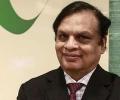
Markets regulator Sebi has ordered the attachment of bank and demat accounts as well as mutual fund holdings of Videocon Group founder Venugopal Dhoot to recover dues totalling Rs 5.16 lakh. The latest decision has been taken after Dhoot failed to pay the fine imposed on him in March by Sebi for not making disclosures about his interest in Supreme Energy as well as for not disclosing that Quality Techno Advisors Pvt Ltd (QTAPL) and Credential Finance Ltd (CFL) were related parties with respect to certain transactions. In an attachment notice on Monday, Sebi said the pending dues of Rs 5.16 lakh include the initial fine of Rs 5 lakh, interest of Rs 15,000 and a recovery cost of Rs 1,000.
Sinha says many fund houses not abiding by rules on minimum number of investors, awareness funds

After holding discussions with the FM, the Sebi chief said the government thought it was an opportune time to levy the LTCG tax as the "markets are booming."
Electric two-wheeler company Ola Electric Mobility will float its initial public offering (IPO) on August 2, and a significant part of the proceeds will be used for capacity expansion of its cell manufacturing plant and revving up R&D. The initial share sale will conclude on August 6, and the bidding for anchor investors will open for a day on August 1, according to the red herring prospectus (RHP).

Stock exchanges are expanding the buffet of index derivatives even as the number of stocks permitted to trade in this space, generating an average daily turnover of Rs 450 trillion, is shrinking. This week, the National Stock Exchange (NSE) started issuing futures and options (F&O) contracts based on the Nifty Next 50 Index, bringing the total count of index derivatives to five.

Experts say you should be certain of living in a city and locality for a long time before purchasing a home.

'The markets will correct, and they are bound to correct. The boom will turn into bust.' 'When this bust happens, people would lose like they have lost in the past.' 'Whatever you have made possibly in the last couple of years, you may lose in a couple of weeks. That's very much possible.'

The National Stock Exchange (NSE) and BSE on Tuesday said they will conduct a special trading session in the equity and equity derivative segments on May 18 to check their preparedness for handling major disruptions or failure at the primary site. The special live trading session will have an intra-day switchover from the Primary Site (PR) to the Disaster Recovery (DR) site.

Market regulator scours platforms to establish link between traders and those who share info.

Armed with fresh powers to conduct search and seizure operations and attach properties and bank accounts, the Securities and Exchange Board of India (Sebi) is going all out to use these effectively.
Sebi on Tuesday restrained two Brightcom Group officials, M Suresh Kumar Reddy and Narayan Raju, from holding any managerial position in the company or its subsidiaries until further orders. Reddy is the promoter-cum-chairman and MD of Brightcom Group Ltd (BGL) while Raju is the chief financial officer. Besides, the regulator also banned Reddy from the securities market until further orders.

Fund houses have been barred from being net sellers or holding net short positions at the scheme level in commodities.

In January, Sebi had barred Mallya and six former officials of USL from securities markets in a case related to illegal fund diversions.
