The government has asked manufacturers to revise the maximum retail price (MRP) on unsold stocks in line with the change in GST rates. The government has reduced GST on various products and services, which will come into effect from September 22.

Mahindra & Mahindra on Saturday said it has reduced prices of its passenger vehicle range by up to Rs 1.56 lakh with immediate effect in order to pass on GST rate cut benefit to customers. The price cut follows the announcement of revamped GST at the 56th GST Council meeting held on September 3, 2025, the Mumbai-based auto major said in a statement.

Renault India on Saturday said it will reduce prices of its vehicles by up to Rs 96,395 to pass on full benefit of the recent GST rate cut to buyers. The GST Council, earlier this week, approved limiting slabs to 5 per cent and 18 per cent, effective from September 22.

Recalling or relabelling medicines already in the supply chain before September 22 will not be mandatory, the finance ministry said on Tuesday, issuing a fresh set of frequently asked questions (FAQs) to address industry concerns following the announcement of goods and services tax (GST) revisions.
Daily essentials and food products will be cheaper from Monday, as leading FMCG companies have slashed prices, extending GST cut benefits to consumers.
Leading FMCG companies have announced a price cut on their products, including soaps, shampoo, baby diapers, toothpaste, razors, and after-shave lotions, effective from September 22 to extend the GST rate cut benefits to consumers. Firms such as Procter & Gamble, Emami and HUL have come up with new price lists which have been communicated to their respective distributors and consumers through their respective websites.

The price of jet fuel (ATF) was sharply increased by 7.5 per cent on Tuesday, while the cost of LPG used in commercial establishments was reduced by Rs 58.50 per cylinder, reflecting shifts in international benchmark rates. After three rounds of price cuts, aviation turbine fuel (ATF) price was increased by Rs 6,271.5 per kilolitre, or 7.5 per cent, to Rs 89,344.05 per kl in the national capital - home to one of the busiest airports in the country, according to state-owned fuel retailers.

Hyundai Motor India and Honda Cars India on Wednesday joined the list of automakers planning to hike prices of vehicles from April, second time this year, to partially offset the impact of rising input costs and higher operational expenses. In a statement Hyundai Motor India Ltd (HMIL) said it will hike prices of its vehicles by up to 3 per cent effective in April 2025.

Global brokerage CLSA has lowered its target price for IndusInd Bank from Rs 1,200 to Rs 900 while maintaining an outperform rating on the stock after the private lender disclosed a net worth hit of Rs 1,500 crore due to an accounting gap. The revised price target still implies an upside of 34 per cent from current levels.

Car market leader Maruti Suzuki India on Thursday said it will hike prices by up to Rs 32,500 across various models from February 1 to partially offset the rise in input costs. Due to rising input costs and operational expenses, the company plans to increase car prices, starting February 1, 2025, Maruti Suzuki India said in a regulatory filing.
CNG price in Mumbai as well as several other cities in the country has been hiked by Rs 2 per kg but users in poll-bound Delhi have been spared for the time being, according to city gas firms. Indraprastha Gas Ltd, the firm that retails CNG to automobiles and pipes natural gas to household kitchens for cooking in the national capital and adjoining cities, over the weekend raised CNG price by Rs 2 per kg.

The National Pharmaceutical Pricing Authority has revised prices of 440 medicines. Around 300 medicines have seen price cuts, while the others have seen a hike, sources said. The extent of the revisions is not known as yet.
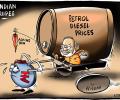
Price of international crude oil - the raw material for making petrol and diesel - dropped to a three-year low before marginally recovering but a revision in domestic petrol and diesel rates is likely only if lower rates are sustained, industry sources and officials said. Global oil benchmark Brent crude futures fell below $70 per barrel on Tuesday - the first time since December 2021 - but gained thereafter after Hurricane Francine hit crude supply in the Gulf of Mexico. Brent rose above $71 a barrel on Thursday while West Texas Intermediate advanced to trade near $68.
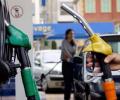
International oil prices continue to be extremely volatile, falling on one day and rising thereafter, a top oil ministry official said explaining the reason behind no reduction in petrol and diesel prices despite softening in input cost, but could not say if the rates will be cut before Maharashtra elections. Global oil benchmark Brent crude futures fell below $70 per barrel last week -- the first time since December 2021 -- but gained thereafter. Brent was trading at $74.58 per barrel on Thursday while West Texas Intermediate advanced to trade at $71.71.
There seems to be no respite for primary markets as initial public offers (IPOs) continue to get a tepid response from investors. The latest example is Emaar MGF's mega IPO, which has not just been extended by five days, its price band has also been revised once again. The issue will now close on February 11, according to investment banking sources.
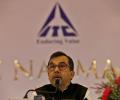
ITC stock slipped over 4 per cent on Thursday (February 8) after British American Tobacco (BAT) said it could sell some of its stake in the company, recovering partially in trade. The stock of the cigarette-to-hotels conglomerate traded at Rs 420 levels, rising 1.3 per cent in intraday deals as compared to the S&P BSE Sensex that traded flat for most part of the day. The development, meanwhile, saw Jefferies downgrade the stock to 'hold' from 'buy' earlier with a target price of Rs 430, down a huge 17.3 per cent from its earlier price target of Rs 520.
Petrol and diesel prices were cut by Rs 2 per litre each as state-owned oil companies ended a nearly two-year-long hiatus in rate revision, just hours before the general election schedule was announced.
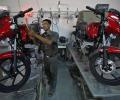
Bajaj Auto's market capitalisation (market cap) hit Rs 2 trillion mark for the first time. The stock of the two and three-wheeler major rallied 6 per cent to hit a new high of Rs 7,420 on the BSE in Tuesday's (January 9) intraday trade after its board approved Rs 4,000 crore share buyback at Rs 10,000 per share. The stock ended the day at Rs 7,093.75, up 1.55 per cent and its market cap a shade above Rs 2 trillion.
In a decision that would impact the entire pharmaceutical industry, the National Pharmaceutical Pricing Authority (NPPA) has fixed the prices of 130 common drugs and antibiotics.
McGraw-Hill and S&P India on Monday revised upwards their offer price by about 14 per cent to Rs 775 per share to acquire up to 65.57 per cent stake in credit rating agency Crisil.\n\n

The 17th daily increase in rates, since oil companies on June 7 restarted revising prices in line with costs after ending an 82-day hiatus in rate revision, has taken diesel prices to fresh highs.

They said 37.5 crore of Covishield doses from the Serum Institute of India and 28.5 crore Covaxin doses from Bharat Biotech will be procured by December.

Diesel rates had gone up by Rs 12.55 a litre between June 7, when oil firms resumed revising prices in line with cost, and July 25.
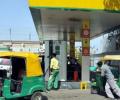
Prices of natural gas, which is used to generate electricity, make fertiliser and is converted into CNG to run automobiles, is likely to rise to record levels at the rate review scheduled this week, sources said. The government-dictated price for natural gas produced in the country is to be revised on October 1. After factoring in the spike in energy prices witnessed in recent months, the rate paid for gas produced from old fields such as of state-owned Oil and Natural Gas Corporation (ONGC) is likely to rise to $9 per million British thermal units from current $6.1.
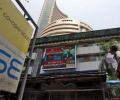
Analysts believe that investors should look at stocks that hit 52-week lows only if they have a dividend paying track record, are debt-free and have sound fundamentals.

The medical devices, which have been in high demand during the Covid-19 pandemic, will now see a drop in prices, as the earlier margins were up to 709 per cent for some of these products.
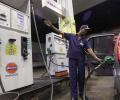
In four hikes over four days, petrol price has gone up by Rs 2.14 per litre and diesel by Rs 2.23.
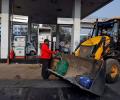
Diesel price on Friday was hiked by 20 paise per litre - the first increase in rates in over two months - as international oil prices neared their highest since 2018. Price of diesel was hiked to Rs 88.82 per litre in Delhi and to Rs 96.41 in Mumbai, according to a price notification of state-owned fuel retailers. Petrol price was not changed. It costs Rs 101.19 a litre in Delhi and Rs 107.26 in Mumbai.
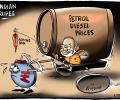
In five hikes, petrol price has gone up by Rs 2.74 per litre and diesel by Rs 2.83.

Life insurers, on the prodding of global reinsurers, are set to hike premiums on term plans because rising mortality after the second wave of the pandemic has led to an increase in the number of settlements. Some will do so next month while others may wait till January. Global reinsurer Munich Re had nudged its insurance partners on the hike in September and insurers have been engaged in negotiations with the reinsurer on the amount of the increase. Term plan prices in India were among the lowest in the world for a long period but in the past couple of years, they have been increased a few times.
Petrol price in Delhi was hiked to Rs 77.28 per litre from Rs 76.73, while diesel rates were increased to Rs 75.79 a litre from Rs 75.19, according to a price notification from State oil marketing companies. Rates have been increased across the country and vary from state to state depending on the incidence of local sales tax or VAT.

Having exposure to international funds and gold is a must for those who have foreign currency-denominated goals.
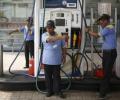
In nine hikes, petrol price has gone up by Rs 5 per litre and diesel by Rs 4.87 a litre.

Leading milk supplier Mother Dairy has increased milk prices in Delhi-NCR and other cities by Rs 2 per litre with effect from Sunday on rising input cost. The milk prices were last revised in December 2019. Justifying the hike, Mother Dairy said that procurement cost of milk from dairy farmers has gone up by 8-10 per cent in the last one year. Other operational costs have also risen.
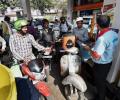
In 13 hikes, petrol price has gone up by Rs 7.11 per litre and diesel by Rs 7.67 a litre.

In 12 hikes, petrol price has gone up by Rs 6.55 per litre and diesel by Rs 7.04 a litre.
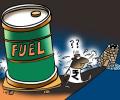
In all, petrol price has gone up by Rs 1.74 per litre and diesel by Rs 1.78 a litre in three days.

Adar Poonawalla says it took a five-minute chat with his father Cyrus before making the decision to manufacture Covishield. The bet paid off, and handsomely. Serum Institute now has the capacity to make 4 billion doses of Covishield annually.
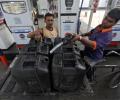
The cut reflects changes in global prices of the two fuels since the last revision.
 © 2026 Rediff.com - Investor Information - Advertise with us - Disclaimer - Privacy Policy - Sitemap - Feedback - About us - Terms of use - Grievances