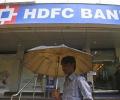
With the merger between HDFC Bank and HDFC Ltd complete, analysts said the next key monitorable for the Street would be successful resolution of merger-related hiccups, including employee-related churn and roll out of complete banking services across branches. At the bourses, they expect the stock to perform in-line with the benchmark indices in the near-term. "There's usually an initial period of consolidation after a merger as the entities work towards integration.

Except for Westlife Foodworld (Westlife), a weak 2022-23 (FY23) January-March (fourth quarter, or Q4) quarter performance and a muted near-term outlook led to a downward revision of earnings estimates for quick-service restaurant (QSR) players. Brokerages have slashed estimates by as much as 10 per cent for 2023-24 (FY24) and 2024-25 (FY25). The downward revisions have weighed on the performance of listed players, who have underperformed the market with low single-digit returns over the past month.

Seven consecutive sessions of decline in the equity market has eroded the wealth of investors by a whopping Rs 10.42 lakh crore and the benchmark Sensex has tumbled more than 2,000 points during this period. Concerns over more rate hikes by developed economies, weak global equity markets and fresh foreign fund outflows from the domestic market have dented investor sentiments. On Monday, the BSE Sensex dropped 175.58 points or 0.30 per cent to end at 59,288.35 points, marking a decline for seven straight trading sessions.

The reason? Price of open cell panels has gone up 15%. One of the main components in the manufacturing of TV sets, open cells contribute to 60%-65% of the manufacturing cost.

India's largest two-wheeler maker by volume - Hero MotoCorp (Hero) - posted a better-than-expected operating performance in the January-March (fourth quarter, or Q4) quarter of 2022-23 (FY23). Riding on higher average selling prices which were up 5 per cent year-on-year (YoY) and volume growth of 7 per cent, the company registered a 12 per cent growth in revenue to Rs 8,306 crore. The company sold 127,000 units in the quarter, largely driven by domestic sales which were up 11.6 per cent, while exports saw a sharp fall of 57 per cent over the year-ago quarter.

Since its October high last year, the stock of innerwear major Page Industries has been on a downtrend, shedding a little over 30 per cent of its market value. Higher competitive intensity, muted volumes, pressure on margins, and rich valuations have led to downgrades for the stock. The October-December quarter (third quarter, or Q3) performance was lower than the Street's expectations - both on volumes/sales and margins.

From the Sensex pack, State Bank of India, ICICI Bank, IndusInd Bank, Axis Bank, Kotak Mahindra Bank, HDFC Bank, Reliance Industries were among the major laggards. Bucking the trend, auto stocks Tata Motors and Mahindra & Mahindra closed with gains.

The rally in silver may continue if the global economic recovery remains on course.
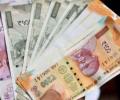
The rupee slipped 13 paise to 77.67 against the US dollar in early trade on Tuesday, weighed down by the surge in crude oil prices. At the interbank foreign exchange, the rupee opened at 77.65 against the American dollar, then lost ground to quote at 77.67, registering a fall of 13 paise from the last close. On Monday, the rupee settled at 77.54 against the US dollar.

After lagging behind other segments in the automotive (auto) space over the past few years, two-wheelers are expected to reverse their volume underperformance. After witnessing a 36.3 per cent volume decline over the 2018-19 (FY19) through 2021-22 (FY22) periods, the sector staged a recovery in 2022-23 (FY23), with volumes rising 17 per cent. While volumes are still a quarter lower than the FY19 peak of 21 million units, a double-digit growth trajectory is expected to prolong.

Wadia Group-owned Go First Airways' (Go First) insolvency plea could trigger a 'momentum rally' in shares of rival airlines, Interglobe Aviation (parent company of IndiGo) and SpiceJet, as they look to gain bankrupt airline's market share, said analysts. On the bourses, shares of InterGlobe Aviation hit a 52-week high of Rs 2,235.95, surging 8 per cent on the BSE in Wednesday's intra-day trade, before settling 4.5 per cent higher at Rs 2,164 apiece. Those of SpiceJet and Jet Airways, meanwhile, rallied up to 6 per cent in the intra-day trade, and ended 1 per cent and 5 per cent higher, respectively, following the development, which was announced post market hours on Tuesday.

The March quarter (Q4) of the ongoing financial year (FY23) may see cement companies report better financial numbers as input costs ease, pricing action resumes, and cement demand remains firm. While companies have been cautiously optimistic about their outlook, analysts and sector experts remain bullish. In its latest report on the cement sector, brokerage IDBI Capital said that it expected earnings before interest, tax, depreciation, and amortisation (Ebitda) per tonne for cement companies to improve by Rs 200-300 sequentially in Q4.

The rupee depreciated 7 paise to an all-time low of 80.05 against the US dollar in early trade on Tuesday tracking the strength of the American currency and firm crude oil prices. At the interbank foreign exchange, the rupee opened at 80 against the American dollar, then lost ground to quote at 80.05, registering a fall of 7 paise from the last close. In initial trade, the local unit also touched 79.90 against the American currency.

The rupee on Thursday closed at its all-time low of 78.32 (provisional) against the US dollar as strong American currency and persistent foreign fund outflows weighed on investor sentiments. At the interbank foreign exchange market, the local currency opened at 78.26 and finally settled at its all-time low 78.32, unchanged from its previous close. On Wednesday, the rupee declined by 19 paise to settle at an all-time low level of 78.32 against the US dollar.

Strong Q3 brings Infosys comfort amid macro risks.

Notwithstanding expectations of a pick-up in construction activity during a seasonally strong January-March quarter (fourth quarter) of 2022-23 (FY23), analysts are cautiously optimistic about the building material sector - encompassing paints, pipes, wood panels, tiles, metals, and cement - as volatile input costs, coupled with fears of a global slowdown, are making demand projections uncertain. Against this backdrop, analysts suggest investors stay selective and pick stocks of companies with stronger brand recall, expanding distribution network, diversified product profile, healthier balance sheet, and sustainable cash flow. "The government's various proposals under Budget 2023-24 (FY24) may lead to the building material segment growing between 8 per cent and 12 per cent for the next five years.

The rupee plunged 58 paise to close at an all-time low of 81.67 (provisional) against the US dollar on Monday as the strengthening of the American currency overseas and risk-averse sentiment among investors weighed on the local unit. Moreover, escalation of geopolitical risks due to conflict in Ukraine, a negative trend in domestic equities and significant foreign fund outflows sapped investor appetite, forex traders said. At the interbank foreign exchange market, the local currency opened at 81.47, then fell further to close at an all-time low of 81.67 against the American currency, registering a decline of 58 paise over its previous close.

India's largest listed pharmaceutical (pharma) company - Sun Pharmaceutical Industries (Sun Pharma) - is expected to maintain its outperformance vis--vis the sector's, as its multiple bets on specialty products, improving product mix, recent acquisitions, and branded business are finding favour with brokerages. While it has gained 7 per cent over the past year, the Nifty Pharma Index is down 13.6 per cent. Its outperformance over two years has been fairly evident, with the market leader gaining 66 per cent to Nifty Pharma's minus 1.4 per cent.

Invest in quality companies that make profits, advises stock market expert and rediffGURU Samraat Jadhav.
The rupee depreciated by 37 paise to close at 79.62 against the US dollar on Thursday despite sustained foreign capital inflows and a positive trend in equities. At the interbank foreign exchange market, the local currency opened at 79.22 and saw an intra-day high of 79.22 and a low of 79.94 against the American currency. It finally ended at 79.62, down 37 paise over its previous close of 79.25.

The S&P BSE Auto Index has been one of the biggest outperformers among sectoral indices over the past year with returns of 26 per cent. By comparison, the benchmarks - the National Stock Exchange Nifty50 and the S&P BSE Sensex - managed about 6-8 per cent during this period. Improving demand, falling raw material costs, and rising product realisations, led by the premiumisation of portfolios, have led to a revision of growth estimates and upgrades by domestic brokerages.

Here's how beginners can follow a very practical approach for finding stocks for long term investing and building a decent portfolio.

The market capitalisation of BSE-listed firms reached an all-time high of Rs 288.50 lakh crore on Wednesday amid an ongoing rally in equities, as the benchmark Sensex settled above 63,000-level for the first time ever. The 30-share BSE barometer climbed 417.81 points or 0.67 per cent to settle at 63,099.65, its fresh record closing high. During the day, the benchmark jumped 621.17 points or 0.99 per cent to 63,303.01, its lifetime intra-day peak. Extending its winning momentum to seventh day, the Sensex has rallied 1,954.81 points or 3.19 per cent during this time.

The rupee depreciated 22 paise to a record low of 78.59 against the US dollar in opening trade on Tuesday as persistent foreign funds outflows weighed on investor sentiments. At the interbank foreign exchange, the rupee opened on a weak note at 78.53 against the American dollar, then lost ground to quote at 78.59 -- its all-time low level, registering a fall of 22 paise from the last close. On Monday, the rupee declined by 4 paise to close at its life-time low of 78.37 against the US dollar.
The rupee extended its losses and slipped 12 paise to 77.74 against the US dollar in early trade on Thursday, weighed down by a muted trend in domestic equities and unabated foreign fund outflows. At the interbank foreign exchange, the rupee opened at 77.72 against the American dollar, then lost ground to quote at 77.74, registering a fall of 12 paise from the last close. On Wednesday, the rupee declined by 1?7 paise to close at its fresh lifetime low of 77.6?1 against the US dollar.
The rupee on Wednesday declined by 16 paise to close at its fresh lifetime low of 77.60 against the US dollar amid unabated foreign fund outflows and a stronger greenback in overseas markets. At the interbank foreign exchange market, the rupee opened lower at 77.57 and later hit the day's low of 77.61 as the dollar rebounded in global markets following hawkish comments from US Federal Reserve chief Jerome Powell. Crude oil prices also surged over 1 per cent, which weighed on the rupee.

In addition to the negative sentiment as a consequence of changes announced in the Union Budget 2023-24 concerning tax treatment for debt repayment distribution, concerns about hiring slowdown and its leasing impact, as well as higher interest rates, could blight the sector in the near term.

Open order books in February breach 700,000; wait period for some models exceed a year.

Equity benchmark Sensex tanked 372 points on Thursday, tracking losses in index majors L&T, Infosys and TCS amid a negative trend in global markets. The 30-share index ended 372.32 points or 0.62 per cent lower at 59,636.01. Similarly, the NSE Nifty fell 133.85 points or 0.75 per cent to 17,764.80.

The rupee fell by 41 paise to close at a fresh lifetime low of 79.36 (provisional) against the US dollar on Tuesday amid a strong greenback overseas and unrelenting foreign fund outflows. At the interbank forex market, the local unit opened at 79.04 against the greenback and witnessed an intra-day high of 79.02 and a low of 79.38. It finally settled at 79.36 (provisional), down 41 paise over its previous close.

ITC was the top loser in the Sensex pack, shedding nearly 3 per cent, followed by Bajaj Finance, Kotak Bank, Bharti Airtel and Reliance Industries. Nifty fell 43.35 points to 17,324.90.

Auto Expo 2023 may not trigger a fresh rally in automobile stocks, say analysts, as this year's edition lacks participation from major listed players. It is also owing to the focus on electric vehicles (EVs), a segment where four-wheelers have minuscule market share. "In the passenger vehicles (PV) segment, Maruti Suzuki India and Tata Motors are the only listed players.

It may be a little early to cheer the recovery in the fast-moving consumer goods (FMCG) space as a deceleration in discretionary demand, after the festival season, may offset fragile rural recovery, analysts have cautioned. "The overall demand environment for staples remains muted, while discretionary demand trends have seen some deceleration after the festival season. "We believe margins in staples have bottomed out, but we expect only a gradual uptick with the ongoing softening in raw material prices.

The rupee depreciated 11 paise to a record low of 78.96 against the US dollar in opening trade on Wednesday, weighed down by persistent foreign capital outflows. At the interbank foreign exchange, the rupee opened on a weak note at 78.86 against the American dollar, then lost ground to quote at 78.96 -- its all-time low level, registering a fall of 11 paise from the last close. On Tuesday, the rupee plunged by 48 paise to close at record low of 78.85 against the US dollar.

On May 6, the fund house had issued a statement where it had stated that it had launched a suo motu investigation two months ago to probe potential irregularities.
For the first time, the rupee declined to the low level of 80 against the US dollar in intra-day spot trading on Monday before ending the session 16 paise lower at 79.98 amid a surge in crude oil prices and unrelenting foreign fund outflows. At the interbank forex market, the local unit opened at 79.76 against the greenback but lost ground to touch the psychological low mark of 80 against the American currency. The local unit clawed back some lost ground and closed at 79.98, registering a fall of 16 paise over its previous close.
The rupee plunged 20 paise to close at an all-time low of 78.13 against the US dollar on Monday, as a lacklustre trend in domestic equities and stronger greenback overseas weighed on investor sentiments. Forex traders said weak Asian currencies and persistent foreign capital outflows were the other major factors that dragged the local unit down. At the interbank foreign exchange market, the local currency opened at 78.20 and witnessed an intra-day high of 78.02 and a low of 78.29 against the US dollar.

Equity benchmarks Sensex and Nifty ended on a mixed note on Wednesday as the euphoria about the Budget fizzled out, with investors going for profit-taking ahead of the Fed interest rate decision. The 30-share BSE benchmark Sensex climbed 158.18 points or 0.27 per cent to settle at 59,708.08 after it trimmed most of the intra-day gains. During the day, it had zoomed 1,223.54 points or 2 per cent to 60,773.44.

In the absence of major domestic events, equity markets will be driven by global trends, foreign fund flows and movement in the Brent crude oil, analysts said. The major global events this week are the European Central Bank interest rate decision and China's inflation rate, they added. "Indian equity markets are outperforming most of their global peers and trying to show resilience despite weak global cues.

China's covid crisis could provoke a raw material crunch for India's EV industry later this year.
 © 2026 Rediff.com - Investor Information - Advertise with us - Disclaimer - Privacy Policy - Sitemap - Feedback - About us - Terms of use - Grievances