
Precious metal prices, particularly gold and silver, experienced a significant surge in the national capital as investors sought safe-haven assets amid escalating hostilities in the Middle East.

Precious metal prices surged in futures trading, with silver hitting Rs 2.93 lakh per kg and gold nearing Rs 1.68 lakh per 10 grams, driven by safe-haven demand following US-Israel strikes in Iran and retaliatory attacks.

Benchmark indices Sensex and Nifty experienced a significant decline, falling over 1 per cent due to foreign fund outflows and global uncertainties.

A new study by AI firm Anthropic reveals that while AI hasn't caused widespread unemployment, it has slowed hiring for younger workers in AI-exposed roles. The study also highlights the gap between AI's theoretical capabilities and actual deployment, and the ongoing conflict between Anthropic and the US government over AI weaponisation.

Analysts predict a surge in gold and silver prices as investors seek safe-haven assets due to escalating tensions in the Middle East. The impact on domestic prices will depend on the conflict's duration, with geopolitical factors and macroeconomic data also playing a role.
The rupee appreciated 13 paise to close at 90.34 against the US dollar on Thursday, on trade deal optimism and overnight decline in commodity prices, even as the upside remained capped as investors look for more clarity on the India-US trade deal.

India possesses approximately 100 million barrels of commercial crude oil stocks, capable of covering 40-45 days of its requirements if flows through the Strait of Hormuz are disrupted, according to Kpler.

Analysts predict India will face oil price volatility and macroeconomic effects due to the escalating Iran crisis, though the country's oil supply chain is not yet structurally insecure.
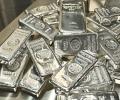
New investors should enter gradually and with a long horizon. 'Staggered investment through systematic purchase plans is advisable rather than lump-sum buying.'

Benchmark stock indices Sensex and Nifty dived sharply by nearly 2 per cent on Sunday after Finance Minister Nirmala Sitharaman proposed a hike in the Securities Transaction Tax (STT) on derivatives. Reversing the early gains, the 30-share BSE Sensex plunged sharply by 2,370.36 points or 2.88 per cent to slide below the 80,000-mark at 79,899.42 in afternoon trade as the finance minister announced a hike in STT on futures contracts to 0.05 per cent from the current 0.02 per cent.

The rupee declined 31 paise to settle at 90.65 against the US dollar on Friday, weighed down by geopolitical uncertainties over the US-Iran talks, and a sharp rise in global crude oil prices.

The rupee witnessed a volatile trading session and settled for the day on a slightly lower note, down 1 paisa at 90.66 against the US dollar on Monday, as traders assessed the details of the India-US interim trade framework.

The recent correction suggests that while precious metals hedge geopolitical tension and inflation, they are not immune to sharp short-term corrections and profit-booking.

Foreign Portfolio Investors (FPIs) remained in a selling mode in January, withdrawing nearly Rs 36,000 crore (about $3.97 billion) as global uncertainties persisted. Meanwhile, a higher securities transaction tax (STT) proposed in the Union Budget may weigh on overseas investor participation in the near future.

The India-US trade deal has offered a much-needed breather for the Indian information technology (IT) industry, which has been grappling with global macroeconomic uncertainty and subdued client spending over the past few years.
Silver and gold prices snapped a two-day rebound and declined sharply up to 10 per cent in the futures trade on Thursday amid weak trends in the international markets and a strong US dollar.

Shares of brokerage-related companies nosedived 18 per cent on Sunday after Finance Minister Nirmala Sitharaman proposed raising securities transaction tax on commodity futures to 0.05 per cent from 0.02 per cent in the Union Budget 2026-27.

Worries about global politics and trade are pulling the Nifty 50 down. Experts say the market could drop further low.
Silver and gold prices declined sharply in the futures trade on Friday as traders booked profits at elevated levels after a record-breaking rally, tracking a bearish sentiment in global markets and a rebound in the US dollar.

Finance Minister Nirmala Sitharaman on Sunday announced an increase in the Securities Transaction Tax (STT) on Futures and Options trade with a view to discouraging small investors from speculative trading in derivatives, which led to a sharp decline in the stock market.

Benchmark equity indices Sensex and Nifty rebounded on Thursday after three sessions of losses, tracking gains in global markets after US President Donald Trump struck a conciliatory tone on Greenland. In a volatile session, the 30-share BSE Sensex climbed 397.74 points, or 0.49 per cent, to close at 82,307.37.

India will restrict crude oil purchases from Russia as part of an agreement reached with the US in exchange for lower trade tariffs, sources said, adding imports will continue for now by refiners such as Nayara Energy, which have no other alternative source. US President Donald Trump announced overnight that the United States will cut the reciprocal tariff on imports of Indian goods to 18 per cent from 25 per cent under a broader bilateral understanding.

The tribunal granted partial relief to the appellants by modifying Sebi's directions on trading restrictions and account freezes, making them conditional on the deposit of the said amount.

Gold extended its record-breaking run to breach the Rs 1.5 lakh per 10-gram mark in futures trade on Tuesday, while silver surged to a lifetime high of Rs 3.27 lakh per kg as investors rushed to safe-haven assets amid mounting global tensions. On the Multi Commodity Exchange (MCX), gold futures for February delivery climbed Rs 6,861, or 4.7 per cent, to record Rs 1,52,500 per 10 grams after settling at Rs 1,45,639 per 10 grams in the previous session.

The Indian rupee, swaying through multiple headwinds, tiding over global trade disruptions and massive foreign fund outlfows, is unlikely to arrest its descent until tariff impact overhangs, notwithstanding robust domestic macroeconomic tailwinds. The Reserve Bank of India (RBI), which sees the rupee's depreciation as a silver bullet to offset the tariff shock, expects the currency to find its stable course once India reaches a trade deal with its largest trading partner, the US.
Silver prices rallied sharply by Rs 15,000 to hit a lifetime high of Rs 265,000 per kg in the national capital on Monday, and gold advanced to a fresh record of Rs 144,600 per 10 grams, mirroring strong gains in the global markets.
Gold prices surged by Rs 4,000 to touch an all-time high of Rs 1,37,600 per 10 grams in the national capital on Monday, tracking firm global cues, according to the All India Sarafa Association. The precious metal of 99.9 per cent purity had closed at Rs 1,33,600 per 10 grams on Friday.

India's third-largest telecom operator Vodafone Idea (Vi) has secured a 10-year breather on adjusted gross revenue (AGR) payments from the Department of Telecommunications (DoT). This is expected to ease pressure on its balance sheet and enable the company to raise bank debt for capital expenditure.

Cleaner balance sheets, regulatory support and strong growth prospects helped Indian private banks attract over $6 billion in foreign capital, with more deals expected in 2026.
The rupee plunged 38 paise to close at an all-time low of 90.32 against the US dollar on Thursday amid uncertainty over the India-US trade deal. Forex traders said the rupee is expected to trade with a negative bias as the delay in the trade deal between India and the US may continue to dent investor confidence.
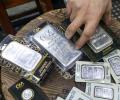
Silver prices extended their record-breaking rally for a sixth straight session on Monday, surging 6 per cent to touch a lifetime high of Rs 2,54,174 per kilogram in futures trade amid strong investor demand and bullish global trends. On the Multi Commodity Exchange (MCX), silver futures for March delivery surged Rs 14,387, or 6 per cent, to hit a new record of Rs 2,54,174 per kilogram.

The rupee slumped 5 per cent in 2025 as persistent capital outflows from foreign investors, alongside heightened dollar demand from importers, making it one of the worst-performing Asian currencies.

The rupee plunged 26 paise to an all-time low of 90.75 against the US dollar in intra-day trade on Monday, weighed down by uncertainty over an India-US trade deal and persistent foreign fund outflows.

The rupee appreciated 53 paise to close at 89.67 against the US dollar on Friday, supported by corporate dollar inflows and easing crude oil prices. Forex traders said a positive trend in domestic equities and Brent crude oil prices hovering near $59 per barrel supported the domestic unit at lower levels.

Companies are squeezing more profits from their operations relative to the capital they put to work, the highest now since 2011. Profit after tax relative to capital employed came in at 10.47 per cent in September, shows data from the Centre for Monitoring Indian Economy (CMIE), higher than the 8.41 per cent seen in September last year. This is the highest since March 2010.
The rupee recovered 55 paise from its all-time low level to close at 90.38 against the US dollar after a volatile trade on Wednesday, amid suspected aggressive central bank intervention.

The rupee breached 90-levels against the greenback for the first time on Wednesday, falling 6 paise to 90.02 in early trade, as banks kept buying US dollars at higher levels and FII outflows continued.

Gold and silver prices are poised to maintain their record-setting rally in the coming week as investors focus on global inflation data and key macroeconomic indicators that shape central bank policy paths, analysts said.

Top real estate developers reported healthy presales growth in the second quarter of FY26, aided by a steady pipeline of new project launches. While overall housing momentum across major Indian cities moderated during the quarter, listed players remained relatively insulated.

India's decision to import LPG from the US helps it to diversify sources as it reduces almost full reliance on West Asian countries for supply of the country's primary cooking fuel.
 © 2026 Rediff.com - Investor Information - Advertise with us - Disclaimer - Privacy Policy - Sitemap - Feedback - About us - Terms of use - Grievances