

A new Anthropic study reveals that while artificial intelligence hasn't led to mass unemployment, it's slowing down hiring for younger workers in roles most exposed to AI, sparking debate over AI's impact on the future of work.
Key Points
- AI's actual deployment is still a fraction of its theoretical capabilities, indicating significant room for growth.
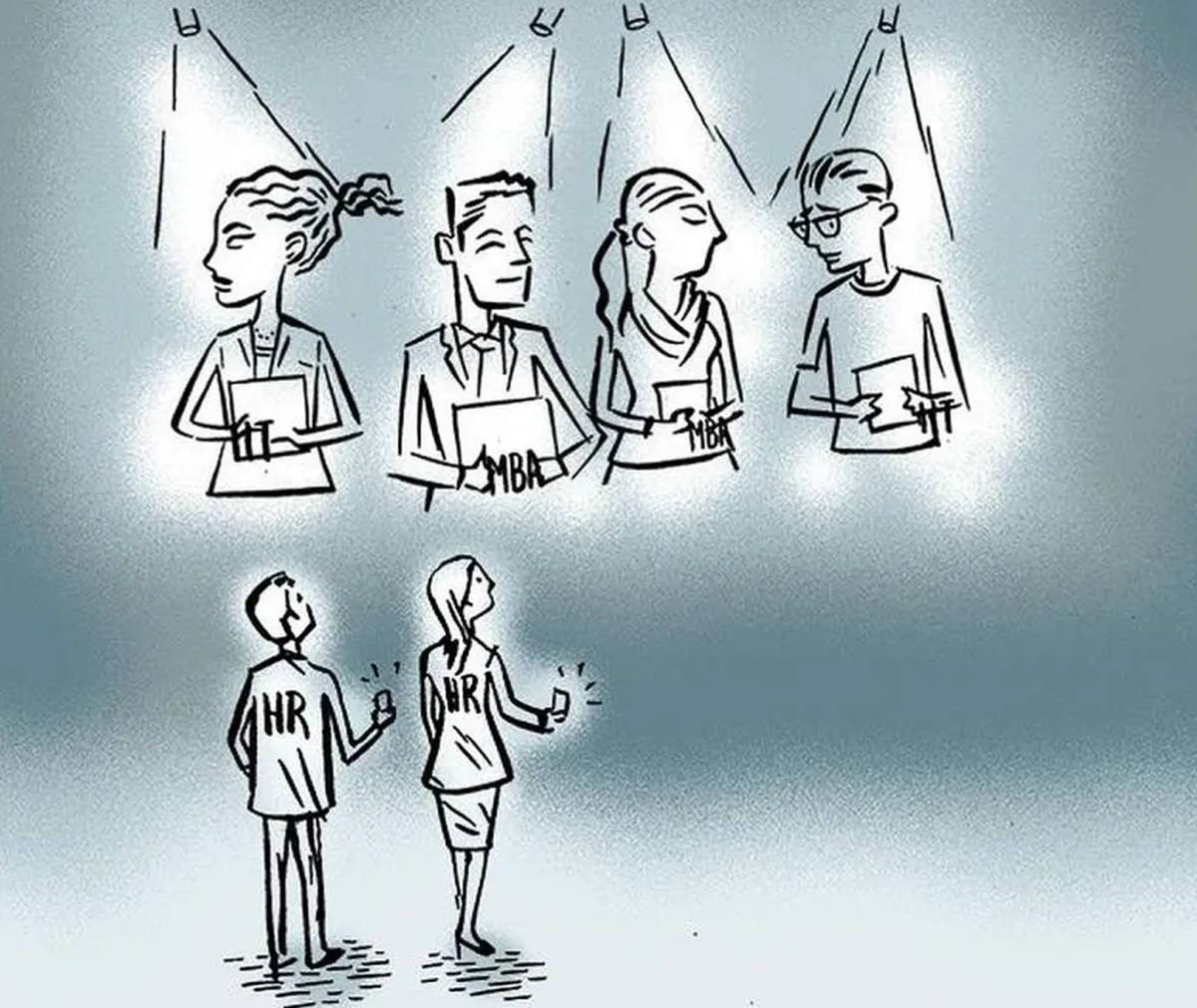
- While AI hasn't caused widespread unemployment, there's evidence of a slowdown in hiring younger workers in AI-exposed occupations.
- White-collar, knowledge-based jobs involving coding, information processing, and data analysis are most susceptible to AI automation.
- Anthropic is facing a standoff with the US government over concerns about the potential weaponisation of its AI technology.
- Despite the conflict with the US government, Anthropic's Claude chatbot has seen a surge in popularity, surpassing ChatGPT in downloads.
AI's actual coverage remains a fraction of what is feasible, and while artificial intelligence has not yet triggered a systematic rise in unemployment in occupations most exposed to the technology, hiring of younger workers in such roles appears to have slowed, according to a new study by AI firm Anthropic.
Released by the San Francisco-headquartered AI startup behind the Claude chatbot -- and now a company in the crosshairs of the US administration -- the report crunches labour market data alongside real-world AI usage.
The report 'Labor market impacts of AI: A new measure and early evidence', found that white-collar, knowledge-based occupations are the most exposed to AI, particularly roles involving coding, information processing, analysis and routine digital tasks.
In fact roles such as computer programmers, customer service representatives, data entry keyers, market research analysts and financial, and investment analysts are among the most exposed occupations because many of their tasks can already be automated or accelerated by large language models.
In contrast -- and on expected lines -- jobs requiring largely manual abilities seem to be least susceptible, including occupations such as cooks, motorcycle mechanics, lifeguards, bartenders and Dressing Room Attendants.
"AI is far from reaching its theoretical capability: actual coverage remains a fraction of what's feasible," the study said, citing the key findings.
Occupations with higher observed exposure are projected by the BLS (US' Bureau of Labor Statistics) to grow less through 2034, it said, adding that workers in the most-exposed professions are more likely to be older, female, more educated, and higher-paid.
"We find no systematic increase in unemployment for highly exposed workers since late 2022, though we find suggestive evidence that hiring of younger workers has slowed in exposed occupations," the report said.
Most measures of AI exposure focus on what is theoretically possible. But there is a large gap between capability and deployment, Anthropic study said asserting that it compared theoretically LLM capability to actual automated usage across occupations.
Anthropic's Rise and US Government Standoff
Anthropic has been dominating headlines in recent weeks, with its popularity surging on the back of its ability to automate a wide range of tasks -- from generating code to analysing data -- promising more streamlined workflows while stoking fears of a potential shake-up in the job market.
The AI firm has also been in the spotlight amid a standoff with the US Department of Defense over concerns about how American agencies might deploy its technology, including in autonomous weapons systems or for large-scale domestic surveillance -- a discussion that has since become more heated amid the war in West Asia.
Last week, US administration directed all federal agencies to immediately halt the use of Anthropic's technology, deeming it a supply chain risk after Anthropic CEO Dario Amodei's moral stance.
The standoff with the US government notwithstanding, Anthropic has seen a notable spike in consumer downloads over the past week, as several users rallied behind the company's firm stance against weaponisation of AI.
The company said more than one million people signed up for its Claude chatbot each day this week, pushing the app ahead of OpenAI's ChatGPT and Google's Gemini to become the top AI app in over 20 countries on Apple's App Store.
The clash with Pentagon has also intensified Anthropic's rift with OpenAI, which recently announced a deal with the US defence department to deploy ChatGPT in classified environments, effectively displacing Anthropic's technology.








 © 2026