
After Pyongyang tests a missile potentially capable of reaching the US, Dr Rajaram Panda explores the realistic -- and peaceful -- options before Donald Trump and the international community at large.

COP 21 is about how much carbon space is left and who gets how much of that space

Greek proposals hailed as "a positive step forward".
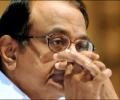
'Chidambaram, lots of people argue not without justification, is all about bluff and bluster without any concrete achievement on the ground. His record in the finance ministry fully endorses that view,' argues Virendra Kapoor.

Negotiating a sustainable compromise with Iran is not getting any easier, and this delay might not yield the desired result of bringing Tehran's nuclear programme under stringent limits, says Claude Smadja

Although the current long-term bullish trend is intact, markets are awaiting clarity on the taper and the Assembly election results.

The Geneva agreement is a signal, which at least Saudi Arabia and Israel are so reading, that normalisation of relations between US and Iran is not merely about the nuclear fuel cycle, says K C Singh.
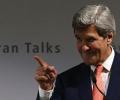
The deal with Iran does not address any of the major issues thrown up by Tehran's ambitions, says Claude Smadja.

New Delhi and Beijing are the only two regional capitals that have commented on US President Donald Trump's speech on August 21 outlining the way forward in Afghanistan. The Indian foreign ministry statement was effusive in praise, while the Chinese statement has been one of cautious and guarded hope. Delhi has identified itself with Trump's Afghan strategy, whereas the Chinese stance is calibrated -- observant and objective, keeping a distance, says Ambassador M K Bhadrakumar.

'I am no longer surprised by how cynical university students generally are about American motives. America, no matter who the President, what the circumstances will act like a bully, is their collective belief,' says Ambassador B S Prakash after a recent interaction with students.

The city readies itself for the biggest economic, political and social event of the year

Shreekant Sambrani is confident that today's adversity will make the country emerge even stronger


The history of the Cauvery and Mullaperiyar cases has shown how helpless the constitutional processes and judicial verdicts have been in enforcing the law of the land in inter-state and state-Centre disputes, says N Sathiya Moorthy.

'Crafting a coherent, transparent and consistent policy vis-a-vis our neighbours, leave alone the rest of the world, is unlikely to be high on the priority list of the new Indian government, which will be sworn in before June,' says Ramananda Sengupta.

The administration and America Inc have invested in Narendra Modi's power to transform India. Aziz Haniffa/Rediff.com reports from Washington, DC.
'Why not ask for a change of leadership in Qatar, Bahrain or Saudi Arabia? Is there a constitution in Saudi Arabia? Are there elections in Saudi Arabia? Why no talk of democracy in these countries?' 'America said change the leader now, but is now ignoring the feelings of the Syrian moderate majority. Is that democracy,' asks H E Dr Riad Abbas, Syrian ambassador to India, in an interview to Cleo Paskal.
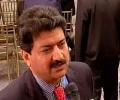
'ISI mouthpieces in the media have been quick to blame India for the attack. Clearly, the intellect and worldview of these characters (which includes fairly senior retired military officers) is based on Bollywood movies like Ek Tha Tiger and Agent Vinod... More seriously, the fact that ISI touts have been using this opportunity to train their guns on India raises serious questions about all the talk of the army being on the same page as the civilian government on the issue of improving relations with India,' says Sushant Sareen.
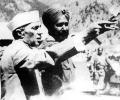
Let us hope that what happened in 1962 will never happened again, prays Claude Arpi

'When it comes to India-Pakistan relations, seminal moments of progress invariably bring out saboteurs of peace -- whether we're talking about fresh provocations along the LoC, or even a terror attack in India.'

In an online chat with Get Ahead readers Love Guru answered their relationship queries.
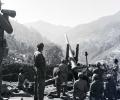
Fifty years ago, India and Pakistan fought a short but bloody war. The author finds out how Sainik Samachar, the defence ministry's journal, reported it.
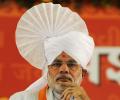
The second and final part of former cabinet secretary Naresh Chandra's interview to Sheela Bhatt.

'In the first meeting of this new year, we took a joint new year resolution that we will complete it this year. At the time things were not very clear, but the mood was clear that yes, we must resolve it.' 'Yes, details have to come out, but there are some sensitivities, there are some stake-holders not yet on board, especially other Naga undergrounds etc, we would like them to come on board... So at a proper time it has to be revealed to the country, and to the legislature. Perhaps, we may have to wait for some more time.' 'With better understanding of the Indian system, many of them have learnt, realised, appreciated that Naga nationalist aspirations can be accommodated in the Indian system. The Indian system is pretty comprehensive and flexible.' 'A Naga has as much stake, claim over India as any other Indian. There is no distinction. This, Nagas have realised, that yes, Naga nationalist aspirations and Indian nationalism are not mutually exclusive.' Ravindra Narayan Ravi, the Government of India's Special Interlocutor for the Naga talks, explains how the Naga Peace Accord was reached in an exclusive interview to Saisuresh Sivaswamy/Rediff.com
