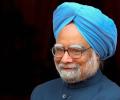
Former Prime Minister Manmohan Singh's 1991 budget unshackled India's economy, significantly enhancing the economic prospects for hundreds of millions of Indians, first deputy managing director of the International Monetary Fund (IMF) Gita Gopinath said on Friday.

'Binary fission will happen -- startups will lead to more startups.'
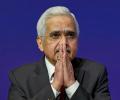
The highlights of RBI's bi-monthly monetary policy announced by Governor Shaktikanta Das:

India's forex reserves declined by $2.67 billion to $682.13 billion for the week ended November 1, the RBI said on Friday. In the previous reporting week, the overall reserves had dropped by $3.46 billion to $684.805 billion.

The Reserve Bank has told the International Monetary Fund (IMF) that the objective of frequent interventions in the forex market is to curb excessive volatility, dismissing the Fund's rationale for reclassifying India's exchange rate regime. The IMF, following the Article IV consultation with the Indian authorities, reclassified the status of the exchange rate regime to "stabilised arrangement" from "floating" for period between December 2022 to October 2023. India's Executive Director at IMF K V Subramanian and Senior Advisors Sanjay Kumar Hansda and Anand Singh questioned the selection period adopted by the Fund for analysis and also reclassification of the country's exchange rate regime.

In a major relief for taxpayers, Finance Minister Nirmala Sitharaman on Saturday announced an increase in the threshold for Tax Deduction at Source (TDS) on rent from Rs2.40 lakh per annum to Rs6 lakh per annum while presenting the Union Budget 2025-26. Presenting the budget in Lok Sabha, the Finance Minister said, "The annual limit of Rs 2.40 lakh for TDS on rent is being increased to Rs 6 lakh.

While the capital spending is being maintained at 3.1 per cent of the GDP, a little more would have boosted economic growth even further, suggests Rajiv Memani.

The communication was clear, transparent and worded in a manner that did not induce any fear in the minds of the people, point out A K Bhattacharya.

Foreign investors have made a strong comeback to Indian equities with a net investment of Rs 22,766 crore in the first two weeks of December driven by expectations of rate cut by the US Federal Reserve. This revival follows significant outflows in the preceding months, with Foreign Portfolio Investors (FPIs) pulling out a net Rs 21,612 crore in November and a massive Rs 94,017 crore in October -- the worst monthly outflow on record.

After three consecutive weeks of drop, India's forex reserves increased by $3.67 billion to $641.59 billion for the week ended May 3, the RBI said on Friday. The overall kitty dropped $2.412 billion to $637.922 billion for the previous week ended April 26.

Federal Bank on Thursday said the Reserve Bank of India has accorded approval to ICICI Prudential Asset Management Company Ltd () for acquiring up to 9.95 per cent stake in the bank. RBI accorded the approval subject to conditions on Thursday, Federal Bank said in a regulatory filing.
The Indian rupee may experience some volatility in the early days of Donald Trump's presidency, but it is likely to stabilise soon after, a report by the State Bank of India (SBI) said on Tuesday, terming this short term phenomenon as "Trump Tantrum".

Credit card spending reached Rs 2 trillion in October, a 14.5 per cent rise from September, largely driven by festival season purchases. However, the volume of outstanding credit cards increased only marginally during the same period. The spike in spending comes at a time when nearly all major credit card issuers are calibrating their growth in the segment due to visible signs of stress.

Bank credit growth is expected to moderate this financial year after a robust 16 per cent estimated for last financial year, driven by strong economic activity and retail credit demand. There are three reasons for this: a statistical high-base effect given the strong growth seen last financial year, revision in risk weights by the Reserve Bank of India (RBI), and relatively slower economic activity.

While the fiscal year has just begun, any windfall surplus will be welcomed by the government as it bids to meet the fiscal deficit target of 5.9 per cent of GDP, amidst lack of clarity on exactly to what extent will recession in the West impact India's trade and tax collections.

Finance Minister Nirmala Sitharaman on Saturday unveiled 'transformative' tax reforms that ranged from a simpler income tax law to higher TCS threshold for remittances and income tax benefits for middle class.

Anticipating US action on tariffs, India seems to have made the first move by revamping its tariff structure by reducing the slabs to eight rates, points out Mukesh Butani.

The Reserve Bank of India (RBI) added another 102 metric tonnes to the domestically held gold in the April-September period, as per a disclosure made on Tuesday. The overall quantity of the precious metal stored in local safes stood at 510.46 metric tonnes as of September 30, which was up from over 408 metric tonnes as on March 31, 2024. The central bank said it added another 32 metric tonnes of gold reserves in the six-month period to take the overall tonnage to 854.73 metric tonnes, as per the half yearly report on management of foreign exchange reserves.

State Bank of India (SBI) - the country's largest lender - has unveiled two new schemes to boost deposit mobilisation at a time when most banks are facing challenges in raising resources. The first is 'Har Ghar Lakhpati,' a pre-calculated recurring deposit (RD) scheme designed to help customers accumulate Rs 100,000 or multiples thereof and develop a savings habit.

The government, in the forthcoming Budget, could consider levying higher tariffs on imports to check the significant decline in rupee value witnessed in the past few months, said EY Chief Policy Advisor DK Srivastava. The noted economist argued that higher import duties would curb the demand for dollars from importers and help arrest the sliding value of the rupee, which touched a historic low of 86.70 to a dollar on January 13.

Reserve Bank Governor Shaktikanta Das on Thursday said the fundamental drivers of the Indian economy are gaining momentum and the country is moving on a sustainable growth path. In the inaugural address at FIBAC 2024, the governor said that massive changes are taking shape in various economic sectors and markets, and the country is geared for orbital shifts.

Value mutual funds have witnessed robust investor interest, garnering Rs 22,757 crore in inflows in 2024, nearly double the amount seen in 2023, fueled by impressive returns generated by the segment. This surge reflects a shift in investor focus towards fundamentally strong yet undervalued stocks.
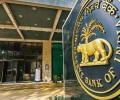
The Reserve Bank of India (RBI) has updated Know Your Customer (KYC) norms for politically exposed persons (PEPs) who transact with regulated entities (REs), seeking to comply with the recommendations of intergovernmental organisation Financial Action Task Force (FATF). PEPs are individuals entrusted with prominent public functions by a foreign country, including the heads of states/governments, senior politicians, senior government or judicial or military officers, senior executives of state-owned corporations and important political party officials, said the RBI. This change is expected to provide more clarity to undertake Customer Due Diligence (CDD), said the RBI in a communication to REs.

The decision by the Reserve Bank of India to introduce a unified regulatory framework on connected lending for all the regulated entities (RE) is expected to reduce the influence of business conglomerates in the Indian lending space, said bankers and experts. "Connected lending pertains to lending to related parties within the same business group. "While the RBI might appear more agreeable to allowing business conglomerates to own banking licenses, it deems it crucial to bolster regulations that would prevent conglomerate-owned banks from gaming the system," said Shivaji Thapliyal, head of research and lead analyst, YES Securities.

Retail inflation breached the Reserve Bank's upper tolerance level, soaring to a 14-month high of 6.21 per cent in October mainly on account of rising food prices. Inflation based on the consumer price index (CPI) was 5.49 per cent in September and 4.87 per cent in the year-ago month. Retail inflation trended below the RBI's upper tolerance band of 6 per cent since September last year.

Dr Nagesh Kumar, one of the three new MPC members, wanted the MPC to reduce the repo rate by 25 basis points to 6.25%.

The Reserve Bank on Saturday extended the special drive to withdraw Rs 2,000 bank notes from the system by another week, till October 7.

The Reserve Bank of India on Friday raised the GDP growth projection for the current fiscal to 7 per cent from 6.5 per cent earlier on buoyant domestic demand and higher capacity utilisation in the manufacturing sector. Announcing the bi-monthly monetary policy, RBI Governor Shaktikanta Das, however, flagged protracted geopolitical turmoil and global economic fragmentation as risks to the growth outlook. The RBI kept interest rates unchanged at 6.5 per cent in Friday's monetary policy statement.

After depreciating 0.32 per cent against the dollar in October so far, the rupee is expected to hold ground against the greenback in the current quarter on the back of robust inflows. According to the median of a Business Standard poll of 10 respondents, the rupee is seen trading around 84 per dollar till the end of December. "In India's case, at least the bond and cash related inflows will continue.

The Reserve Bank of India on Friday revised upwards the GDP growth projection for the current fiscal to 7.2 per cent from 7 per cent on rising private consumption and revival of demand in rural areas. Unveiling the bi-monthly monetary policy, RBI Governor Shaktikanta Das said estimates released by the National Statistical Office (NSO) placed India's real gross domestic product (GDP) growth at 8.2 per cent in 2023-24. "During 2024-25 so far, domestic economic activity has maintained resilience," he said, adding that manufacturing activity continues to gain ground on the back of strengthening domestic demand.

From the 30-share blue-chip pack, Adani Ports jumped over 5 per cent. NTPC, Tata Steel, Bajaj Finserv, Zomato, Bajaj Finance, Tata Motors, State Bank of India, IndusInd Bank and Maruti were among the other big gainers. From the 30-share pack, Hindustan Unilever, Titan, Tata Consultancy Services, Infosys and UltraTech Cement were the other laggards.

Indian economy is in a sweet spot, with a mix of solid growth and moderating inflation, Moody's Ratings said, forecasting a 7.2 per cent GDP growth in the 2024 calendar year and 6.6 per cent in the next. In its Global Macro Outlook 2025-26, the rating agency said the global economy has shown remarkable resilience in bouncing back from supply chain disruptions during the pandemic, an energy and food crisis after the Russia-Ukraine war began, high inflation and consequent monetary policy tightening.

The RBI had earlier fixed September 30, 2023 as the last date for the purpose of completing the exercise in a time-bound manner and to provide adequate time to the public.

Benchmark equity indices Sensex and Nifty pared early gains to settle lower on Wednesday due to late selling in index major Reliance Industries, ITC and HDFC Bank even as the RBI took the first step towards a rate cut in its monetary policy review. Erasing its early gains, the 30-share BSE Sensex fell 167.71 points or 0.21 per cent to close at 81,467.1. During the day, it surged 684.4 points or 0.83 per cent to hit an intra-day high of 82,319.21.
The Reserve Bank of India (RBI) on Friday said nearly 97.26 per cent of the Rs 2,000 bank notes have been returned to the banking system, and only about Rs 9,760 crore worth of the notes are still with the public. On May 19, the RBI announced the withdrawal of Rs 2,000 denomination bank notes from circulation. "The total value of Rs 2,000 bank notes in circulation, which amounted to Rs 3.56 lakh crore as at the close of business on May 19, 2023 when the withdrawal of Rs 2,000 bank notes was announced, has declined to Rs 9,760 crore as at the close of business on November 30, 2023," the RBI said in a statement.
The Reserve Bank of India on Thursday projected a GDP growth of 7 per cent for 2024-25 financial year, which is lower than the 7.3 per cent expansion estimated for the current fiscal. Announcing the bi-monthly monetary policy, RBI Governor Shaktikanta Das said rural demand continues to gather pace, urban consumption remains strong and investment cycle is gaining steam on the back of increased capex.

The country's current account deficit widened marginally to $9.7 billion or 1.1 per cent of GDP in April-June 2024, as against $8.9 billion or 1 per cent in the year-ago period, Reserve Bank of India said on Monday. The crucial number representing the country's external sector strength has come on the heels of a surplus of $4.6 billion or 0.5 per cent of GDP recorded in the preceding January-March quarter. The Reserve Bank attributed the year-on-year widening in current account deficit to a rise in merchandise trade gap which was recorded at $65.1 billion in Q1 FY25 as compared to $56.7 billion in the year-ago period.

From the 30-share blue-chip pack, Zomato cracked nearly 7 per cent. Power Grid, Adani Ports, Tata Steel, NTPC, Tata Motors, Tech Mahindra, Mahindra & Mahindra, Asian Paints, Sun Pharma and UltraTech Cement were the other major laggards. In contrast, Axis Bank, Hindustan Unilever, Tata Consultancy Services and IndusInd Bank were the gainers.

Union Finance Minister Nirmala Sitharaman on Monday said people are finding current interest rates "very stressful" and urged banks to make them affordable. Speaking at an event organised by State Bank of India, the finance minister said that at present, India requires industry to ramp up and invest in new facilities, and added that lowering lending rates can help achieve the "Viksit Bharat" aspiration.

The three day MPC meeting began on Monday and the decision will be announced on Wednesday by RBI Governor Shaktikanta Das.
 © 2026 Rediff.com - Investor Information - Advertise with us - Disclaimer - Privacy Policy - Sitemap - Feedback - About us - Terms of use - Grievances