
Kotak Mahindra Bank's loan and deposit growth are likely to be affected after the Reserve Bank of India (RBI) asked the private-sector lender not to take on board new customers through the bank's online and mobile banking channels and not to issue any new credit cards, according to analysts. The bank's share price fell 10.85 per cent on Thursday to close the day at Rs 1,643 on the BSE. The RBI's action came after market hours on Wednesday.

In 2025 banks are in for challenges such as pressure on margins and slowing credit growth. With the likelihood of a repo rate cut in February or April, external benchmark-linked loans of banks will be repriced immediately. However, deposit rates are expected to adjust more gradually, which could impact the net interest margin (NIM) - a key measure of profitability for banks.

The private corporate sector showed improvements across various segments in the third quarter of the current financial year (Q3FY25), with the operating profit margin of listed non-financial companies increasing sequentially by 50 basis points (bps) to 16.2 per cent, according to the Reserve Bank of India (RBI) data released on Monday. Sales of listed private non-financial companies increased by 8.0 per cent during Q3FY25, compared to 5.5 per cent in the corresponding quarter a year ago. It was, however, 5.4 per cent in Q2FY25.

India's foreign exchange reserves fell for the fourth consecutive week after reaching an all-time high last month. In the week ending October 25, the forex reserves declined by $3.46 billion to $684.80 billion, according to data released by the Reserve Bank of India (RBI) on Friday. In the three preceding weeks, reserves dropped by $3.7 billion, $10.7 billion, and $2.16 billion, respectively, the data showed.

The number of digital financial frauds rose more than four times in FY24 year-on-year to comprise 80 per cent of all financial frauds.

India's forex reserves increased by $1.51 billion to $658.09 billion for the week ended November 29, the RBI said on Friday. The overall reserves had dropped by $1.31 billion to $656.58 billion in the previous reporting week.

The Indian rupee is likely to depreciate further against the US dollar through the end of 2024. This is due to the continued strengthening of the greenback, combined with the weakening of the Chinese yuan, which is expected to keep pressure on the Indian currency.

The rupee tumbled 3 per cent against the US dollar in 2024 as concerns over slower economic growth and a stronger greenback in global markets weighed, but it was among the least volatile currencies in the world and the headwinds may be less intense in the coming year.

While the economy seems to be on a firm growth path, the fight against inflation is not over yet. Shaktikanta Das seems to be in no hurry. After playing well through a five-year Test match, he doesn't want to get out hit wicket, observes Tamal Bandyopadhyay.

Events proved that on every count the RBI had accurately predicted both the damage and the lack of benefit. What the RBI was hiding was the fact that Modi had ignored its concerns -- all of which turned out to be true -- and gone ahead anyway, asserts Aakar Patel.

To ease the potential liquidity stress, the Reserve Bank on Friday slashed Cash Reserve Ratio (CRR) by 50 basis points to 4 per cent, a move that would unlock Rs 1.16 lakh crore bank funds. The RBI on May 4, 2022 had raised CRR to 4.5 per cent from 4 per cent in an off-cycle Monetary Policy Committee (MPC) meeting, with effect from May 21 the same year.

The average cost of data breaches in India reached $2.18 million in 2023, marking a 28 per cent increase since 2020, according to the Reserve Bank of India's (RBI) Currency and Finance report for 2023-24. The report said that India's average data breach cost was still below the global average. The most common attacks in India are phishing which was at 22 per cent and stolen or compromised credentials was 16 per cent. The automotive industry is highly vulnerable to cyber attacks, whereas the banking and financial services sector, benefiting from stringent regulations, enjoys comparatively stronger protection.

Loan against gold as a product is catching on fast. Let's keep the momentum going, but aim for sustainable growth. A few bad apples should not ruin the brunch, argues Tamal Bandyopadhyay.

Trading sentiment in the equity market this week will be guided by global trends, foreign fund movement, macroeconomic data announcements and RBI's interest rate decision, analysts said. The monthly auto sales data announcement would also be tracked by investors this week.

Prospects of a bumper kharif harvest are expected to lower food inflation in the coming months, making the country's inflation outlook benign, the Union Ministry of Finance (FinMin) said in its monthly economic report for October released on Monday.

The upcoming Union Budget to be presented on February 1 is likely to assume a nominal gross domestic product (GDP) growth between 10 and 10.5 per cent for FY26, a Business Standard poll of 10 economists showed. The first advance estimates released by the National Statistics Office (NSO) had estimated a nominal GDP growth of 9.7 per cent for FY25. Nominal GDP, calculated at current market prices, factors in the effect of inflation. It is used as the base to calculate crucial macroeconomic indicators, such as fiscal deficit, revenue deficit, and debt-to-GDP ratio.

Union Finance Minister Nirmala Sitharaman's call for making lending rates affordable may not resonate anytime soon as banks still struggle with margin compression, and await clues from the Reserve Bank of India (RBI) on liquidity and rate action. Hinting that any lending rate cut was some time away, State Bank of India (SBI) managing director Vinay M Tonse said there was still some aggression in the market regarding deposit pricing.

The stocks are largely from sectors such as chemicals, finance and cement, which struggled earlier but the worse seems to be behind them.
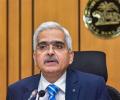
The Reserve Bank of India on Thursday decided to keep policy rate unchanged for the sixth time in a row as it maintains a tight vigil on inflation. The rate increase cycle was paused in April last year after six consecutive rate hikes aggregating to 250 basis points since May 2022.

The banking regulator was uncomfortable with the runaway pace at which consumer credit was growing.

Ramalingam Kalirajan offers some easy steps to reactivate your accounts with banks like SBI, HDFC Bank, IDFC First Bank and PNB just so that you can start availing all the benefits linked to your account.

Reserve Bank has directed banks to provide their eligible customers with an option to choose from multiple card networks at the time of issuing credit or debit cards, a move which will benefit card users. The central bank also asked issuers of credit cards not to enter into any arrangement or agreement with card networks that restrain customers from availing the services of other networks.
The Reserve Bank of India (RBI) was a net seller of the US dollar in August, reversing its net buying position from July. During the current financial year up to August, the central bank had sold a net $1.11 billion. The RBI sold a net total of $6.49 billion worth of the foreign currency in August, according to the central bank's monthly bulletin.

Finance Minister Nirmala Sitharaman on Saturday said she is likely to introduce the new income tax bill, which will replace the six-decade-old I-T Act, in the Lok Sabha in the coming week.

S&P Global Ratings on Tuesday said the Indian economy is set for "resilient growth" in 2025 and projected inflation pressure to recede which will lead to "modest" easing of the monetary policy by the RBI. In its India outlook for 2025, S&P also retained India's growth forecast for current fiscal at 6.8 per cent, followed by 6.9 per cent growth in 2025-26.

The exodus of FPIs from the Indian equity markets continued unabated, as they withdrew over Rs 7,300 crore (about $840 million) in the first week of this month due to global trade tensions, with the US imposing tariffs on countries such as Canada, Mexico, and China. This came following an outflow of Rs 78,027 crore in the entire January. Before that, they invested Rs 15,446 crore in December, data with the depositories showed.

The Reserve Bank on Thursday tightened norms for consumer credit as it asked banks and NBFCs to assign a higher risk weight for unsecured personal loans, a move aimed at making the lenders more cautious on such advances. The risk weight on unsecured consumer loans has been raised by 25 percentage points. The new regulations, however, will not be applicable on housing loans, education loans, vehicle loans and loans secured by gold and gold jewellery, the Reserve Bank said in a circular.

All that you must know about the pros and cons of gift deeds, tax implications, essentials, documents required, conditions, etc...
The Reserve Bank of India (RBI) conducted two overnight variable rate reverse repo (VRRR) auctions on Tuesday, marking the first instance of such action in a single day. The move aimed to reduce liquidity from the banking system, which has been largely in deficit mode for the past four months. Market participants noted that the central bank held the second VRRR auction due to its awareness of funds being released to banks during the day.

India's forex reserves dropped by $17.76 billion to $657.89 billion for the week ended November 15, the RBI said on Friday. In the previous reporting week ended November 8, the overall reserves dropped by $6.48 billion to $675.65 billion.

The number of cyberfraud cases has skyrocketed from 2,677 in 1999-2000 to 29,082 in FY24 -- more than a 10-fold increase. The RBI pegs digital payment frauds at Rs 1,457 crore in FY24, up more than five times in a year. It's not just the number of frauds. What's alarming is the growing sophistication of the fraudsters, exposing the vulnerabilities within the financial system, observes Tamal Bandyopadhyay.

Several mutual funds (MFs) have recently approached the Reserve Bank of India (RBI) as they renew efforts to increase their overseas investment limit. In June 2022, the capital markets regulator Securities and Exchange Board of India (Sebi) permitted MFs to invest in foreign stocks within the aggregate mandated limit of $7 billion after a correction in stocks. One of the proposals shared with the RBI is to link MFs' foreign investment limit to the country's foreign exchange reserves.

The RBI was not party to the decision to demonetize 500 and 1,000-rupee notes, which was taken at the highest level of India's political leadership.

The RBI is fully aware that the high-cost loans and high indebtedness of the borrowers could pose financial stability risks, if not addressed by these NBFCs. Governor Shaktikanta Das has issued a stern warning, saying the RBI is closely monitoring these areas and will not hesitate to take appropriate action, if necessary, if the culprits don't opt for self-correction. Watch out for some action, soon, notes Tamal Bandyopadhyay.

Among the Sensex firms, State Bank of India rose the most by 3.78 per cent after the bank announced the acquisition of SBI CAPS subsidiary for Rs 708.07 crore. Nestle India gained 1.68 per cent after it reported around 9 per cent growth in sales. JSW Steel, Bajaj Finance, Axis Bank and Asian Paints were among the gainers.

Alternative investment funds (AIFs) have not seen any significant redemptions from financial institutions even though the 30-day timeline provided by the Reserve Bank of India (RBI) to liquidate their holdings or make full provisions ends recently. Sources said the industry is awaiting certain relaxations or extensions based on the recommendations submitted to the banking regulator. On December 19, the RBI restricted financial institutions and banks from investing in AIFs where there is any downstream link or exposure to a debtor firm.
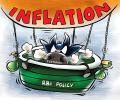
The Reserve Bank of India on Friday retained its projection for retail inflation at 4.5 per cent for the current fiscal assuming a normal monsoon, while emphasising that uncertainties related to food price outlook warrant a close monitoring. Consumer Price Index (CPI)-based retail inflation has been projected at 4.5 per cent with quarter-wise projections at 4.9 per cent in Q1 (April-June), 3.8 per cent in Q2, 4.6 per cent in Q3, and 4.5 per cent in Q4.

Among the Sensex constituents, 18 stocks closed in negative with UltraTech Cement, L&T, Bharti Airtel, Bajaj Finance and Tech Mahindra being major laggards. Other heavyweights like Asian Paints, Maruti, Titan and JSW Steel also saw heavy selling. In contrast, Kotak Mahindra Bank, Bajaj Finserve, HDFC Bank, ITC and SBI bucked the trend and ended the session with a gain of up to 2.09 per cent.
India's forex reserves dropped by $6.46 billion to $675.65 billion for the week ended November 8, the RBI said on Friday. In the previous reporting week, the forex reserves had dropped by $2.67 billion to $682.13 billion.

Capital market regulator Sebi on Tuesday rejected the competing open offer made by the US-based entity Danny Gaekwad Developments & Investments for acquisition of Religare Enterprises Ltd (REL) as it did not meet necessary regulations.
 © 2026 Rediff.com - Investor Information - Advertise with us - Disclaimer - Privacy Policy - Sitemap - Feedback - About us - Terms of use - Grievances