
Several multinational medical device makers are focusing on deepening their presence in India by expanding their local manufacturing footprint and research capabilities, a move that can catapult India into a strategic hub for the medical technology (medtech) industry. Among those increasing their reach in the country are Siemens Healthineers and Philips, signalling a broader shift from India being only a sales destination to becoming a global production and innovation base.

Research and development (R&D) spending by BSE 100 companies has grown steadily, rising from 0.89 per cent of revenue in FY20 to 1.32 per cent in FY24, averaging around 1 per cent over the period in-between, according to data compiled from Bloomberg and company annual reports. Also, these companies more than doubled their R&D spending in absolute terms over these five years: From Rs 25,041 crore to Rs 63,072 crore. While this reflects a prioritisation of innovation, corporate R&D investment remains relatively conservative.

US President Donald Trump's plan to sign an executive order to cut prescription drug prices by 30-80 per cent could lead to a global price adjustment with pharma firms pushing lower-cost countries like India to raise prices, according to the economic think tank GTRI. The US move could push prices in lower-cost countries like India as manufacturers would seek to recover losses and R&D costs from these nations.

After Chennai, it is Coimbatore, Madurai, and Tiruchirappalli, that are emerging as manufacturing hubs. Coimbatore is India's top Tier-II city in terms of the number of GCCs, according to a report by Cushman & Wakefield.
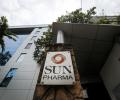
Around six weeks ago, Sun Pharmaceutical Industries, India's largest drugmaker, suffered a setback, which led to a selloff in the share. The US District Court of New Jersey granted Incyte's request for a preliminary injunction against Sun Pharma's launch of Leqselvi, a drug that treats alopecia.

After falling 17 per cent since the start of the year to its March lows, the stock of the country's largest pharmaceutical (pharma) company, Sun Pharmaceutical Industries, has clawed back nearly half of those losses. Recent acquisitions, a favourable court ruling in the case of the hair loss drug Leqselvi, an edge over peers owing to its specialty portfolio, and a diversified global presence have supported the recovery.

HAL's sustained, long-term income will come from the design, development, manufacture, overhaul, and upgrade of a family of helicopters designed for deployment on India's 21,000-foot-high Himalayan frontier with Pakistan and China.

Whether the ambitious targets are achievable is a moot question as India's earlier target was 20,000 MW of nuclear power by 2020.
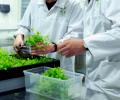
Several leading scientists, academicians, and agriculturalists have called for raising government support for research and development to make Indian agriculture future-ready.

There is a need to incentivise R&D investments, offer corporate tax concessions and establish an effective intellectual property rights regime in order to push the growth of domestic pharmaceutical industry, as per the industry bodies. Outlining the sector's wish list for the upcoming Union Budget, Organisation of Pharmaceutical Producers of India (OPPI) Director General Anil Matai urged the government to explore methods to incentivise R&D investments, such as deductions on R&D expenses, research-linked incentives for MNCs, and corporate tax concessions.
Indian pharmaceutical companies may have units abroad as part of "distributed manufacturing" across various locations, according to industry veterans. This may come about over the next five to 10 years.

The jackets have been developed at the DRDO Industry Academia Centre of Excellence at IIT-Delhi, the ministry said in a statement.

PC maker Lenovo India will start manufacturing 50,000 GPU-based AI servers in India next year, the company said on Tuesday. Besides this, Lenovo announced setting up its fourth largest research and development centre in Bengaluru. Lenovo India managing director Shailendra Katyal said that the company will make servers locally and also export them from its manufacturing unit in Puducherry.

A fresh US executive order (EO) which seeks to bring down prices of prescription drugs in the country by up to 90 per cent -- on par with other developed nations -- will affect innovator companies, while sparing the Indian generic drug makers in the short term. US President Donald Trump signed the EO on Monday, directing the US Trade Representative and the Secretary of Commerce to act against foreign countries that "purposefully and unfairly undercut market prices", driving price hikes in the US.

Ola Electric, India's largest electric vehicle company, has achieved a significant milestone by becoming the first two-wheeler automotive electric vehicle (EV) manufacturer in India to receive incentives under the Production Linked Incentive (PLI) Scheme for Automotive and Auto Component (PLI-Auto Scheme). The company has been granted a total incentive of Rs 73.74 crore for the Determined Sales Value of FY 2023-24 under the scheme, according to a stock exchange filing by the company.

'That is a significant milestone for us and something we aspired for.'

India's economy is projected to grow between 6.3 per cent and 6.8 per cent in FY26, according to the Economic Survey 2024-25, tabled in Parliament on Friday. The survey highlights that the country's economic fundamentals remain strong, supported by a stable external account, fiscal consolidation, and private consumption. It noted that the government plans to strengthen long-term industrial growth by focusing on research and development (R&D), micro, small, and medium enterprises (MSMEs), and capital goods.

'And this will persist given the two-and-a-half-front threat we face.'

Nibe Space (NSPL), a subsidiary of Nibe, announced its vision to establish India's first multi-sensor, all-weather, high-revisit Earth observation satellite constellation. Aiming to strengthen India's self-reliance in the strategically crucial defence-space sector, NSPL signed memoranda of agreement with Indian and global partners, including Larsen & Toubro, Centum, AgniKul, Skyroot Aerospace, SpaceFields, SISIR Radar, CYRAN AI Solutions, and Thales Alenia Space as a technology partner.
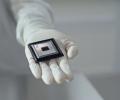
With Google announcing the milestone of Willow - a state-of-the-art quantum computing chip that can solve complex problems in under five minutes, a computation so complex it would have taken a supercomputer around 10 septillion (10^25) years to complete - tech experts believe this breakthrough could impact artificial intelligence (AI), particularly by making it more accessible to the masses. However, industry players caution that it may take several years for this innovation to become commercially viable.
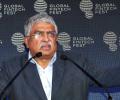
'Binary fission will happen -- startups will lead to more startups.'

For India to transform into a high-income country with a projected gross domestic product (GDP) of $23-35 trillion, will need a sustained annual growth of 8 per cent to 10 per cent. This will be powered by India's demographic dividend, technological innovation, and sectoral transformation, according to the "India@2047: Transforming India Into A Tech-Driven Economy" report by Bain & Company and Nasscom. By 2047, the services sector is expected to contribute 60 per cent of India's GDP, while manufacturing will account for 32 per cent, both playing a pivotal role in economic expansion.

Simplifying investment policies at the micro level and introducing a time-bound framework will be critical for India's growth targets, notes Krishna Ella.
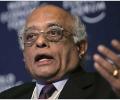
'The very fact that his autobiography is called India Rising is a correct example of his wish for India to be a developed country and do as best as possible by science reaching to the common people.'

The missile showcased its precision and capability to neutralise targets, the statement said.

South Korean consumer electronics major Samsung, which on Wednesday launched its latest smartphone Galaxy S25 in San Jose, US, will also be manufacturing it at its Noida plant in India, J B Park, president & CEO of Samsung Southwest Asia, said. Moreover, the Bengaluru-based R&D centre of Samsung, the biggest outside South Korea, has "contributed significantly" for developing the S25 series of Galaxy AI.

DeepSeek is a case in point on how economic interdependence between nations are utilised for geopolitical ambitions and global domination efforts, observes China expert Srikanth Kondapalli.

The deal with Nokia will be signed in San Francisco on Friday morning in the presence of Tamil Nadu Chief Minister M K Stalin, who is on a 17-day trip to the US to attract fresh investments.

India has declared 2025 as the year of defence reforms, aiming to establish integrated theatre commands to enhance synergy among the three armed forces and transform the military into a technologically-advanced combat-ready force. The reforms will also focus on streamlining acquisition procedures, promoting collaboration, and leveraging emerging technologies like artificial intelligence and robotics.

The generation of quality jobs and skill development should be the focal point, cutting across ministries and departments, asserts Nivedita Mookerji.

'Because the same stupid questions are repeated year after year when an exam should provoke the students to think and not ask repetitive questions.' 'So, what do coaching institutes do? They teach students to memorise these questions and answers without understanding the subject.'
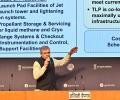
He said that as compared to global models costing 2.5 to 3 US dollars per hour usage, India's AI model will cost less than less than Rs 100 per hour (1.16 US dollars per hour) after 40 percent government subsidy.

The time is ideal for a 'Dream Budget' akin to the 1991 reforms that sparked high growth and unlocked significant gains in productivity, points out Rajeswari Sengupta.

Tata Elxsi (TelX) reported a weak Q3FY25, with a sharp deceleration in the transportation vertical. However, recent deals in the Asia-Pacific (APAC), higher mix of original equipment makers (OEMs) and partnership with Qualcomm will improve growth. FY25 is the third successive financial year of revenue growth deceleration and second successive financial year of profit deceleration.
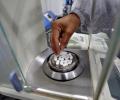
After registering a net profit of Rs 25.1 crore in Q3FY25 and consolidated revenues growing by 7 per cent on a like-for-like basis, Siddharth Mittal, chief executive officer (CEO) and managing director, Biocon, told Sohini Das/Business Standard in a virtual interaction that local manufacturing in the US is a trade off between cost and qualifying to do business there.
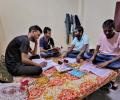
Out of 24,230 IIT and NIT grads, about 8,000 students didn't find any takers during campus placement drives this year.

With the recent launch of smartwatches, home-grown smartphone maker Lava is looking to secure a strong foothold in the Indian wearables market. The company aims to capture up to 20 per cent of this segment over the next few years, according to a senior executive.

The October-December quarter (Q3FY25) results of fast moving consumer goods (FMCG) major Hindustan Unilever (HUL) indicated weak demand, with urban growth muted and rural showing recovery. Consolidated revenue grew by 1.6 per cent (volume was flat) to Rs 15,818 crore, due to price hikes. Prices of key raw materials such as palm oil and tea remained elevated, leading to compression of gross margin.

Sun Pharmaceutical Industries reported a 34 per cent year-on-year (Y-o-Y) jump in net profit to Rs 2,654.6 crore in Q4FY24.
