
Calling a ministerial group formed to look into their wage demands an eyewash, PSU oil firm executives today said they will go on indefinite strike from January 7, as the government has failed to live up to its promises of giving officers a fair deal.

The four public sector general insurance companies -- New India Assurance, United India Insurance, Oriental Insurance, and National Insurance Company -- have lost 800 basis points (bps) in market share in last five years to their private counterparts, the data from the Insurance Regulatory and Development Authority (Irdai) revealed. In 2018-19, the four had a cumulative market share of 40.04 per cent, with New India Assurance having a market share of 14 per cent and United India Insurance with a market share of 9.63 per cent. But, gradually in the past five years, these state-backed firms have lost their market share to private sector players, due to the declining health of their business.
Stocks of government probables for divestment or stake sale such as Steel Authority of India (SAIL), Mahanagar Telephone Nigam (MTNL), National Aluminium Company (Nalco) and Container Corporation (Concor) have outperformed the markets in the past one year.

Diktat to four general insurance companies says 'avoid competition' in any corporate or group account

rediffGURU Vivek Lala answers your income tax and personal finance queries.

Sensex has six while Nifty has only 10.

In the past 10 trading sessions, shares of the state-owned company have shot up more than 50 per cent.
The government on Tuesday gave greater autonomy to state-run banks, allowing them make domestic and overseas acquisitions without its approval.

Air India has very often been slammed for living off taxpayers' money - an impression that was patently wrong till a couple of months ago when the first tranche of Rs 800 crore was given to the airline as additional equity by the government

The divergence shows lack of financial depth in the Indian stock markets.
Land resources belonging to ailing companies being pitched to pvt players for new initiatives.

The share of listed public sector undertakings (PSUs) in the overall market capitalisation has hit a three-year high of 11.4 per cent. This comes on the back of the sharp outperformance of the PSU pack over the past two years. In 2021 and 2022, the BSE PSU index gained 41 per cent and 23 per cent, respectively. Market participants said a combination of factors like value buying and bullishness, particularly in public sector banks (PSBs), were the reason for the improved prospects.

Power Grid Corporation (PGCIL) intends to ramp up its capex substantially through the next two financial years. The Public Sector Undertaking (PSU) utility posted flat consolidated revenues of Rs 10,700 crore in the third quarter of the current financial year (Q3FY24) and reported 7 per cent year on year (Y-o-Y) growth in net profit to Rs 4,000 crore. The Q3FY24 capex stood at Rs 3,440 crore and capitalisation at Rs 1,780 crore, taking the 9MFY24 total to Rs 8,700 crore capex and Rs 5,800 crore capitalisation, respectively.

On government's last week's announcement of revamping of PSU banks, Fitch Ratings said the move is "credit positive, but risks remain".
To boost the economy, the RBI has taken a slew of measures since September last year, including cuts in the cash reserve ratio and short-term lending (repo) rate, to inject funds into the system and signalled a soft interest rate regime. PSU bankers' meeting is being held in the backdrop of the third quarterly review of monetary policy by the Reserve Bank of India.
Chidambaram would be meeting the bankers for the first time after the quarterly review of monetary policy by Reserve Bank on July 29. The apex bank raised the key policy rate to 9 per cent following which most of the PSU banks including the largest lender SBI hiked their lending rates by 50-100 basis points.

Finance Minister Nirmala Sitharaman on Tuesday held a review meeting on credit guarantee scheme with heads of public sector banks, and asked them to expedite loan disbursement under the Rs 3-lakh crore ECLGS for MSME sector, hit hard by coronavirus-induced lockdown. The meeting on Emergency Credit Line Guarantee Scheme (ECLGS) was held through video conference, and the minister appreciated the efforts of banks in execution of the scheme.

'I would say restore the banks to health, get active board composed of professionals, then there will be an ideal situation for merger.'

In the last two months, these stocks have lost nearly a quarter of their market cap.

Five state-run general insurance companies have a total exposure of Rs 347.64 crore, or 0.14 per cent of their total assets under management (AUM), in Adani group of companies, the finance ministry said on Monday. In a written reply to a question by Congress' Manish Tewari, Minister of State for Finance Bhagwat Karad said Life Insurance Corp (LIC) held Rs 35,917.31 crore in debt and equity of Adani group of companies as on December 31, 2022. This is 0.97 per cent of its total assets under management (AUM) of Rs 41.66 trillion.
The country's government-run firms suffered a loss of over Rs 82,000 crore (Rs 820 billion) on a single day on Monday with no significant announcement like FDI hike in some sectors or disinvestments in PSUs in the Budget 2009-10.

Among PSBs, the top gainers have been Union Bank of India and Corporation Bank, whose shares have rallied more than 15% each. Indian Bank and Bank of Baroda, too, registered double-digit rise

These PSU banks also account for the lion's share of bad loans or NPAs plaguing the sector and need crores of rupees in new capital in the next two years to meet global Basel III capital norms.

Tata Motors was the biggest gainer in the Sensex pack, rallying 2.94 per cent. It was followed by Vedanta, Bajaj Finance, Sun Pharma, ONGC, ICICI Bank, Bajaj Auto, Tata Steel, RIL, HDFC duo, L&T and SBI, rising up to 2.78 per cent.

Government-owned companies are more generous in rewarding their shareholders with dividends.

P V Subramanyam clears some misconceptions about debt funds.

The recent failure of PSU public issues lies in the present character and structure of the primary market
PSU stocks held gains on selective buying interest

Public sector banks have raked in more profits in the three months ended June on the back of a persistent decline in bad loans and the trend may have a positive bearing on their balance sheets in the coming quarters. In the June quarter, Bank of Maharashtra (BoM) and State Bank of India (SBI) were in the lowest quartile as far as Gross Non Performing Assets (NPAs) and net NPAs were concerned, according to an analysis of the quarterly financial numbers published by the public sector lenders. Cumulatively, all the 12 public sector banks reported a profit of about Rs 15,306 crore in the three months ended June, registering an annual growth of 9.2 per cent. However, leading public sector lenders -- SBI and PNB -- posted lower profits in the June quarter.

As of June, the gross NPA of nationalised banks was 3.89 per cent and State Bank Group at 5.50 per cent.

Telecom, metal and healthcare came as dampeners.
The Oil Sector Officers Association, which claims to represent executives at 14 state-run firms, is protesting against a pay increase smaller than it had demanded.

Known for stable returns, near debt-free status and dividend track record, these 10 PSU stocks are worth buying now.

The Finance Ministry has called a meeting of heads of public sector banks to clear stalled projects.

The top 100 companies have accounted for 63% of the gains (Rs 51 trillion out of Rs 81 trillion), while firms beyond the top 100 have contributed 37 per cent (Rs 30 trillion).

PNB reported the maximum number of such frauds.

The new government that presents the full Budget for 2024-2025 in July should be ready to restructure the way divestment is managed and implemented, proposes A K Bhattacharya.

This is also the first stake sale by a state-run company in 17 months after REC went public in February 2008 to raise over Rs 1,600 crore (Rs 16 billion). The issue will open on August 7 and close on August 11. The company would sell 168 crore (1.68 billion) shares comprising of five per cent stake divestment of the government and infusion of 10 per cent fresh equity.
Over 1.6 million employees working in the estimated 240 central public sector undertakings (PSUs) are likely to receive a 50 to 60 per cent salary increase, possibly with retrospective effect from January 2006. The second PSU pay revision committee, headed by former Supreme Court Justice M Jagannadha Rao, is in advanced stages of finalising its award due April-end and plans to submit its report to the government soon after.
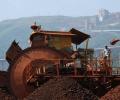
Its 11MFY24 production is around 40.2 mt. In FY25, it could hit 50 mt and it may reach 55 mt by FY26. The PSU has capex plans for multiple projects, which should improve the product mix and augment capacity to 100 mt for FY30.
