
Indian car buyers care more about affordability than technology, keeping ICE vehicles dominant while hybrids emerge as the preferred transition option and EVs struggle in the mass market.

Government schemes such as the PM E-Drive initiative, with allocations of around Rs 2,000 crore for charging points deployment, are helping accelerate rollout

The new Renault Duster with hybrid engine has an edge over its rivals despite having no diesel engine while the styling also appeals with its butch looks, says Somnath Chatterjee.

French automotive component maker Valeo on Wednesday said it will invest over Rs 2,150 crore in India and treble its annual sales in the country to around Rs 7,510 crore by 2028.

Toyota's first standalone electric SUV, the Urban Cruiser Ebella, delivers strong range and performance with premium quality, but rear space and features could have been better, says Somnath Chatterjee.

Maruti Suzuki India on Friday said it has onboarded five early-stage startups to co-create new technology solutions across business functions.

The Skoda Kushaq steps into the limelight with the latest facelift. Somnath Chatterjee checks it out.

The new Seltos has grown in size with a length of 4460mm and that's 95mm longer!

From EV bus expansion to airport-like terminals and rural connectivity, Uttar Pradesh is overhauling public transport to cut pollution and ensure every village has modern, affordable travel, reports Siddharth Kalhans.
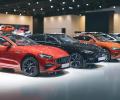
Starting January, the market is expected to welcome models like the Tata Punch 2025 which is expected to be around 6 lakh, Mahindra BE 07 EV around 29 lakh, Maruti WagonR Electric around 8.5 lakh, Toyota 3-Row SUV around 14 lakh, and Volkswagen Tera to be around 8 lakh.

After a record-breaking year, India's automobile industry is entering 2026 on a relatively strong footing, with sales growth expected in the 6-8 per cent range. The outlook is underpinned by policy support, including GST rationalisation, easing monetary conditions, and income tax relief, which together are likely to improve affordability and sustain consumer demand across vehicle segments.
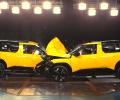
While this is a thoroughly modern SUV, the soul of the original '90s icon lingers.

Japanese auto major Honda considers India a key market for its future growth alongside the US and Japan, according to Honda Cars India President and CEO Takashi Nakajima. The Tokyo-headquartered automaker, which operates in India through a wholly owned subsidiary, plans to drive in more SUVs in the country, as the segment continues to see robust sales across varied price points.
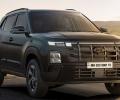
South Korean auto major Hyundai Motor Co president & CEO Jose Munoz on Wednesday said the company's Indian arm will invest Rs 45,000 crore by FY30, aiming to make India its second-largest region globally. Addressing investors here in his first visit to the country, Munoz said Hyundai Motor India Ltd (HMIL) has set a target of up to 30 per cent export contribution.
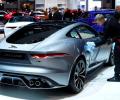
Tata Motors Passenger Vehicles (TMPV) on Friday reported a 13 per cent year-on-year (Y-o-Y) decline in consolidated revenue from operations for the second quarter of 2025-26 (Q2FY26), largely due to the cyberattack on its subsidiary Jaguar Land Rover (JLR) in late August that forced a shutdown of its manufacturing operations for over five weeks.

Between January and August 2025, over 65,000 units of the Bolero were sold, making it the third-highest contributor to Mahindra's overall SUV sales. Bolero annually achieves sales of over 1 lakh units.

The Curvv hasn't set the sales charts on fire and Tata needs another product aimed straight at the Hyundai Creta, which is where the Sierra fits in.

EV manufacturers point out that converting a regular petrol car into a flex-fuel vehicle requires only about Rs 17,000-25,000 per unit, whereas developing an EV demands vastly greater investments in research, battery development, and localisation.

In terms of safety, the Victoris has scored 5 stars in both GNCAP and BNCAP tests and that's a first for Maruti, observes Somnath Chatterjee.

Lining up its 2030 strategy, Hyundai said it was targeting up to 30 per cent export contribution and over 1.5-fold rise in revenue, to cross the 1 trillion milestone in five years.

Maruti takes a leap in terms of technology with features like ADAS, a 360-degree camera, ventilated seats, a powered tailgate, audio system with Dolby Atmos and much more.

Maruti Suzuki India on Wednesday expanded its product range in the country with the launch of all-new 'Victoris' as it looks to enhance its presence in the robustly growing mid-sized SUV segment.
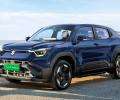
Maruti Suzuki's e-Vitara marks its high-stakes EV debut with strong export ambitions, lifting its stock even as analysts caution over pricing and fierce competition.
Mahindras unveil four stunning, eye-popping, concept SUVs: the Vision.S, Vision.X, Vision.T, and Vision.SXT.
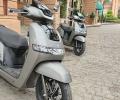
Hero MotoCorp and TVS Motor crossed Rs 1,000 crore in R&D spend for the first time, as legacy OEMs accelerate innovation to compete with new-age EV players.
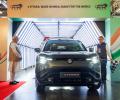
Japanese automaker Suzuki Motor Corporation will invest Rs 70,000 crore in the next five to six years in India to strengthen its operations in the country, its representative director and president Toshihiro Suzuki said on Tuesday. Prime Minister Narendra Modi on Tuesday kicked off exports of Maruti Suzuki India's first electric vehicle e VITARA to 100 countries and also inaugurated the production of lithium-ion battery cells for strong hybrid electric vehicles at its facility in Gujarat.
'The reported deal between the European Union and China should mitigate it (shortage) for the medium to long term. Let's wait and watch how this plays out.'
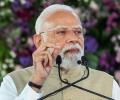
A day before US President Donald Trump's additional 25 per cent tariff kicks in, Prime Minister Narendra Modi on Tuesday made a vehement pitch for swadeshi and Make in India that should help create jobs in the country.
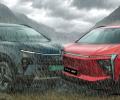
Tata Harrier.ev versus Mahindra BE.06 versus Mahindra XEV.9E -- which one should you buy? Rajesh Karkera offers a checklist of features to influence your decision.

The automobile industry has sought government support in expediting approvals from the Chinese government for importing rare earth magnets used in various applications, including passenger cars. As per the industry sources, various domestic suppliers have already sought approval from the Chinese government through their local vendors in China.
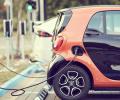
Despite the benefits of hybrid technology, a lack of government backing and few launches have kept the segment from gaining ground.

Tata Motors on Thursday said it has filed 250 patents and 148 design applications, its highest-ever in a single year, in FY25. The filings encompass a broad spectrum of product and process innovations, aligning with key automotive megatrends such as Connectivity, Electrification, Sustainability, and Safety (CESS), as well as emerging technologies like hydrogen-based vehicles and fuel cells, the Mumbai-based auto major said in a statement.
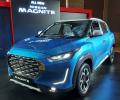
Nissan is targeting annual domestic sales and exports of 100,000 units each by financial year 2026-27.
For FY26, the company has adopted a cautious outlook, anticipating domestic growth to broadly track the industry's low single-digit estimated growth amid ongoing economic headwinds.
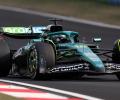
Formula One may have to wait a decade for a return to screaming V10 or V8 engines and jettisoning the next generation V6 due to be introduced next year is simply not feasible, according to F1's former chief technical officer Pat Symonds.
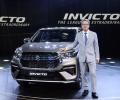
Maruti Suzuki India (MSIL) said on Thursday its operations are unaffected by the global rare earth magnet shortage, but added that the situation is "uncertain and evolving". The firm said it is exploring multiple solutions to maintain continuity in operations and will notify stakeholders in case of material impact.
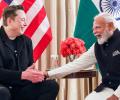
Starlink's application for offering satcom services in India had been held up for the company's inability to comply with mandatory ownership disclosure norms.

The domestic car market leader said there will be no cash outflow from MSI as the merger is proposed to be effected through a share swap agreement.
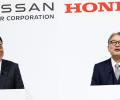
Two Japanese auto giants, Honda and Nissan, are moving towards a potential merger, but it remains unclear how their Indian operations will be immediately impacted.

With nearly 100 launches and unveils, the Bharat Mobility Global Expo 2025, held in Delhi from January 17 to 22, made one thing clear to automobile enthusiasts: Electric vehicles (EVs) are the way ahead for the Indian auto market for years to come.
 © 2026 Rediff.com - Investor Information - Advertise with us - Disclaimer - Privacy Policy - Sitemap - Feedback - About us - Terms of use - Grievances