
Equity benchmarks snapped their six-session rally to close marginally lower on Thursday amid profit booking in banking and energy counters. Investors also stayed on the sidelines ahead of the RBI's policy meet outcome on Friday. In choppy trade, the 30-share BSE Sensex ended 51.73 points or 0.09 per cent lower at 58,298.80. During the day, it hit a low of 57,577.05 and a high of 58,712.66.

India's services sector activities eased to a three-month low in April, as the rise in business activity was constrained by the pandemic and sentiment towards growth prospects faded, a monthly survey said on Wednesday. The seasonally adjusted India Services Business Activity Index fell to 54 in April from 54.6 in March, the slowest increase in output in three months. In PMI parlance, a print above 50 means expansion while a score below 50 denotes contraction.

Manufacturers indicated that the ongoing relaxation of COVID-19 restrictions, better market conditions and improved demand helped them to secure new work in October.

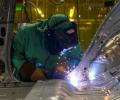
The headline seasonally adjusted IHS Markit India Manufacturing Purchasing Managers' Index (PMI) fell to a two-year low of 50.6 in October from 51.4 in September.

India's services sector activity expanded at the strongest pace in ten-and-a-half years in October, driven by a substantial upturn in business activity amid favourable demand conditions, a monthly survey said on Wednesday. Companies indicated that a notable pick-up in new business led to the fastest expansion in output in over a decade and as a result more jobs were created, even though business confidence remained subdued due to growing inflationary concerns. The seasonally adjusted India Services Business Activity Index rose from 55.2 in September to 58.4 in October, signalling the strongest rate of growth in ten-and-a-half years.
India's services activity expanded at the fastest rate in a year during February, while employment fell further and companies noted the sharpest rise in overall expenses, a monthly survey said on Wednesday. The seasonally adjusted India Services Business Activity Index rose from 52.8 in January to 55.3 in February, pointing to the sharpest rate of expansion in output in a year amid improved demand and more favourable market conditions. The index was above the critical 50 mark that separates growth from contraction for the fifth month in a row during February as the roll-out of COVID-19 vaccines led to an improvement in business confidence towards growth prospects.

The Fed interest rate decision, domestic macroeconomic data announcements and quarterly earnings will be the major sentiment drivers for the equity market in a holiday-shortened week ahead, analysts said. Investors will also take cues from the monthly auto sales numbers to be announced on Monday. Equity markets will remain closed on Thursday for Diwali Laxmi Pujan and on Friday for Diwali Balipratipada.
India's services sector activity moderated in December as business activity and sales rose at a softer pace, while price pressures and the possibility of new waves of Covid-19 affected business sentiment, a monthly survey said on Wednesday. The seasonally adjusted India Services Business Activity Index fell from 58.1 in November to a three-month low of 55.5 in December. The rates of expansion moderated but were nevertheless "marked" by historical standards, the survey said.

The MoUs were signed on Monday under the 'Magnetic Maharashtra 2.0', hours before the violent face-off between Indian and Chinese troops in the Galwan Valley in Ladakh, in which 20 Indian Army personnel were martyred.

India's services industry expanded at its fastest pace in eight months in October as new business rose with discounting probably stoking demand, a survey showed on Wednesday.
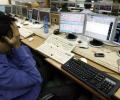
Top losers are Sun Pharma, Bajaj Auto, L&T, ITC, Hero Moto.

Trading in the domestic stock market would be influenced by trends in the global equities, macroeconomic data and foreign fund movement in a holiday-shortened week, analysts said. Markets may face volatile trends on Monday after Federal Reserve Chair Jerome Powell's speech at the Fed's annual economic symposium in Jackson Hole on Friday.

The seasonally adjusted India Services Business Activity Index rose from 45.4 in July to 56.7 in August, as the reopening of several establishments and increased consumer footfall boosted sales. The services sector witnessed the first expansion in output in four months and a rebound in business confidence.

Foreign currency loans raised by Indian companies nosedived to $210 million in the September quarter (Q2), 93.3 per cent less than the year-ago period when five firms raised $3.1 billion. The Q2 amount is the lowest since December 2003 quarter when India Inc raised $191 million. Companies cited volatility in the currency markets, sharp rise in interest rates in the United States, and fund availability in India as the main reasons behind the sharp fall.
The country is gripped in an unprecedented economic downturn which is certainly going to spill over into the second half of this year unless the infection rate can be brought under control.

The coronavirus outbreak has brought a large part of the world's second-largest economy China to a standstill and its impact has been felt across industries.

India's manufacturing sector activity witnessed a significant loss of growth momentum in May due to the intensification of the COVID-19 crisis and its detrimental impact on demand, a monthly survey said on Tuesday. The seasonally adjusted IHS Markit India Manufacturing Purchasing Managers' Index (PMI), fell to 50.8 in May, down from 55.5 in April, as companies observed the slowest rises in new work and output in ten months amid intensification of the COVID-19 crisis. In PMI parlance, a print above 50 means expansion while a score below 50 denotes contraction.

PMI went up from 51.2 points in May to 53.1 in June. Owing to the June figure, PMI for manufacturing stood at 51.9 points in the first quarter of 2018-19 against 51.8 points in the fourth quarter of 2017-18.

India's consumer price index (CPI)-based inflation could ease in the coming months thanks to the arrival of kharif crops, lower international commodity prices, and a pass through of lower input costs to consumers, the finance ministry said in its Monthly Economic Review (MER) for October, which was released on Thursday. The MER, however, warned that the global macroeconomic situation remained precarious and a recession in many advanced economies would impact India's exports. "Easing international commodity prices and new Kharif arrival are set to dampen inflationary pressures in the coming months.
India's services sector activity continued to expand in September, supported by favourable underlying demand amid the easing of COVID-19 restrictions, but lost some momentum from August's 18-month high level, a monthly survey said on Tuesday. The seasonally adjusted India Services Business Activity Index fell from 56.7 in August to 55.2 in September, but remained well above its long-run average. "Despite easing from August, the rate of expansion was marked and the second-fastest since February 2020," the survey said.

Indian service sector output broadly stabilised in September but remained in the contraction zone as incoming new business fell moderately due to the damaging impact of the pandemic on demand, leading to more job losses.

India's manufacturing sector activities witnessed the strongest rate of growth in three months in July amid improved demand conditions and easing of some local COVID-19 restrictions, a monthly survey said on Monday. The seasonally adjusted IHS Markit India Manufacturing Purchasing Managers' Index (PMI) rose from 48.1 in June to 55.3 in July, pointing to the strongest rate of growth in three months. In PMI parlance, a print above 50 means expansion while a score below 50 denotes contraction.

The survey also showed that both input and output prices rose at a slower pace during the month.

India's manufacturing sector activities lost further growth momentum and fell to a seven-month low in March as demand was constrained by the escalation of the COVID-19 pandemic, a monthly survey said on Monday. The seasonally adjusted IHS Markit India Manufacturing Purchasing Managers' Index (PMI) fell from 57.5 in February to a seven-month low of 55.4 in March. However, the latest reading was indicative of a substantial improvement in the health of the sector that outpaced the long-run series average, it said. In PMI parlance, a print above 50 means expansion while a score below 50 denotes contraction.

In the absence of major domestic events, equity markets will be driven by global trends, foreign fund flows and movement in the Brent crude oil, analysts said. The major global events this week are the European Central Bank interest rate decision and China's inflation rate, they added. "Indian equity markets are outperforming most of their global peers and trying to show resilience despite weak global cues.

Benchmark indices continued their downtrend on Monday, with the Sensex falling 84.88 points, tracking selling in index majors Infosys and Reliance Industries along with weak global equities. The 30-share BSE benchmark went lower by 84.88 points or 0.15 per cent to settle at 56,975.99 after recovering some lost ground during the fag-end of trade. During the day, it tanked 648.25 points or 1.13 per cent to 56,412.62. The NSE Nifty declined 33.45 points or 0.20 per cent to close at 17,069.10.

Finance Minister Nirmala Sitharaman on Tuesday said there were visible signs of revival in the economy but the GDP growth may be in the negative zone or near zero in the current fiscal.

India's manufacturing sector activities eased slightly in February but firms were upbeat as they responded to increased new work intakes by stepping up production and purchasing activities, a monthly survey said on Monday. The seasonally-adjusted IHS Markit India Manufacturing Purchasing Managers' Index (PMI) fell marginally to 57.5 in February from 57.7 in January, indicating that even though the pace of growth eased from January it remained sharp in the context of historical data. The headline figure for February remained above its long-run average of 53.6, the survey noted. In PMI parlance, a print above 50 means expansion while a score below 50 denotes contraction.

Macro-economic data from China and minutes of the US Federal Reserve's last meeting caused the turmoil as stocks tumbled around the globe.
India's services sector activities eased in March as growth was hit by the detrimental impact of the coronavirus pandemic and input costs remained elevated, a monthly survey said on Wednesday. The seasonally-adjusted India Services Business Activity Index fell from 55.3 in February to 54.6 in March. Though the rates of expansion softened, it indicated growth for the sixth consecutive month. In PMI parlance, a print above 50 means expansion while a score below 50 denotes contraction.

There will be status quo with regard to the MoUs signed with Hengli Engineering, PMI Electro Mobility Solutions JV with Photon and Great Wall Motors on June 15, 2020.

Domestic macroeconomic data, RBI policy and developments related to the Russia-Ukraine war would be major driving factors for the stock market this week, analysts said. Moreover, FPI investment and trends in crude oil would also influence the trading sentiment, they added. "This week, the RBI credit policy will be a critical factor for Indian markets.
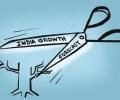
Moody's Investors Service on Thursday slashed India's economic growth projection for 2022 to 7.7 per cent, saying that rising interest rates, uneven monsoon, and slowing global growth will dampen economic momentum on a sequential basis.

The seasonally adjusted Nikkei India Services Business Activity Index fell to 50.2 in May, from 51.0 in April, pointing to the slowest growth rate in the current 12-month stretch of expansion.

The IHS Markit India Manufacturing PMI rose from 51.2 in November to 52.7 in December. Factories benefited from a rebound in demand, and responded by scaling up production to the greatest extent since May. As per the survey, new work orders witnessed marked improvement, with the pace of expansion picking up to the fastest since July.

IndusInd Bank was the top gainer in the Sensex pack, rising nearly 6 per cent, followed by Axis Bank, SBI, Maruti, Tech Mahindra and Reliance Industries. NSE Nifty surged 183.70 points to close at 17,166.90.
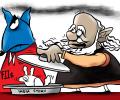
Foreign portfolio investors (FPIs) turned net buyers in October after being net sellers in the previous month. In October, FPIs bought shares worth nearly Rs 8,430 crore ($1 billion) against net selling of Rs 13,405 crore ($1.6 billion) in September. Positive flows during three of the previous four months have pushed the domestic markets towards fresh all-time highs. At present, the Sensex and Nifty are less than 2 per cent shy of breaching record highs logged in October 2021. A rally in equity markets in the US and Europe is in hopes that the Federal Reserve may go soft on rate hikes after its November meeting.
India was already in the midst of a protracted economic slowdown before the virus hit due to a festering crisis among shadow lenders and declining consumer demand and private investment. Service sector activity in India is still effectively on hold.
A figure above 50 indicates that the sector is expanding, while a figure below that level means contraction.
