
US-Indian space company Pixxel has partnered with Bengaluru-based artificial intelligence firm Sarvam to build an orbital data centre satellite.

India's move to privatise PSLV rocket production through IN-SPACe has triggered debate over national security, ageing technology and the agency's role.

The private consortium would invest more than Rs 1,200 crore over the next five years to launch a constellation of 12 state-of-the-art Earth Observation satellites equipped with panchromatic, multispectral, hyperspectral, and microwave SAR (synthetic aperture radar) sensors.

This is the first deal by an Indian startup after the sector was opened to private companies in 2020.

Pixxel has raised $95 million in funding and with the company's commercial Firefly satellites up in orbit selling data globally 'we know and seen what it takes to make this business work.'

India is set to take its first steps towards its own human space flight when the uncrewed Gaganyaan mission soars to the skies later this year. Private players in the space sector are also gearing up for launching satellites on home-built rockets.

India took another leap in space infrastructure with the foundation stone laid for a new launch pad at the country's second rocket port in Kulasekarapattinam.

Notably, four portfolio companies-- Agnikul, ePlane, CynLr, and GalaxEye -- of deep-tech investor Speciale Invest made it to the list.

The race for space has got real, and it is attracting funding like never before. In 2022 so far, funding to private players in the space sector has jumped a whopping 61.5 per cent - soaring to $108.52 million compared to $67.2 million in 2021. Propelling it is the government's decision to open up the space sector to private players and the work done by companies like Skyroot Aerospace, the Hyderabad-based start-up behind the launch of India's first privately developed rocket on November 18.
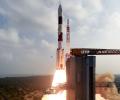
The launch is scheduled at 11.46 am on November 26, said the national space agency headquartered in Bengaluru.
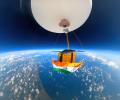
Lauding India's ambitious space programme, The New York Times has said the country, currently witnessing an 'explosive' growth in space-tech start-ups, is set to 'transform the planet's connection to the final frontier' and can emerge as a 'counterweight' to China.

The new year will witness two unmanned missions under the "Gaganyaan" project, deep ocean exploration project, "Samudrayaan" and many more.

A business in India wanting access to maps and geospatial data would typically have to wait months before it got what it wanted. All this is set to change with the new guidelines on geospatial data, report Neha Alawadhi and Peerzada Abrar.

The mission objective is to ensure data continuity of ocean color and wind vector data to sustain the operational applications.
While participation of start-ups in the space sector has largely been minimal so far, their involvement will be key towards building India's very own aerospace companies such as Maxar, Elon Musk's SpaceX and Rocket Labs, according to experts.

Government think-tank body Niti Ayog CEO Amitabh Kant supported the industry demand and called for setting up of a single window clearance system for expeditious approval of projects. Start-ups and small medium enterprises requested the prime minister to provide support in low-cost capital at the virtual launch of space and satellite industry body Indian Space Association (ISpA).
