
US President Donald Trump's plan to sign an executive order to cut prescription drug prices by 30-80 per cent could lead to a global price adjustment with pharma firms pushing lower-cost countries like India to raise prices, according to the economic think tank GTRI. The US move could push prices in lower-cost countries like India as manufacturers would seek to recover losses and R&D costs from these nations.

The decision has come in the wake of allegations of plagiarism against the Mashelkar panel report.
: Shri Vile Parle Kelavani Mandal's Institute of Intellectual Property Studies, Mumbai, invites applications for its one year Post-graduate Diploma in Patent Law and Practice and a four-month Certificate Course in Intellectual Property.
Shri Vile Parle Kelavani Mandal's Institute of Intellectual Property Studies in association with Narsee Monjee Institute of Management Studies invites applications for its one year Post Graduate Diploma in Patent Law and Practice.
'No retaliatory tariffs now. You can retaliate after a few months.' 'Today, there is no need to retaliate because it is a question of long term benefits.'
India would have a new World Trade Organisation-compliant patent regime by January 1, 2005, apart from making India competitive
The new Patents Law, which was passed by Parliament in the third week of March, came into force on Tuesday with President A P J Abdul Kalam giving his assent.
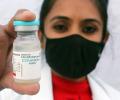
After reports claimed that filings in patent offices in India, the US, and Europe did not mention ICMR or its scientists, but only BBIL and its scientists, the Hyderabad-based biotechnology (biotech) company clarified that in the "rush" to develop vaccines and file appropriate patents, BBIL had missed adding ICMR's name in the original filings.
Intellectual property rights must be backed by a strong enforcement mechanism that will effectively curb counterfeiting and piracy, an official of the World Intellectual Property Organisation said in New Delhi on Thursday.
Let's look at the major provisions that will have lasting effect on the industry, both domestic and exports.

Microsoft's methods of protecting copyright have been slammed by the court as abuse of its 'money power'.
Paul Herrling, global head of Novartis' corporate research, spoke to Business Standard about the changing concepts in R&D and Novartis' strategy.
Intellectual Property is still a strange beast in this country. People eye it rather warily, uncertain of its temperament (how hard will it bite or is it the clawing sort?) and the hidden threat in its still unfolding contours. To familiarise businessmen with this creature, industry organisations have been doing a fair amount of spadework organising seminars, workshops and talks by visiting experts.

Negotiations for a trade deal between India and the UK have run into fresh controversy, after the proposals under a leaked chapter of the deal on intellectual property (IP) are believed to put access to affordable, lifesaving generic medicines from India at risk. According to the draft IP chapter put out by an international trade portal bilaterals.org, the UK is seeking continuous extension of patent period and rights through small tweaks in the drug, known as evergreening. This may prevent patents from expiring, impacting cheaper drug availability and its production by Indian generic drug manufacturers.
The government on Monday said it was open to suggestions on fine-tuning amendments to patent laws.
Despite the Left Parties asking the government to address the concerns of Indian companies before seeking amendments in the Patent law, Commerce Minister Kamal Nath on Tuesday said the country would meet the deadline for product patent protection.

The USTR has placed India on its "priority watch" list for two years in a row, saying the country's patent laws unfairly favour local drug makers.
As marketing rights for off-patent drugs in the US become less exclusive, companies are scrambling for fresh strategies to make up for the revenue loss.

Says Indian Patent Law conforms fully with global obligations under the WTO IPR pact-TRIPS.

Dying To Survive, on its way to becoming China's biggest box office hit, may compel the Xi Jinping government to change its policy towards Indian pharmaceutical companies, says Tarun Vijay.

The industry has registered a 29-fold increase in patents over 2005-2008.
The Global Institute of Intellectual Property (GIIP) opens admissions for its post graduate courses.

The Valcyte case is vital as it bars incremental innovation and recognises the right of patient groups to oppose patents.

Western drugmakers, including Pfizer Inc, Novartis AG, Roche Holding AG and Sanofi SA, covet a bigger share of the fast-growing Indian drugs market.
The Prime Minister's Office (PMO) has sought the opinion of various stakeholder departments on the need for further amendments to the patent law to introduce some of the controversial provisions that were kept out during the previous amendment to the Indian Patent Act five years ago.

Carlos M Correa of Brazil, a patent expert of international repute whose views have been widely quoted by the Mashelkar committee to support its conclusions, has complained of 'misinterpretation' of some quotes from a published article titled 'Integrating Public Health Concerns into Patent Legislation in Developing Countries'.

MNC-backed IP summits try to influence sitting judges on patent law enforcement issues pending in Indian courts.

A comprehensive IPR policy would help the government pull in investors into its 'Make in India' initiative.
The NMIMS School of Law's Institute of Intellectual Property Studies, Mumbai, introduces a one-year postgraduate diploma course and a four-month weekend certificate course in intellectual property laws.
With anti-competitive practices of global pharma companies increasingly coming under regulatory scrutiny internationally, Indian public interest groups and the domestic medicine makers complain that India's competitive laws are not equipped to face a similar situation of monopoly in the sales of patent protected medicines in the country.
The presence of more Indian Americans in the team has made the whole community proud.
Global pharma majors such as Novartis, Roche and Pfizer have secured 392 medicine patents in less than three years of India changing its patent laws to allow product patenting system for drugs in the country. While Swiss multinational Hoffmann La Roche leads the tally with 34 patent grants, Novartis AG and Pfizer Inc follow closely with 25 and 24 respectively.
A study by a Swedish University has accused India's Active Pharmaceutical Ingredient (API) manufacturers of causing alarming levels of environmental pollution and threatening the region's flora and fauna.
Individual scientists attached to research institutions and domestic companies like Lupin, Dr Reddy's and Cadila account for the rest.
The Norwegian government has intervened in the high-profile case filed by Novartis against Indian patent laws by asking the drug company to withdraw the litigation.
Even as some major global pharmaceutical majors like Novartis say India's patent laws are weak and a hurdle to their investment plans for the country
The Mashelkar panel's recommendation to consider all modifications and variants of new chemical entities (NCEs) as patentable has invited criticism from sections of Indian pharmaceutical industry and public interest organisations
 © 2026 Rediff.com - Advertise with us - Disclaimer - Privacy Policy - Sitemap - Feedback - About us - Terms of use - Grievances