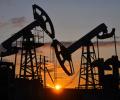
Reliance Industries' refining earnings will remain steady, supported by its position as India's largest importer of Russian crude and favourable global supplies, according to analysts at JM Financial and Goldman Sachs. Reliance imported more Russian barrels than any other Indian refiner in the past eight months, according to data from Bloomberg/Kpler.

State-run Indian Oil Corp is the biggest company in terms of revenue, followed by Reliance Industries, according to the Fortune 500 list of Indian companies for 2012.

Corporate India's struggle with subdued revenue and earnings growth persisted in the October-December quarter of 2024-25 (Q3FY25). The combined net sales (gross interest earnings for lenders) of listed companies grew in single digits for the seventh consecutive quarter, while their combined net profit rose by a single digit for the third straight quarter.
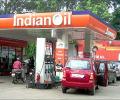
At the current market price of the stock, that stake would be valued at about $1.5 billion.

State-owned ONGC and Oil India Ltd (OIL) are likely to buy a 10 per cent stake in Indian Oil Corp (IOC) from the government at Rs 220 per share, aggregating about Rs 5,300 crore (Rs 53 billion).
Like the rest of the world, it's the oil companies that are dominating the Fortune 500 entries from India in 2013.

The Q1FY24 earnings season has started on a dismal note for corporate India. The early-bird companies' revenue growth has been at a 10-quarter low, while the combined earnings of non-BFSI (banking, financial services, and insurance) companies seem to have hit the ceiling. The numbers suggest corporate India is entirely dependent on BFSI companies and the IT services sector to drive growth in revenue and profit while other sectors are showing signs of stagnation.

As much as 8 billion rubles (about Rs 1,000 crore) of dividend income belonging to Indian oil firms is stuck in Russia after the Putin administration clamped down on dollar repatriation, officials said on Friday. Indian state oil firms have invested $5.46 billion in buying stakes in four different assets in Russia. These include a 49.9 per cent stake in Vankorneft oil and gas field and another 29.9 per cent in TAAS-Yuryakh Neftegazodobycha fields.
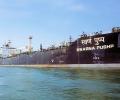
Sri Lankan government on Monday admitted that it has run out of cash to buy fuel as pumps in most filling stations across the country have run dry, exacerbating the deepening foreign-exchange crisis that has crippled the island nation's economy.
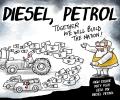
Petrol and diesel price soared to an all-time high across the country on Friday after rates were hiked again by 25 paise and 30 paise a litre, respectively. The price of petrol in Delhi rose it its highest ever level of Rs 101.89 a litre and to Rs 107.95 in Mumbai, according to a price notification of state-owned fuel retailers. Diesel rates too touched a record high of Rs 90.17 in Delhi and Rs 97.84 in Mumbai.
Diesel price on Friday was hiked by 20 paise per litre - the first increase in rates in over two months - as international oil prices neared their highest since 2018. Price of diesel was hiked to Rs 88.82 per litre in Delhi and to Rs 96.41 in Mumbai, according to a price notification of state-owned fuel retailers. Petrol price was not changed. It costs Rs 101.19 a litre in Delhi and Rs 107.26 in Mumbai.
Rajapaksa said China indicated that it would help Sri Lanka, while adding that "usually they don't like" lending out more money to cover earlier debt payments.
Petrol price in Delhi was hiked to Rs 77.28 per litre from Rs 76.73, while diesel rates were increased to Rs 75.79 a litre from Rs 75.19, according to a price notification from State oil marketing companies. Rates have been increased across the country and vary from state to state depending on the incidence of local sales tax or VAT.

This is the second hike in diesel price this month.
The price of petrol was hiked to Rs 101.39 a litre in Delhi from Rs 101.19 and to Rs 107.47 per litre in Mumbai, according to a price notification of state-owned fuel retailers. Diesel rates went to Rs 89.57 a litre in Delhi and Rs 97.21 in Mumbai.
In nine hikes, petrol price has gone up by Rs 5 per litre and diesel by Rs 4.87 a litre.

After a hiatus of nearly two decades, the government's programme to privatise state-owned firms restarted with the handing over of debt-laden national carrier Air India to the Tata Group. With the new owner shelling out Rs 18,000 crore for the buyout of the 'Maharaja', this would be the highest-ever amount garnered through privatisation, and is even more than the cumulative sum mopped up through strategic sales from 1999-00 to 2003-04. The government had in October last year inked the share purchase agreement with the Tata Group for sale of national carrier Air India for Rs 18,000 crore. Tatas would pay Rs 2,700 crore cash and take over Rs 15,300 crore of the airline's debt.
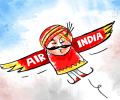
With the new owner shelling out Rs 18,000 crore for the buyout of 'Maharaja' this would be the highest ever amount garnered through privatisation or even the cumulative sum garnered through strategic sale in 1999-00 to 2003-04. The government had garnered roughly over Rs 5,000 crore during that five-year period by privatising 10 CPSEs.

International oil prices retreated from an over seven-year high but was still above $100 a barrel and continue to pose threat to India's inflation rate and current account deficit. While there are no supply concerns as the oil route remained open, consumers will feel the pinch when PSU oil firms start passing on the increase in international rates through a revision in petrol and diesel prices, which have been on a pause for over three-and-a-half-months in view of elections in Uttar Pradesh and four other states. The government is "closely monitoring the situation" and will "take appropriate steps as and when required", a top official said. Brent crude oil surged past $105 per barrel on Thursday for the first time since August 2014, following Russia's invasion of Ukraine.

Diesel price on Monday was hiked by 25 paise per litre -- the third increase since last week -- and more rate hikes for both diesel and petrol are in the offing in the coming days as international oil prices have soared to a three-year high. The price of diesel was hiked to Rs 89.32 per litre in Delhi and to Rs 96.94 in Mumbai, according to a price notification of state-owned fuel retailers. This is the second straight day of increase in diesel prices and the third since September 24 when the state-owned oil firms ended a three-week hiatus in rates.
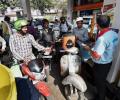
In 13 hikes, petrol price has gone up by Rs 7.11 per litre and diesel by Rs 7.67 a litre.

The revision in rates announced by Indian Oil Corp is excluding VAT and the actual change will be higher after considering them

In 12 hikes, petrol price has gone up by Rs 6.55 per litre and diesel by Rs 7.04 a litre.
In all, petrol price has gone up by Rs 1.74 per litre and diesel by Rs 1.78 a litre in three days.
State-owned Indian Oil Corp (IOC) on Friday said international oil prices have been range-bound in the last few weeks, warranting no revision in retail petrol and diesel rates. While petrol price hasn't changed since September 22, diesel rates have been static from October 2.

This is the highest any Indian company has been ranked on the Fortune Global 500 list.

Indian Oil Corp is ranked highest at 161st in the Fortune 500 list.

According to Mukesh Ambani, this is the country's largest bonus issue.

Diesel rates had gone up by Rs 12.55 a litre between June 7, when oil firms resumed revising prices in line with cost, and July 25.

India on Monday lost the ONGC Videsh Ltd-discovered Farzad-B gas field in the Persian Gulf after Iran awarded a contract for developing the giant gas field to a local company. "The National Iranian Oil Company (NIOC) has signed a contract worth $1.78 billion with Petropars Group for the development of Farzad B Gas Field in the Persian Gulf," the Iranian oil ministry's official news service Shana reported. "The deal was signed on Monday, May 17, in a ceremony held in the presence of Iranian Minister of Petroleum Bijan Zangeneh in Tehran." The field holds 23 trillion cubic feet of in-place gas reserves, of which about 60 per cent is recoverable.
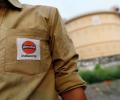
Indian Oil Corp (IOC) is deploying drones to monitor its vast network of pipelines across the country as it doubles down on the use of technology to thwart attempts to steal fuel, helping not just save the commodity but also avoid accidents. The country's top oil company already uses a combination of sophisticated technology and patrolling to detect any leakage from the pipeline network spanning over 15,000-kilometers. And now, it is adding drones to monitor the vast network, officials said. Use of technology helped throttle 34 attempts to pilfer fuel and arrest 53 persons in the 2020-21 fiscal year, they said adding the latest incident was in Sonipat, Haryana on August 17.
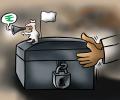
At the same time, the Cabinet approved reducing government's stake in select PSUs such as IOC to below 51 per cent while continuing to retain management control.
The demand, which had fallen by as much as 70 per cent, has since recovered after lockdown restrictions were eased beginning early May.
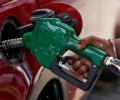
The fuel price hike for the last 16 days had caused inconvenience and disappointment among the general public.
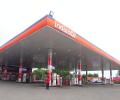
This is the first time that petrol sales in the world's third-largest oil importer have risen since the March 25 nationwide lockdown crippled economic activity and sent demand plummeting.

There will be corresponding price revisions on petrol and diesel in other states on account of change in dealer commission

Gandhi said the one paisa cut in petrol rates was not a "suitable response" to the fuel challenge he threw to the prime minister a few days ago.

Indian Oil Corp has emerged as India's biggest company in terms of annual revenue.

The three state-owned oil companies have decided to defer snapping fuel supplies to Air India. The airline owes the three firms over Rs 5,000 crore in past fuel bills.
 © 2026 Rediff.com - Investor Information - Advertise with us - Disclaimer - Privacy Policy - Sitemap - Feedback - About us - Terms of use - Grievances