
Artificial intelligence (AI) is no longer a side conversation for Indian pharma. It is fast becoming central to how drugs will be discovered, made, and supplied. Along with that shift comes a sharper focus on innovation, on the one hand, and quality and trust, on the other.

Fast-moving consumer goods (FMCG) companies, retail firms, and producers of consumer durables are witnessing stable urban demand. However, people in the trade are waiting for clearer signs of revival closer to the festival season, starting in September.

As temperatures shoot up this month signalling an early onset of summer, sales of air conditioners (AC) are set to increase, with companies expected to hike the prices of ACs by 4-5 per cent due to component shortages. Leading players like Haier and Bluestar and suppliers like EPack Durables have raised their production capacities to meet the 25-30 per cent rise in demand expected in the coming months.

Indian pharmaceutical companies may have units abroad as part of "distributed manufacturing" across various locations, according to industry veterans. This may come about over the next five to 10 years.

While there was a 6 to 7 per cent increase in volume compared to last year in the first few days of the month which coincided with festivals, a large part of the demand is yet to hit the market.

Sales of apparel were a mixed bag this festive season while those of consumer durables saw an uptick with mobiles, laptops, and air conditioners being in demand. In apparel, Tier-2 and -3 markets did better for some brands, because these have been witnessing an uptick for the past 18-20 months compared to metros. "The past two weeks have been good, and we saw a 13 per cent increase in value sales, and volume sales have also been similar," Manish Kapoor, managing director (MD) and chief executive officer (CEO), Pepe Jeans

Consumer durables retailers and manufacturers may end up bearing the cost of the Reserve Bank of India's (RBI's) tightening on easy personal loans, as their margins are expected to be impacted by higher borrowing costs. During the recently passed festival season, consumer durables companies started offering longer tenure loans, zero down payments, and zero interest on a wider assortment of products than ever before, making the products more affordable. While 18- and 24-month easy monthly instalment (EMI) options were available earlier, companies offered them only on select products; now, they are being extended to a larger section of products.
Consumer durables firms and fashion retailers expect double-digit growth in value terms in the ongoing festival season as consumers have stepped up purchases during this period. They expect to see value sales growth upwards of 15 per cent, which is especially coming in from cities. However, volume growth may lag behind value growth.

Rishad Premji, chairman of IT services major Wipro, saw his compensation for FY23 decline by almost 50 per cent year-on-year, due to a fall in the firm's profit. According to the Form 20-F, filed with the US Securities and Exchange Commission by Wipro, Premji's compensation for FY23 was $951,353, down 50 per cent from $1,819,022 in FY22. "Rishad A Premji is entitled to a commission at the rate of 0.35 per cent on incremental consolidated net profits of Wipro Limited over the previous fiscal year. However, in light of the fact that the incremental consolidated net profits for fiscal year 2023 was negative, the Company determined that no commission was payable for fiscal year 2023 to Mr Rishad A. Premji," said the company in the filing.
The reason? Price of open cell panels has gone up 15%. One of the main components in the manufacturing of TV sets, open cells contribute to 60%-65% of the manufacturing cost.
Automotive (auto) and consumer appliance companies are hoping for a bounty from the harvest season after two consecutive dry spells in 2020 and 2021. The season, which also marks the beginning of the regional New Year, kicked in across the country from April 1 - Gudi Padwa in Maharashtra; Ugadi in Karnataka, Telangana, and Andhra Pradesh; Bihu in the Northeast; and Chaitra Navratri in the North. Manufacturers and retailers of cars, two-wheelers, and consumer appliances said they have seen demand pick up year-on-year (YoY) at a brisk pace across categories.

The latest hike is likely to be followed by another such move next month, said industry players. Before the latest hike, companies had initiated price hikes to the tune of 12-13 per cent in 2021 but they weren't able to fully cover the increase in costs.
Maharashtra, which contributes between 12 and 15 per cent of appliances sales, announced lockdown-like curbs, meaning there will be no business for the second half of the month as well from the state.

Retailers want rental waivers should be extended for a few more months, since business is not expected to pick up before the Dussehra-Diwali period, which falls in October-November.

Offline retailers are feeling the Omicron January chill as consumers are apprehensive about venturing out in the midst of rising Covid cases across the country. Covid restrictions, as well as concerns over the new virus variant, are seeing shoppers pull back from the high streets and shopping malls, clearly cautious about streaming into stores and choosing to self-censor instead. Offline retailers' hopes of a bumper End-Of-Season Sale (EOSS) and Republic Day (R-Day) Sale to compensate for losses over the pandemic have been dashed. Fewer trips to malls mean lower footfall and sales, resulting in higher piling of stock - and possibly higher discounts.

While domestic sales in the second quarter are expected to be weak for major players, Lupin is likely to outperform the pharma sector on the back of a growing chronic portfolio.
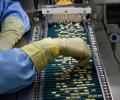
Once a difficult market to crack, in recent years, China has relatively opened up its drug market, enacting reforms and speeding up approval time.

But the fear of less-than-normal rain hitting rural demand continues to haunt the industry.

Black Friday sales in India received a good response as brands dropped their prices making customers queue up outside stores where discounts were steeper. Discounts were offered both online and offline. Most of the international brands in India offered discounts under the Black Friday Sale banner. The Black Friday Sale started in the US on the Friday after Thanksgiving Thursday. The day typically marks the beginning of the Christmas shopping season ahead of the festival.
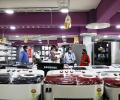
Durable goods companies and retailers say online sales won't compensate for the fall in offline sales.

'There is a clear business impact. People are avoiding crowded places and gatherings across cities. This is hitting business, both at traditional and modern trade outlets, during the Holi season, which kicked off from Saturday,' says Praveen Khandelwal, general secretary, Confederation of All India Traders (CAIT).

The company will now focus on specialty products in Japan; it is open to inorganic opportunities, especially in India.

While companies continue to face regulatory pressure leading to higher costs, they see an uptick from the launch of differentiated and high-margin products

This acquisition marks Lupin's foray into the Japanese branded market in-line with aspirations to build business globally.

Stock clearing to rain discounts on consumers in June ahead of GST rollout.

As on July 31, the valuation of his shareholding in the company stood at Rs 9,830 crore.

FMCG, durables, pharma firms say they remain unclear about transition gains and losses

In the last few years, zero per cent financing has become quite attractive as consumers aspire to buy the latest products, especially in categories such as mobile phones and television sets.

Nearly 92% of the 250-mn smartphones run on Android.
 © 2026 Rediff.com - Investor Information - Advertise with us - Disclaimer - Privacy Policy - Sitemap - Feedback - About us - Terms of use - Grievances