The K-shaped economic recovery in India from the pandemic slowdown shows in corporate results as well. The automobile sector, which represents big-ticket consumption, continues to do well and has increased its share in corporate revenues and profits while fast-moving consumer goods (FMCG) companies that sell low-ticket consumer goods are struggling with poor sales and earnings growth. The share of the automobile sector, including makers of auto ancillaries, in corporate net sales rose to a 10-quarter high of 10.05 per cent during July-September 2023 (Q2FY24) from 8.94 per cent a year earlier and 9.75 per cent in Q1FY24.

A new regulation concerning the disclosure of family arrangements by listed companies is exacerbating rifts between feuding shareholders. The latest example is Bengaluru-based TD Power Systems (TDPS), currently enmeshed in a legal dispute before the Karnataka high court over ownership of its 16 per cent equity. Vijay Kirloskar, who is asserting a claim over the 16 per cent stake held by Mohib Khericha (chairperson of TDPS) and Nikhil Kumar (managing director of TDPS and nephew of Kirloskar), has sent a letter to the market regulator, Securities and Exchange Board of India (Sebi), and stock exchanges. He accuses TDPS of insufficient disclosure concerning shareholder agreements.
As the world celebrated International Day of Persons with Disabilities (PwD) on December 3, corporate India has kept up with efforts to make workplaces more inclusive and accessible. Organisations across sectors are taking initiatives such as equipping offices with practical work tools like Braille-friendly and voice-enabled lifts and screen readers. While inclusion has gained pace, only 11.3 per cent (or 3.4 million out of 30 million) Indians with disabilities have jobs.

Passenger vehicle wholesales in India rose to a record high in October as companies pushed dispatches to dealers to cater to the enhanced demand in the festive season. The overall passenger vehicle wholesales in October rose to 391,472 units, up 16 per cent from 336,679 units in the same month last year. Last month witnessed the highest-ever dispatches of passenger vehicles in the domestic market by Maruti Suzuki India and Mahindra & Mahindra.

Tata Sons chairman Natarajan Chandrasekaran was paid Rs. 113 crore as remuneration for 2022-23 (FY23), including Rs. 100 crore as commission on profit. Chandrasekaran, 60, often referred to as Chandra, received a remuneration of Rs. 109 crore in 2021-22 (FY22). With this, Chandra has emerged as one of the highest-paid chief executive officers (CEO) in Corporate India for FY23.
TVS Motor Company has been one of the best-performing two-wheeler stocks in the current financial year (FY24), enriching investors with gains of 24 per cent. Among listed two-wheeler stocks, only Hero MotoCorp has done better in this period. New launches, market share gains, steady margins and expectations that its performance will continue in FY24 are expected to support TVS Motor's stock.

The US Federal Reserve's interest rate decision, quarterly earnings of corporates and domestic macroeconomic data will influence trading in the equity market in a holiday-shortened week ahead, analysts said. Foreign funds' trading activity, monthly automobile sales data and global trends would also guide market movement this week, they added. Markets would remain closed on Monday on account of 'Maharashtra Day'.
Riding on an improved show across parameters, TVS Motor (TVS) outperformed larger two-wheeler peers Hero MotoCorp (Hero) and Bajaj Auto (Bajaj) during the September (Q2 of FY23) quarter. The Chennai-based firm, which has the most-diversified portfolio among two-wheeler majors, posted a 28 per cent jump in revenues. This compares to 18 per cent growth for Bajaj Auto and single-digit uptick for Hero MotoCorp.
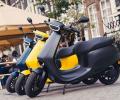
Even though electric two wheeler (e2W) companies saw a slight recovery in July of 12 per cent with 49,518 registrations - after a wash out in June because the government slashed the FAME 2 subsidy by a third - registrations are still lower for the second month in a row compared to April FY24. The slow pace has raised doubts about whether the registrations will reach anywhere near either Niti Aayog's ambitious target of 2.4 million vehicles in FY24 or whether they will be closer to the trimmed down industry expectation of around one million. In June, e2W registrations plunged to a mere 44,253, the worst month in more than a year, as companies hiked scooter prices.
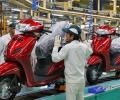
Honda Motorcycle and Scooter India (HMSI), the country's second-largest two-wheeler manufacturer, is planning to launch its first electric vehicle (EV) here by March next year, said CEO & MD Atsushi Ogata on Monday. The company would also enter the low-end motorcycle market in March by launching a 100cc engine bike at a price that will "positively shock" customers, he said while speaking with reporters, after launching the Activa with Honda Smart Key. HMSI's first EV, an electric scooter, will have a fixed battery and the second model will have two swappable batteries, Ogata explained.

Can Bhavish Aggarwal upend the electric two-wheeler market, which is now overwhelmingly in favour of scooters?

Automotive (auto) and auto ancillary stocks have been in the fast lane thus far in 2023-24 (FY24), with the National Stock Exchange Nifty Auto Index surging nearly 27 per cent, outperforming the Nifty50, which has gained roughly 11 per cent during this period. The top-gear performance of auto stocks at the bourses, according to A K Prabhakar, head of research at IDBI Capital, has been triggered by the premiumisation of products across vehicle manufacturers, which has seen vehicle sales remaining relatively stable. "It is not about higher sales figures now, but about premiumisation.

The limited availability of flexible (flex)-fuel vehicles in the Indian market and the slow rollout of ethanol-blended petrol by oil-marketing companies (OMCs) remain major obstacles to achieving widespread use of biofuels in the transportation sector in India. Recently, two Union ministers have emphasised India's biofuel potential, arguing that it has the capacity and potential to lead a transition towards widespread biofuel adoption. Road Transport Minister Nitin Gadkari signalled that this transition is well underway and urged car manufacturers to quickly adapt and introduce new biofuel-run vehicles, lest the government resort to taxing diesel vehicles.

Leading two-wheeler maker Hero MotoCorp is going full throttle to launch a Harley-Davidson model with retro styling as it looks to enter a very profitable segment in the premium motorcycle space, according to a senior company official. The alliance between Hero and Harley-Davidson fructified last year after the iconic US two-wheeler maker announced discontinuation of sales and manufacturing operations in India, a decade after it started selling its premium bikes in the country. "There are two legs to the Harley tie up strategy. One of course is that we are the sales distributors for Harley bikes in India.
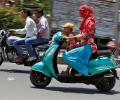
The two-wheeler sector has been underperforming its peers on the volumes front for over five quarters now. Even in the March quarter, Bajaj Auto and Hero MotoCorp posted a 17-24 per cent YoY decline in volumes, the sharpest in the listed auto universe. The ongoing impact of frequent price hikes, all-time high fuel prices, and muted rural sentiment has led to the lacklustre showing by two-wheeler makers. What has aggravated the situation for two-wheeler companies, which get almost all their sales from the internal combustion engine or ICE-based units, is the traction for electric two-wheelers (EV).

Stung by the government's punitive action on electric two-wheelers, registrations in April fell by nearly a fourth to 62,581 from 82,292 in March, according to data from VAHAN. Electric two-wheeler companies, including Okinawa, Hero Electric, Ather Energy, and TVS, have all clocked their lowest registrations in the four months of this calendar year. Ola Electric has been the only exception to this bloodbath, and has crossed its March numbers, hitting 21,560 registrations in April, which is its highest in this calendar year. As a result, there have been some interesting changes in the electric two-wheeler pecking order.
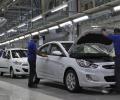
Automotive retail sales saw a 14 per cent rise in March on a year-on-year (YoY) basis, according to data released by the Federation of Automobile Dealers Associations (FADA). For the whole of financial year 2022-23 (FY23), sales grew 21 per cent YoY. For both March and the financial year, all categories, except for tractors, and including two-wheelers, three-wheelers, passenger vehicles (PVs), and commercial vehicles (CVs), posted double-digit growth. However, the total retail sales of 22.1 million for the financial year were still 12 per cent lower than the pre-Covid (FY20) level of 25 million, owing to an 18 per cent dip in the two-wheeler segment.
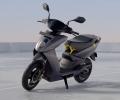
If you thought electric scooters have caught the fancy of only people in the metros, think again. According to data from electric two-wheeler maker, Ather Energy, 54 per cent of its sales of scooters, starting from Rs 1.2 lakh, come from Tier 2 and Tier 3 cities. Based on sales per lakh population, the top five cities for the company are Calicut, followed by Kochi, Kolaphur, Trivandrum and Pune.
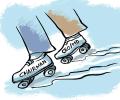
Mirroring the increase in the earnings of their companies, the chief executives and promoters of India's top listed firms gained handsomely from the boom last financial year. Their remuneration includes salaries, perquisites or perks, and profit-linked commissions.
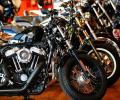
Two years after it hitched a ride with Hero MotoCorp (Hero), Harley-Davidson (Harley) and the Pawan Munjal-led firm are gearing up to ride into the middleweight (midweight) motorcycle segment (350-850cc) in the world's largest two-wheeler market.
After lagging behind other segments in the automotive (auto) space over the past few years, two-wheelers are expected to reverse their volume underperformance. After witnessing a 36.3 per cent volume decline over the 2018-19 (FY19) through 2021-22 (FY22) periods, the sector staged a recovery in 2022-23 (FY23), with volumes rising 17 per cent. While volumes are still a quarter lower than the FY19 peak of 21 million units, a double-digit growth trajectory is expected to prolong.

This is not the first time Reliance has eyed a stake in the club.
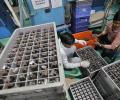
The automobile sector is considered a good indicator of economic health. It has a very long value chain, from primary materials, like metals, glass and plastic, to value-added high-end electronic components, specialised alloys, and software.

Honda Motorcycle and Scooter India (HMSI), India's second-largest two-wheeler maker, on Wednesday revealed its electric vehicle (EV) roadmap, which includes setting up a dedicated EV factory, launching the first two EVs in 2023-24, and establishing 6,000 battery exchange points in the country. HMSI plans to establish a specialised unit for the manufacturing of electric vehicles (EVs), named 'Factory E', at its Narsapura plant located in Karnataka. Factory E will be created by converting an existing production line that currently manufactures internal combustion engine (ICE) vehicles, said Atsushi Ogata, HMSI managing director and chief executive officer.

Automotive (auto) and consumer appliance companies are hoping for a bounty from the harvest season after two consecutive dry spells in 2020 and 2021. The season, which also marks the beginning of the regional New Year, kicked in across the country from April 1 - Gudi Padwa in Maharashtra; Ugadi in Karnataka, Telangana, and Andhra Pradesh; Bihu in the Northeast; and Chaitra Navratri in the North. Manufacturers and retailers of cars, two-wheelers, and consumer appliances said they have seen demand pick up year-on-year (YoY) at a brisk pace across categories.
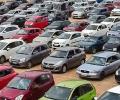
Automobile retail sales in India rose 11 per cent in September as better supplies from manufacturers enabled dealers to ramp up customer deliveries amid the ongoing festive period, Federation Of Automobile Dealers Associations said on Tuesday. Last month, total retail sales stood at 14,64,001 units as compared to 13,19,647 units in September 2021. FADA noted that October is expected to witness even better overall sales due to the festive season further gathering steam.
India's incumbent two-wheeler players, led by TVS Motors, are flexing their muscles, having crossed the registration of 10,000 electric two-wheelers for the first time in November this year, according to data from Vahan, the website of the ministry of road transport and highways. The two key incumbent players, TVS Motors and Bajaj Auto, now account for around 15 per cent share of registrations in the month of November. The number will only go up with Hero MotoCorp now joining the bandwagon with its Vida range of electric scooters.
Even as India overtakes Japan in automotive sales in 2022, moving to third place for the first time, oddly enough the country's biggest motor show is going to see some big hitters give it a clear miss. Some prominent automotive brands have cited high event costs, negligible returns on investment, poor event management, and unfavourable location as reasons for their reluctance to participate. Major pure-play electric two-wheelers, too, are riding past this year's edition of the Auto Expo.

The country's largest two wheeler maker Hero MotoCorp and Harley-Davidson on Tuesday announced a wide ranging partnership for the Indian market, days after the US cult bike manufacturer announced its exit from the country. As part of the deal, Hero MotoCorp will develop and sell a range of premium motorcycles under the Harley-Davidson brand name in the country. Besides, it will take care of service and parts requirements for the Harley bikes.
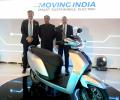
With its new premium Primus and Ampere NXG, it is targeting buyers seeking a faster and more stylish ride
Domestic passenger vehicle (PV) sales saw a significant growth in October due to increased availability of semiconductor chips and rising consumer confidence. The sales figures during the month - which coincided with the first post-Covid festival season - released by the top ten carmakers saw a jump of 30.7 per cent to 322,885 units in October. Auto companies count wholesales - units dispatched to dealers - as sales.
Electric two-wheelers have zipped past the half-a-million registration mark and achieved a market penetration of 4 per cent at the fag end of Calendar 2022, according to data released by VAHAN. According to VAHAN data for the year (until December 27), 560,000 two-wheelers were registered in the country, up a staggering fourfold over 2021, when only 136,000 were registered, and when electric vehicle penetration was a mere 1.05 per cent. The total number of two-wheelers (internal combustion engine, or ICE, and electric) registered so far in 2022 stands at 14.5 million, up only 12.7 per cent over the previous calendar year.

M&M was the top gainer in the Sensex pack, rallying over 5 per cent, followed by Bajaj Finance, HDFC Bank, ICICI Bank, Bharti Airtel and Hero MotoCorp. NSE Nifty rose 65.30 points, or 0.71 per cent, to finish at 9,270.90.
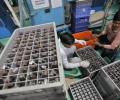
After auto components major Bosch Ltd, Sundaram-Clayton, Hero MotoCorp now announce temporary production shut down

Tech Mahindra was the top loser in the Sensex pack, shedding 2.51 per cent, followed by Bajaj Auto, RIL, Hero MotoCorp, IndusInd Bank, Mahindra and Mahindra, HDFC and TCS.

With more features and frills, the updated Hero Xtreme seems worth a bang for the buck, says Faisal Ali Khan of MotorBeam.com

Top gainers in the Sensex pack included Vedanta, M&M, ONGC, Hero MotoCorp and Maruti, rising up to 3.79 per cent.
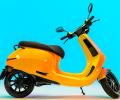
The entry of SoftBank-backed Ola into the electric scooter (e-scooter) segment is set to power up the overall market and perhaps fast-track the adoption of battery-operated vehicles. But for manufacturers of internal combustion engine (ICE)-powered two-wheelers, such as Bajaj Auto, Hero MotoCorp, and TVS Motor, it will be a double whammy. Not only will they have to contend with the aggressive pricing of Ola's scooter and incur a loss at each unit of the e-scooter sold, the volumes of their regular (ICE) models, too, could feel the squeeze, observed analysts. Ola is expected to price its e-scooter in the range of Rs 85,000-1.1 lakh.

For Hero MotoCorp, India's largest two-wheeler company, it's a calculated gambit to revive Harley-Davidson whose ride in India has been anything but easy since it got here.When automotive firms embark on alliances, it's a roll of the dice on how such marriages will play out.
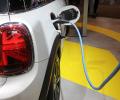
Electric vehicle retail sales in the country witnessed over three-fold jump last fiscal with two-wheeler offtake leading the segment, according to data compiled by automobile dealers' body FADA. Total electric vehicle (EV) retails reached 4,29,217 units in 2021-22, a rise of three-fold from 1,34,821 units in the financial year 2020-21, the industry body said. Total EV sales had stood at 1,68,300 units in the 2019-20 fiscal, it noted.
 © 2026 Rediff.com - Advertise with us - Disclaimer - Privacy Policy - Sitemap - Feedback - About us - Terms of use - Grievances