
The Finance Ministry has clarified that the decision to impose a 0.4% Merchant Discount Rate (MDR) on UPI transactions above Rs 2,000 was made independently, refuting claims of foreign influence. The ministry stated the policy aims to build a self-sustaining digital payments ecosystem, with MDR funding infrastructure and supporting small merchants.
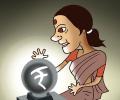
The Finance Ministry has refuted allegations that US pressure influenced the decision to levy a 0.4% Merchant Discount Rate (MDR) on select UPI payments. It clarified that NPCI guidelines prioritise RuPay credit cards on UPI to foster a domestic payment ecosystem and that the MDR introduction aims to create a sustainable revenue model for smaller domestic companies, thereby protecting India's sovereignty in digital payments.

The Finance Ministry has refuted allegations that US pressure influenced the decision to levy a 0.4 per cent Merchant Discount Rate (MDR) on select UPI payments. The ministry clarified that the NPCI guidelines prioritise RuPay credit cards on UPI to promote domestic alternatives and ensure a self-sustaining revenue model for smaller domestic companies, countering claims of favouring foreign payment providers.

The Finance Ministry has clarified that the 0.4 per cent Merchant Discount Rate (MDR) on UPI transactions above Rs 2,000, effective October 15, is not expected to increase cash transactions or cause inflation. The ministry also dismissed allegations of US pressure influencing the decision, asserting that the policy aims to promote RuPay credit cards within the UPI ecosystem, and a monitoring mechanism will ensure the MDR burden is not passed on to consumers.

The Ministry of Heavy Industries (MHI) anticipates disbursing approximately 4,700 crore in incentives under the automotive PLI scheme in FY27, more than double the previous two years, while also exploring financing mechanisms for electric buses and trucks and promoting domestic manufacturing of critical EV components.

The Finance Ministry has dismissed allegations of US pressure influencing the 0.4% Merchant Discount Rate (MDR) on select UPI transactions. It clarified that NPCI guidelines prioritise RuPay credit cards on UPI and do not favour international cards. The ministry also asserted that the MDR, applicable to person-to-merchant transactions above Rs 2,000, is unlikely to increase cash transactions or cause inflation, with measures in place to prevent burdening consumers.

The Supreme Court has directed the Central Bureau of Investigation (CBI) to examine all six allegations of financial irregularities levelled by the Enforcement Directorate against Sameer Gehlaut, former chairperson of Indiabulls Housing Finance (IHFL), and five corporate groups, following repeated criticism of investigating agencies for lack of progress.

The Indian government has confirmed there will be no rollback of the 0.4 per cent Merchant Discount Rate (MDR) charges on Unified Payments Interface (UPI) transactions exceeding Rs 2,000, effective from October 15. Despite opposition, officials state the decision aims to make the UPI ecosystem self-sustainable and secure, with charges applying only to merchant payments, not person-to-person transactions.

The Indian government has introduced a 0.4% fee on UPI transactions above Rs 2,000 for merchants, effective October 15, sparking strong opposition from political parties and traders. Despite accusations of foreign influence and demands for a rollback, the finance ministry and top functionaries have stated there will be no reversal, citing the need for a self-sustaining digital payments ecosystem.

The Congress party has strongly refuted claims by Parliamentary Standing Committee on Finance Chairperson Bhartruhari Mahtab that opposition MPs supported levying a Merchant Discount Rate (MDR) on UPI transactions. Congress MP Manish Tewari termed Mahtab's remarks "erroneous and fallacious," clarifying that the committee's recommendation was to "explore" revenue models, not to implement MDR. The party accused Mahtab of misleading due to his recent switch to the BJP.

India has dismissed Pakistan's recent announcement of a seven million rupees bounty on Jaish-e-Mohammed chief Masood Azhar as a "gimmick," demanding concrete action against terrorism. India highlighted Pakistan's history of similar "phoney announcements" and its alleged sheltering of Azhar, while Pakistan faces international pressure from the FATF to crack down on terror financing.

The Centre has spent 28 per cent of its FY27 capital expenditure budget of Rs 12.21 trillion in the first three months against around 24.5 per cent during the corresponding period a year ago.

Shares of fintech firms, particularly Paytm, saw significant movement after the Indian government introduced a 0.4 per cent fee on UPI transfers exceeding Rs 2,000 made to merchants, effective October 15.

Opposition MPs have voiced strong concerns regarding the government's decision to levy a 0.4 per cent fee on UPI payments above Rs 2,000 made to merchants, effective October 15. They argue that this "anti-people" move will negatively impact a large segment of the population, despite the finance ministry clarifying that the charge is on the merchant ecosystem and not directly on customers for P2P or small payments.

The Indian government has introduced a 0.4% transaction fee on UPI payments above Rs 2,000 for merchants, effective October 15, sparking a political row. The Congress party has labelled it a "Modi tax" and accused the government of succumbing to US pressure, while the BJP has defended the move, clarifying that consumers will not be charged and small vendors are protected. The finance ministry reiterated that the charge is on merchants, not customers.

A recent Central Vigilance Commission (CVC) report reveals that over 70,500 corruption complaints were lodged against various government bodies last year, with banks and the Railways accounting for the highest numbers. While a significant portion of these complaints has been disposed of, thousands remain under process, highlighting ongoing challenges in addressing corruption within public sector entities.

Private corporations in India invested approximately 30.3 trillion in fixed assets during FY25, marking a 7 per cent increase from the previous year, according to the statistics ministry. This growth in private capital expenditure contrasts with a slowdown in government capital spending.

The CBI has registered a case against USA-based Christian missionary group The Timothy Initiative (TTI) and its associates for allegedly misusing Rs 92.55 crore in foreign funds for missionary activities, violating the Foreign Contribution (Regulation) Act, 2010. The case, based on a Union Home Ministry complaint and ED investigation, highlights the alleged use of foreign debit cards and attempts to conceal identities.

Opposition MPs have voiced strong criticism against the government's new fee on UPI payments exceeding Rs 2,000 to merchants, calling it "anti-people" and expressing widespread "outrage". The issue was raised in a Parliamentary Standing Committee meeting, where concerns were also flagged regarding the methodology of GDP growth calculation and the government's stance on Virtual Digital Assets.

'The number of airport bundles that may be awarded to a single bidder would be capped.'

The Congress party has strongly criticised the Modi government's decision to introduce a 0.4% Merchant Discount Rate (MDR) on UPI transactions over Rs 2,000, alleging it is a result of US pressure to benefit American card companies. The party also linked this move to broader US actions against India, including tariffs and H-1B visa issues, coining the term "Narendra's Ongoing Trump Appeasement." The government, however, clarified that consumers will not bear the charge, which applies only to merchants.
The Congress party has accused the Modi government of succumbing to US pressure by introducing a 0.4% Merchant Discount Rate (MDR) on UPI transactions over Rs 2,000 for merchants. The party alleges this move aims to benefit US card companies and links it to broader US actions against India, including tariffs and H-1B visa issues. The government, however, clarifies that consumers will not be charged.

Former Rajasthan chief minister Ashok Gehlot has criticised the Centre for introducing a 0.4% charge on UPI transactions above Rs 2,000, alleging the decision was influenced by pressure from the United States and its payment companies like Visa and Mastercard. He highlighted a perceived shift in the government's stance on Merchant Discount Rate (MDR) for UPI, claiming it would ultimately burden consumers and small businesses while benefiting American firms.
The Indian government has introduced a 0.4% Merchant Discount Rate (MDR) on UPI person-to-merchant (P2M) transactions exceeding Rs 2,000, effective October 15. This move ends nearly six years of fully free UPI payments, though person-to-person (P2P) transfers and small P2M payments remain free. The charges aim to bolster investment in UPI infrastructure, with specific exemptions and caps for essential sectors.

Finance Minister Nirmala Sitharaman announced that India's real GDP grew by 7.8 per cent in the April-June quarter, surpassing the RBI's forecast. She attributed this strong performance to government reforms and agile economic management, reaffirming the government's commitment to expanding economic opportunities.
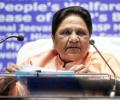
BSP chief Mayawati has criticised the Centre's decision to introduce a 0.4 per cent fee on UPI merchant transactions exceeding Rs 2,000, effective October 15. She termed it a "capitalist profiteering attitude" that burdens the common people, while the government clarified that the charge is on merchants and not customers for person-to-person transactions.

The FCNR (B) stratagem relies on using public money to defend the rupee. The State subsidises foreign borrowing to attract dollars. This tool requires large-scale borrowing to make a material difference against a gross external flow of $11 billion a day. A commensurately large fiscal cost falls upon the exchequer. The ministry of finance will choose how much it is willing to spend in exchange for this round number, points out Ajay Shah.
The Congress party has accused the Indian government of imposing new charges on UPI transactions due to pressure from the United States, specifically to benefit American card companies. The opposition party demanded the withdrawal of the decision, calling it "anti-national" and alleging it fills the coffers of US firms while burdening Indian citizens. The government, however, clarified that the Merchant Discount Rate (MDR) charges apply only to commercial transactions above Rs 2,000 and are not levied on consumers, a stance supported by the BJP which accused Congress of spreading "fake news".
The Indian government has introduced a 0.4% fee on UPI transfers above Rs 2,000 made to merchants, effective October 15, ending nearly six years of free merchant payments. This move led to initial rallies in fintech stocks like Paytm and Mobikwik, though some later pared gains. Person-to-person transactions and small payments remain free for customers, with the fee being a Merchant Discount Rate (MDR).

'It is a blunt and dangerous attempt to pressure India to sign BTA on one-sided terms.'
NPCI International and Uzbekistan's NIPC have partnered to enable UPI payments across Uzbekistan, allowing Indian tourists, business travellers, and students to make instant merchant payments using the UZQR code. This agreement, approved by RBI and CBU, integrates UPI with Uzbekistan's national payment system, HUMO, facilitating direct P2M payments from Indian bank accounts and reducing reliance on foreign exchange or international cards.

Finance Minister Nirmala Sitharaman urged PSBs to become 'cool' and shed their 'government bank' image to attract young customers.
The Reserve Bank of India (RBI) has endorsed the introduction of a Merchant Discount Rate (MDR) on UPI transactions exceeding Rs 2,000, effective October 15. This move, which levies a 0.4 per cent fee on merchant payments above the threshold, aims to bolster the long-term sustainability and growth of India's digital payments ecosystem. The RBI clarified that person-to-person (P2P) transactions and small person-to-merchant (P2M) payments below Rs 2,000 will remain free for users, ensuring no direct charge on customers.

Opposition parties, including Congress, TMC, and RJD, have strongly criticised the government's decision to impose a 0.4% Merchant Discount Rate (MDR) on UPI transactions exceeding Rs 2,000 made to merchants. They allege the move is a result of "American imperialism" and will lead to increased commodity prices, while the government maintains the charge is on merchants and not consumers, with person-to-person transactions remaining free.

The fiscal consolidation path and Rs 1 trillion stabilisation fund provide room to absorb mild shocks, but sustained oil-price increases pose risks.
The opposition has intensified its criticism of the government's decision to impose a 0.4 per cent Merchant Discount Rate (MDR) on UPI transactions above Rs 2,000, effective October 15. Leaders like Rahul Gandhi and Jairam Ramesh allege the move is a result of US pressure, particularly from American card companies, and demand an immediate rollback, warning of increased costs for consumers.
The opposition has strongly criticised the government's decision to introduce a 0.4% Merchant Discount Rate (MDR) on UPI transactions above Rs 2,000 for merchants, effective October 15. They allege the move is a result of US pressure and will lead to increased commodity prices, calling it a "betrayal" of the common man. The government, however, clarifies that customers will not be charged, and the MDR applies only to merchants for larger transactions.

Russian President Vladimir Putin is set to visit India for a three-day trip to attend the 18th BRICS Summit and engage in bilateral discussions with Prime Minister Narendra Modi. The summit will focus on strengthening strategic partnerships and addressing international issues, with Putin also scheduled to meet other world leaders.
CPI(ML) Liberation general secretary Dipankar Bhattacharya has strongly criticised the newly introduced Merchant Discount Rate (MDR) on select UPI transactions, labelling it a "UPI tax" and demanding its immediate rollback. He drew parallels with demonetisation, arguing that the new framework would negatively impact small shopkeepers, MSMEs, and ordinary citizens by increasing prices.

The National Payments Corporation of India (NPCI) stated that the Merchant Discount Rate (MDR) "is distributed only amongst the UPI ecosystem, to further invest into infrastructure resilience, innovation, cybersecurity (protecting the UPI infrastructure with banks and non-banks) and customer service."
