
Exchange-traded currency derivatives volumes are likely to drop in view of new Reserve Bank of India (RBI) rules, casting a cloud over further participation of retail investors and proprietary traders. There are concerns that existing positions without any underlying exposure will need to be liquidated. Also, weighed down by dollar demand from local oil companies and weakness in its Asian peers, the rupee on Wednesday (April 3) ended at a new closing low of 83.44 versus the US currency.

Investors shunned shares of Bajaj Finance on Friday, a day after the non-banking financial company (NBFC) reported a sharp contraction in its net interest margin (NIM) for the March quarter of the financial year 2023-24 (Q4FY24). The losses accounted for a fifth of the benchmark S&P BSE Sensex's 609-point loss. Most brokerages have tamed their earnings expectations for the next couple of quarters, after the management said it expected the pressure on NIMs to continue in the near term.

Although the third quarter of financial year (2023-2024) FY24 (Q3FY24) was marginally below expectations, Info Edge (India) is witnessing strong investment trends and hitting new highs. The big driver is optimism about a pickup in the jobs market, which benefits Naukri.com and could mean upgrades in Q4FY24 expectations. The JobSpeak Index, which Naukri.com releases on a monthly basis, is showing a "transformative shift".

Manappuram declared consolidated assets under management (AUM) growth of 27 per cent year-on-year (Y-o-Y) (5.1 per cent quarter-on-quarter or Q-o-Q) to Rs 38,950 crore. Net interest income (NII) saw a margin expansion of 24 basis points (bps) Q-o-Q to 15.44 per cent.

'Interim Budget has ignited the entrepreneurial spirit.'

Power Grid Corporation (PGCIL) intends to ramp up its capex substantially through the next two financial years. The Public Sector Undertaking (PSU) utility posted flat consolidated revenues of Rs 10,700 crore in the third quarter of the current financial year (Q3FY24) and reported 7 per cent year on year (Y-o-Y) growth in net profit to Rs 4,000 crore. The Q3FY24 capex stood at Rs 3,440 crore and capitalisation at Rs 1,780 crore, taking the 9MFY24 total to Rs 8,700 crore capex and Rs 5,800 crore capitalisation, respectively.

Recently, the government relaxed foreign direct investment (FDI) norms for the space sector by allowing 100 per cent FDI in manufacture of components, systems or sub-systems for satellites, ground segments, and user segments. It also permitted 74 per cent FDI in satellite manufacturing and operation as well as satellite data products and 49 per cent in development of launch vehicles and spaceports. Following this, stocks of related companies saw an uptick on the bourses.

After a stellar run on the bourses that saw tractor stocks rise up to 52 per cent, analysts are turning cautious on the sector as muted demand trends may weigh in the near-term. Total volumes in the tractor segment for the last three quarters of the current financial year (9MFY24) have remained weak with VST Tillers, Escorts Kubota, and M&M seeing declines of 21 per cent, 5 per cent, and 3 per cent year-on-year (Y-o-Y), respectively, during the period, amid patchy rainfall, delayed crop harvest, and lower reservoir level. Across industry, total domestic sales volume so far in the current financial year (April '23 to January '24) has declined 5 per cent Y-o-Y, as per Tractor Manufacturers Association (TMA).

Coal India Limited's (CIL) October-December quarter of financial year 2023-24 (Q3FY24) results have beaten the Street's estimates. Revenue rose 3 per cent year-on-year (Y-o-Y) to Rs 36,200 crore, led by higher volumes and better realisation from Fuel-Supply Agreement (FSA) coal. The blended average selling price (ASP) was down 6 per cent Y-o-Y to Rs 1,727 per tonne, and the FSA ASP was up 3 per cent Y-o-Y to Rs 1,532 per tonne.

SBI Q3FY24 result review: A higher-than-factored weakness in the October-to-December quarter (Q3) results of State Bank of India (SBI), for financial year 2023-24 (FY24), has prompted brokerages to cut earnings estimates for the ongoing financial year. They, however, have maintained 'Buy' ratings on the stock, revising target price upwards in some cases, owing to the stock's recent underperformance relative to its peers.
Banks enjoyed an expansion in Net Interest Margins (or NIMs) as well as in credit demand through the 2022-23 financial year (FY23). The credit expansion was because economic growth continued to recover from the Covid-19 years, and indeed, second half GDP growth surprised on the upside. The NIM expansion was because banks raised lending rates immediately (in many cases automatically due to floaters) as the Reserve Bank of India (RBI) hiked policy rates, and only started raising deposit rates late into the fiscal.

Shares of Bajaj Finance sprinted 4.7 per cent to Rs 7,732 per share on the BSE in Thursday's (January 4) intra-day trade as the non-bank finance company's (NBFC's) December quarter business update reflected minimal impact of the Reserve Bank of India's ban on two of its lending products. The shares, eventually, ended 4.4 per cent higher at Rs 7,710 per share as against 0.69 per cent gain in the benchmark S&P BSE Sensex. The NBFC's asset under management (AUM) topped the Rs 3-trillion-mark at the end of December 2023, swelling by roughly Rs 20,700 crore (35 per cent year-on-year) to hit Rs 3.11 trillion-mark.
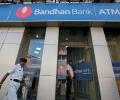
It is 10 years since Bandhan Financial Services became the first microfinance institution (MFI) to receive the universal bank licence. A year later, in 2015, it started operations. Bandhan's entry into banking was seen as a vote of confidence by the Reserve Bank of India (RBI) for the country's microfinance sector. Subsequently, the RBI awarded small finance bank licences to nine MFIs.
India's biggest non-bank finance company, Bajaj Finance (BAF), is set to raise capital after a gap of four years. On October 5, the board of directors will meet to approve the fund raise by way of preferential issue and/or qualified institutional placement (QIP) subject to regulatory and shareholder approvals. The move, analysts said, comes ahead of expectations, and could be in the wake of simmering competition in the consumer lending space, especially with the launch of Jio Financial Services (Jio Fin). "While we still do not have finer details on the game-plan of Jio Financial, it has plans to initially foray into consumer and merchant lending.

A hotel in 1975, entry into paperboards in 1979, India's dominant cigarette maker, ITC, read the tea - or tobacco - leaves early, leveraged its enterprise strengths and stepped up the diversification agenda to create multiple drivers of growth. Some failed, some faltered, some were transformational, adding steadily to the top line. Now those efforts are making a difference: margins from non-cigarettes - FMCG, hotels, agri, paperboards, paper and packaging - are expanding and profits are kicking in more significantly than ever before.

The business model of the microfinance sector must change, emphasised C Rangarajan, chairman of the Economic Advisory Council to the Prime Minister, saying that the microfinance movement must have as its ultimate goal the desire to help the poor and enable them to come out of poverty.

'India has formed tremendous resilience and still a strong growth.'
MMFS is looking at a compounded annual growth rate (CAGR) of 18 per cent in assets under management (AUM) during FY23 to FY26 on the back of the strong recovery. The company has initiated risk-mitigating initiatives, including diversification into non-vehicle loans, building digital capacity and re-classification of customer profiles into affluent and mass-affluent in semi-urban segments to better target marketing.

Reserve Bank of India Deputy Governor M Rajeshwar Rao on Wednesday said while the central bank will foster growth in the microfinance (MFI) sector, the lenders in the space should not throw caution to the wind to achieve higher asset growth and returns. MFIs should not try to mimic the strategies of mainstream finance, as those serving the microfinance borrowers have a greater need to balance the social objectives with their lending operations, he said.

Brokerages have cut their estimates of listed diagnostics players for the financial year 2023-24 (FY24) after mixed December quarter results and muted near-term outlook. Their volumes and realisations will be under pressure due to weakness in Covid-adjusted performance and higher competitive pressures, the brokerages believe. In a post-Q3 results note on Dr Lal Pathlabs, Bhavesh Gandhi of YES Securities pointed out that there has been a lack of volume revival in recent quarters, with an increasing likelihood that FY24 too would be a work-in-progress year for the company's initiatives to bear fruit.

MFIs were allegedly charging interest rates of over 30 per cent.

Some banks, including ICICI, want to restructure securitised advances along with other loans. This is being opposed by Axis Bank, IndusInd Bank and YES Bank.

Stung by the controversy over the sudden sacking of the Managing Director at India's largest microfinance institution, SKS Microfinance, lenders have decided to raise corporate governance issues at board meetings of other MFIs.

Collection dived to 75-80% in November-December from 99% after demonetisation.
PM's economic advisory council chairman C Rangarajan has asked microfinance institutions (MFIs) to overhaul their "flawed" business model for sustainability.
Two months before the microfinance sector crisis in October, an internal committee of the Reserve Bank of India (RBI) had warned of possible problems in the sector.
Two suicides in recent months after banks refused to restructure .

While rising interest rates and tighter liquidity are giving negative signals for the financial sector, increasing economic activity could mean higher business volumes for lenders. Liquidity in the banking system has moved from Rs 8 trillion surplus into a deficit of Rs 33,000 crore over the 2022 calendar year. By the end of November, bank credit had grown 17.5 per cent YoY (year-on-year).

About 7 per cent was priced between Rs 3 crore and Rs 5 crore, 22 per cent priced between Rs 5 crore and Rs 8 crore, and 15 per cent above Rs 8 crore.

Microfinance companies have been facing a crisis after a crackdown by the Andhra Pradesh government last year in response to allegations they were charging high rates and using coercive recovery practices.

One of the factors behind the rise in securitisation deals was State Bank of India's (SBI) decision to buy portfolio worth Rs 45,000 crore from NBFCs

The Bill - to centrally regulate microfinance institutions (MFIs) - may also cap the rates charged by these institutions or limit margins, that is, the difference between the rate charged from the borrower and the lender's cost of funds.

The third-quarter financials didn't excite market watchers. But equity investors can still make money if they invest in the right stocks.

The Reserve Bank of India (RBI) on Monday allowed microfinance lenders to fix interest rates on loans with a rider that those should not be usurious for the borrowers. A microfinance loan is defined as a collateral-free loan given to a household having an annual income of up to Rs 300,000. Each regulated entity (RE) should put in place a board-approved policy regarding pricing of microfinance loans, said the 'Master Direction - Reserve Bank of India (Regulatory Framework for Microfinance Loans) Directions, 2022'. In the past, the central bank used to announce the rates on quarterly basis.

In absolute terms, close to 9.2 million customers (almost equal to Mumbai's suburban population) have defaulted on loan repayment. Microfinance institutions currently have around 32 million clients in the country.

A vast majority of borrowers are in the essential services' supply chain with tiny and micro businesses, and this has sprung back.

Industry fears waiver of interest on interest would distort credit culture, may encourage borrowers who can pay to defer repayment.

For India's leading MFI-turned bank, the challenge is to stay competitive while pricing its loans

Bandhan has got fresh equity infusion of Rs 1,020 crore.

Under the new model, the surplus distribution in the participating policyholders' fund has been modified to 90:10 in a phased manner, wherein 90 per cent will go to policyholders and 10 per cent to shareholders. Further, 100 per cent of the surplus generated out of the non-participating business will be available for distribution to all shareholders.
 © 2026 Rediff.com - Advertise with us - Disclaimer - Privacy Policy - Sitemap - Feedback - About us - Terms of use - Grievances