Metropolis Healthcare (MHL) has decided to acquire a 100 per cent stake in Gurgaon-based Core Diagnostics for Rs 247 crore. This is about 2.2x FY24 (financial year 2023-24) enterprise value (EV)/sales and estimated 14x FY26 EV/Ebitda for the deal.

The government's move to cut GST on medicines and medical devices while exempting lifesaving drugs from the levy is a bold step that will bring direct relief to patients and families while significantly reducing financial strain on them, pharmaceuticals and healthcare industry players said on Thursday.

The offering comprises secondary sale of 13.68 million shares, constituting 27.3 per cent stake.
The stocks of diagnostic service providers have been standout performers within the healthcare sector over the past year, posting returns between 16 and 80 per cent. In comparison, the Nifty 50 saw returns of 8 per cent. Stable pricing, expectations of gradual volume growth, and market share expansion for the larger players have stoked increased optimism for listed companies.

Mutual funds (MFs) scooped up smallcap shares across sectors such as healthcare, banking and financial services in March 2024 amid a near 4.5 per cent fall in key smallcap indices. Aster DM Healthcare, NLC India, and Aavas Financiers topped the list of most-bought stocks in the Rs 10,000-40,000 crore market capitalisation (mcap) bracket, according to a study by Nuvama Alternative & Quantitative Research. Aster and Aavas had corrected by 13 per cent and 10 per cent in March, respectively, while NLC India ended the month with a 2.5 per cent gain.

'We have got enough internal accruals, and we are able to do acquisitions on our own.'

An acute drug shortage in the US and stable pricing along with product launches are likely to boost revenues of India's pharmaceutical companies during the first quarter of this financial year, analysts said. Most brokerages estimate a top line growth of around 14-15 per cent, with earnings before interest, taxes, depreciation, and amortisation (Ebitda) growth of 24-30 per cent for Q1 of FY24. Hospitals are, however, likely to report lower occupancy rates, and diagnostics companies may witness an impact from delayed monsoon.

Brokerages have cut their estimates of listed diagnostics players for the financial year 2023-24 (FY24) after mixed December quarter results and muted near-term outlook. Their volumes and realisations will be under pressure due to weakness in Covid-adjusted performance and higher competitive pressures, the brokerages believe. In a post-Q3 results note on Dr Lal Pathlabs, Bhavesh Gandhi of YES Securities pointed out that there has been a lack of volume revival in recent quarters, with an increasing likelihood that FY24 too would be a work-in-progress year for the company's initiatives to bear fruit.

The government should take measures to promote innovation and R&D while simplifying regulations for the sector in the upcoming Union Budget, as per pharmaceutical industry bodies. Outlining the wish list for the sector in the upcoming Union Budget, Indian Pharmaceutical Alliance (IPA) secretary general Sudarshan Jain said the domestic pharma industry is currently around $50 billion in size and aspires to grow to around $130 billion by 2030 and $450 billion by 2047. "To achieve this vision, the Union Budget 2023-2024 should help fuel innovation and R&D, which will set the pace for propelling the pharmaceutical industry forward," he told PTI.

Among the many exits from the billionaire's club in 2022 are D Uday Kumar Reddy of Tanla Solutions (net worth down 66 per cent), Sushil Kanubhai Shah of Metropolis Healthcare (down 65.7 per cent), Vijay Shekhar Sharma of One97 Communications (down 66 per cent), and C K Birla (down 43.4 per cent).

commercial airlines and air navigation service providers have to carry out random drug tests on at least 10 per cent of their flight crew and air traffic controllers every year.

Going ahead, experts say, the fundraising trend in the primary market will depend on how the secondary market performs against the backdrop of the outcome of general elections and global cues.
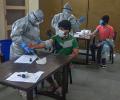
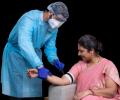
At present, the cost of testing for COVID-19 is Rs 4,500 per examination and the results are available within 24 hours. Almost 90 per cent of queries fizzle out after patients realise the cost of testing will not be borne by the government.
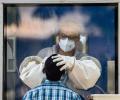
Mumbai, with an estimated population of nearly 20 million, has been testing 1,200-1,400 people per day. Delay in the delivery of rapid antibody test kits has forced the BMC to restrict its testing net.
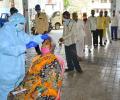
One challenge for many laboratories in ramping up is the shortage of trained manpower for collecting samples, report Sohini Das, Vinay Umarji and Virendra Singh Rawat.

Investment banking star and Moelis India Chief Executive Officer Manisha Girotra remembers a colleague who wanted to resign because she needed to attend to her parents' health issues in a different state. Rather than quit a promising career, she was given the flexibility of working from home on Fridays, which was unusual in the pre-pandemic days. This allowed her to take care of her parents' visits to the doctor and other health-related needs without quitting her job. She would be back in the city office on Mondays.

In one of the largest FDI deals in realty sector, global private equity Warburg Pincus will invest Rs 1,800 crore (Rs 18 billion) in Piramal Realty, which would use the funds to develop mixed-use projects in the megalopolis.
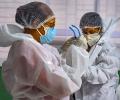
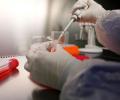
The bouquet of Covid-19 tests that most diagnostic labs are offering include antibody tests (blood tests), rapid antigen tests (point of care tests that detect the presence of an antigen from a nasal or throat swab in case of SARS-CoV-2), and reverse transcription-polymerase chain reaction (RT-PCR) tests.
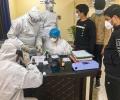
The ICMR is working on a war footing to develop the testing ecosystem -- especially for the screening blood tests. NIV, Pune, is in the process of validating antibody-based screening kits.
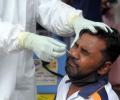
The testing rate is likely to slow down, report Pavan Lall and Sohini Das.

Ajit Mishra, vice president, Research, Religare Broking, answers your queries.

'A probable positive patient walking into a centre is not an ideal situation.'
 © 2026 Rediff.com - Advertise with us - Disclaimer - Privacy Policy - Sitemap - Feedback - About us - Terms of use - Grievances