
With rainfall and monsoons becoming highly unpredictable partly due to climate change and partly due to usual changes in weather patterns, it is such innovations by IMD which will help in planning better, reports Sanjeeb Mukherjee.
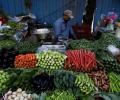
The Reserve Bank on Friday projected retail inflation to be in 5-5.2 per cent range during the first half of the next fiscal year, expecting further softening of vegetables prices in near term. Also, it has lowered the retail inflation forecast for the current January-March quarter of 2020-21 fiscal at 5.2 per cent. The Reserve Bank (RBI) has kept the key policy rate unchanged at 4 per cent, with an accommodative stance, so as to ensure that inflation remains well within the target, Governor Shaktikanta Das said while announcing the last monetary policy of 2020-21.

'The answer for a quicker boost to growth is simple -- run a much larger deficit, use the resulting public resources to ensure adequate price support for agriculture, subsidise wage costs of MSMEs and accelerate public sector construction-intensive activities,' advises Nitin Desai.

The fall in urban sentiments in June is worrisome, observes Mahesh Vyas.

'I hope the trend is sustainable and that economic activity accelerates going forward.'

The kharif grain output is estimated to have declined 2.48 per cent to 117.96 million tonnes while the rabi grain output has remained flat at 109.92 million tonnes, according to a government release. Output has declined mainly in kharif pulses and coarse cereals while a marginal dip has been projected in the rabi wheat output.

The Centre will utilise huge network of post offices across the country to sell subsidised pulses, mainly tur, urad and chana, to ensure availability in the ongoing festival season.

From NITI Aayog to industry leaders to the Reserve Bank of India, all are apprehensive that any major increase in MSP, following the 2018-19 Budget announcements, would push up prices, if not immediately, in the next six to eight months after the decision is taken.

The domestic availability of onion has been affected on account of damage to kharif crop because of unseasonal rains in key producing states including Maharashtra.
According to the first advance estimates of crop production for 2007-08 report that was released on Wednesday, India can expect record production in maize, oybean, cotton and sugarcane crops.
According to Krishi Bhawan officials in New Delhi, due to the well-distributed rainfall this monsoon, kharif production is set to rise perceptibly and consequently the net sown area will also increase.
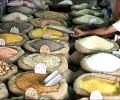
Prices moved up sharply in recent months.

Pushed by rising prices of essential kitchen items, the retail inflation rose to an eight-month high of 7.34 per cent in September, making the RBI's task to push growth by reducing the interest rate even more difficult in coming the days. The Consumer Price Index (CPI)-based inflation was 6.69 per cent in August and 3.99 per cent in September 2019. Inflation has been hovering above 4 per cent since October 2019.
There is good news for the Central government, which is struggling to rein in inflation. Monsoon rains were more than normal in June and the government can hope for a better kharif crop, which in turn may help reduce inflation.

The coronavirus outbreak has brought a large part of the world's second-largest economy China to a standstill and its impact has been felt across industries.

Only vaccinations can eliminate the threat of new waves, help raise sentiments and allow sellers and buyers to participate aggressively in the much awaited economic recovery, observes Mahesh Vyas.
Expecting a better price realisation this year, farmers have gone for pulses in a big way this year.

Officials said good rain in August - though it might not improve acreages much for most crops except urad, moong, and paddy - would help in improving yields in the crops already planted.
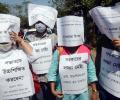
The cumulative loss of salaried jobs since the pandemic is even larger at 12.6 million, reveals Mahesh Vyas.
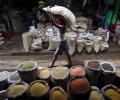
Acreage of these crops is likely to fall as prices drop below MSP in mandis; area under cotton, maize may increase on better realisation

Analysts said the demand recovery in two-wheeler and car segments was skewed towards the semi-urban and rural markets.

Since April, India has seen multiple strains of the coronanavirus sweep the nation, upending life and businesses alike. Out-of-home retail and discretionary categories such as durables, auto, fashion, lifestyle, hospitality, food services, travel, and tourism have been the worst-hit as Covid cases remain high, leaving state governments with no option but to curtail mobility and economic activity.
The Reserve Bank of India on Wednesday hiked the expected GDP growth for the year ending March 31, 2007 to 8.5-9 per cent.

Prices have continued to move up in Delhi's markets, wholesale and retail, on supply worries and spoilage due to record cold weather.
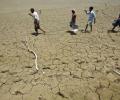
Rain deficiency in eastern and western Uttar Pradesh, Bihar, Jharkhand, Gangetic West Bengal, Assam and Meghalaya is 20-46 per cent less than normal as of June 17.

The most serious recommendations to change the financial year came in the years preceded by deficient rainfall. The Jha committee was formed after droughts in 1979-80 and 1982-83, reports Rishika Pardikar/IndiaSpend.

With the farmers' protest against the three new laws and in support of legalising the minimum support price (MSP) going strong, state governments have announced a slew of measures in their annual Budgets to placate farmers. The Centre kicked things off in the Union Budget by assuring farmers that the MSP would continue and coming out with a report card to demonstrate its commitment. However, these efforts don't seem to have yielded tangible results. In their respective Budgets, states chose to go a step further by announcing a variety of measures.
The reforms will help FPOs procure directly from farmers, something that they have been pressing for long.
The sluggish southwest monsoon, which yielded one of the driest Junes in a century this year, appears disappointing this month as well.

India is expected to harvest 291.95 mt of foodgrain in 2019-20
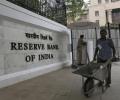
In all, RBI has cut interest rates by 110 bps this year. But this has not yet led to a boost in economic activity. While the growth rate has slowed to a five-year low, consumer confidence is waning and foreign direct investment has plateaued.
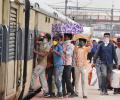
A meeting convened by Congress president Sonia Gandhi on Friday afternoon will see the leaders of around 20 opposition parties come together on a common platform through video-conferencing.

Where do the four members of the Supreme Court appointed panel to interface with farmers stand on the Modi government's farm laws?

While reforms may translate into new opportunities for firms like ITC, Adani Wilmar and Reliance Retail, farmers are unlikely to use it for fear of upsetting commission agents.

The move came a day after Parliament approved two agriculture sector-reform bills which have been bitterly opposed by the opposition parties like Congress and TMC.

Experts say it will make GDP growth target of 5.7-5.8% difficult to achieve, while ministries feel late resurgence will help in sowing of rabi crops.

The fund allocated for pulses buffer is more than 40% of entire farm ministry's 2016-17 budget.
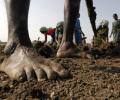
At present, 100 days of work is provided to rural job card holders under the Mahatma Gandhi National Rural Employment Guarantee Act (MGNREGA).
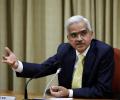
The Reserve Bank of India (RBI) on Friday decided to leave the benchmark interest rate unchanged at 4 per cent but maintained an accommodative stance, implying rate cuts in the future if need arises to support the economy hit by the Covid-19 pandemic.

People normally pray for good rain. But in a few villages of Chhattisgarh this year, it is a different story.
 © 2026 Rediff.com - Advertise with us - Disclaimer - Privacy Policy - Sitemap - Feedback - About us - Terms of use - Grievances