
Citing the sharp rise in food prices, economists at a foreign bank have forecast a steeply higher retail inflation print for July, pegging it at 6.7 per cent, up 190 basis points from the previous month. Deutsche Bank India economists led by chief economist Kaushik Das, in a report on Monday ahead of the monthly inflation print and the Reserve Bank's monetary policy review, said that the July consumer price-based inflation index (CPI) is likely to print at 6.7 per cent on-year as against 4.8 per cent in June. The Reserve Bank is widely believed to leave the key interest rates unchanged for the fourth time in its upcoming bi-monthly monetary policy decision on August 10.

Gold jewellery demand in India is likely to decline in the second and third quarters of this fiscal due to hike in import duty, high volatility in prices and inflationary pressure, according to a report. While demand is likely to contract by 8 per cent year-on-year in the second quarter of FY23, the decline is expected to be higher at 15 per cent in the third quarter due to the exceptionally high base in the same period of FY22, Icra said in a report. According to the report, the exceptional third quarter performance in FY22 was due to the post-Covid reopening of the economy and the substantially high demand in the wedding and festive seasons.

It's a busy season for Indian producers of orthodox tea. As Sri Lanka, the world's largest supplier of orthodox tea, struggles with its worst economic crisis, a window of opportunity has opened up in neighbouring India. Calls to Indian planters and exporters from foreign buyers of Sri Lankan orthodox tea are pouring in and the buoyant sentiment is reflecting in prices at auction centres. Orthodox tea refers to loose-leaf tea which is produced using traditional or orthodox methods such as plucking, withering, rolling, oxidation and drying.

Given the various risks to growth, one could argue for rate cuts to be deeper than the 5 per cent terminal repo rate that we are projecting at this stage, says Kaushik Das.

As the economic crisis in Sri Lanka - the world's largest exporter of orthodox tea - continues to rage across the island nation, tea producers in India look to cash in on the opportunity to seize the market. The country's largest tea growing company, McLeod Russel India, expects orders to come in from July. "A huge opportunity is coming up for everyone in India. "McLeod Russel is well placed because we have the capacity for orthodox tea," said Azam Monem, director, McLeod Russel. About 10 per cent of McLeod's production is orthodox tea.

Russia is among the top buyers of Indian tea, accounting for about 18 per cent of the industry's total exports.

Second seed Ashutosh Singh and fifth ranked Vivek Shokeen scripted identical facile victories to romp into the second round of the Indian Oil Servo National Grasscourt Championships in Kolkata on Tuesday.
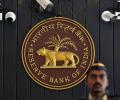
The Reserve Bank of India (RBI) is precariously balancing two opposing objectives - maintaining easy financial condition in the domestic market, while ensuring external stability - and economists have started taking note. They say India is going through the classic trilemma of the 'Impossible Trinity'. The RBI cannot have an independent monetary policy (setting domestic interest rates) in an environment of an open capital account and flexible exchange rates. What is even more complicated for the central bank now is that financial market stability overlays all the other three objectives.

Scanty rainfall, last year's lockdown, growing competition from Nepal and the disaster of the 2017 Gorkhaland agitation are steadily weakening exports and sales of Darjeeling tea.

Experts say the market is more bullish on the BJP as it will ensure continuity in policymaking.

The next key battle the market will watch out for will be in Congress-ruled Karnataka

The central bank had revised its inflation forecast significantly downward in the last policy

A tally around 150 in Gujarat can see the index hit 10,700 levels going ahead

Robust growth in indirect tax receipts points to a nascent revival in manufacturing sector.

Rally restricted to big stocks; FIIs have hit investment caps in many large companies.
 © 2026 Rediff.com - Advertise with us - Disclaimer - Privacy Policy - Sitemap - Feedback - About us - Terms of use - Grievances