
The government has ordered a probe against steel giant Ispat Industries for alleged exposure to Rs 8,500 crore of public funds, erosion of net worth and high accumulated losses.
Barely 24 hours after public sector behemoth SAIL cut its prices by Rs 500 to Rs 2000, domestic steel majors Essar Steel and Ispat Industries on Friday announced cut in their prices by seven to eight per cent due to rising inventories owing to reduce
Fresh from getting a major concession from the corporate debt restructuring forum, the Pramod and V K Mittal-controlled Ispat Industries Ltd on Monday said it aims to be counted among the world's top five lowest cost producers of steel by 2005.
Ispat Industries Limited is planning to market its newly developed 1.2 mm and 1.6 mm hot rolled coil to the carmakers of the US after completing second phase of their HR capacity expansion programme by April-May this year.
Ispat Industries Ltd said it set up a 1.2 million tonne per annum single module DRI plant at Dolvi near Mumbai.\n\n\n\n

India Ratings expects long products demand growth to be sharp, supported by a demand push from the government-led infrastructure investments in affordable housing, railways, rural electrification and road networks.

In the domestic market, the Tata Group has lost ground in the passenger car business.

With a new $100-billion technology fund, SoftBank is likely to go after market leaders.

Accused by the Bharatiya Janata Party of taking bribe, Himachal Pradesh Chief Minister Virbhadra Singh arrived here today to present his version to the Congress high command while slamming the opposition party of indulging in "malicious propaganda" against him and his family.

Then chief minister Jyoti Basu once told an industrialist that capitalists were class enemies and he should expect no sympathy.
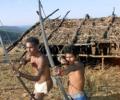
It is the low cost of iron ore extracted from their adivasi homeland mines that enables steelmakers like Tata Steel and Essar, and miners like NMDC, not only to be among the most profitable companies in India, but also gives it the financial muscle to make huge overseas acquisitions. Ultimately, it is the poor adivasi who pays for it with his home and hearth and gets no credit for it! Either from the State, which connives in their exploitation, or the industry that lords over their resources, says Mohan Guruswamy.
 © 2026 Rediff.com - Advertise with us - Disclaimer - Privacy Policy - Sitemap - Feedback - About us - Terms of use - Grievances