
As fintech major Pine Labs gears up for its initial public offering (IPO), its Draft Red Herring Prospectus has highlighted its top executives' pay and stock options, including those of Chief Executive Officer (CEO) Amrish Rau. Rau's net worth is estimated at Rs 850 crore-1,000 crore following the IPO.

Gurugram has overtaken Mumbai to become India's biggest luxury housing market in 2025, recording 24,120 crore in sales of homes priced above 10 crore.

'Retail portfolios were going nowhere even as headline indices moved higher, prompting investors to sell holdings and shift money to IPOs, attracted by listing-day gains.'
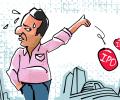
'The primary market's rhythm mirrors investor confidence. While sentiment may appear cautious, it reflects maturity, not weakness.'

Markets regulator Sebi board on Wednesday approved a series of measures aimed at improving investor convenience, easing compliance norms, and deepening participation in the capital and debt markets.

Unless the primary market momentum slows, smallcap stocks will stay subdued.

The IPO filing-to-approval lapsing ratio this year is the best in three years, underscoring the improvement in the IPO market's buoyancy.

Industry players said the sharp sell-off in February forced many companies to put off their listing plans

'Many do not have robust business models, and their prospects of survival and long-term growth are poor.'

Shares of Billionbrains Garage Ventures, the parent of online broking platform Groww, soared nearly 30 per cent on their market debut on Wednesday, defying the recent trend of muted listings. The stock opened at Rs 112 and hit a high of Rs 134.4 before settling at Rs 128.85 on the NSE - a gain of 28.85 per cent over its issue price of Rs 100.

Investors have often been left scratching their heads over why a company's stock fails to move despite delivering beating earnings results, only to see the stock fall. According to theory, beating earnings should translate to higher stock prices, but in today's interconnected world, stock prices do not depend on the numbers.

Foreign investors have remained cautious ahead of the Union Budget amid expectations of limited policy changes.

IPOs worth Rs 50,000 crore including Hyundai, NTPC Green Energy and Swiggy are set to hit the market in late October or early November.

India topped the APAC region with 227 transactions in the first eight months of CY24. The US was second with 133 deals while China ranked third with 69 transactions.

Fundraising momentum is expected to accelerate further in the New Year, potentially surpassing 2024's record figures

Flipkart Group Chief Executive Kalyan Krishnamurthy on Monday said the firm was advancing preparations for a potential initial public offering (IPO) in India, which included shifting its holding company to India from Singapore. Speaking at an internal town hall, Krishnamurthy said the company's leadership structure is strengthening and that the steps toward relocating Flipkart's legal base to India are progressing as planned, according to people familiar with the matter.

'IPOs have performed exceptionally well, with a notable increase in average ticket size from Rs 800 crore in the last financial year to around Rs 1,300 crore in this financial year.'

So far this year, bankers have earned Rs 1,226 crore for handling 45 IPOs, which together mobilised Rs 48,363 crore.
Fifteen companies have launched their initial public offerings (IPOs) in December 2024, making it the best month for public offerings since 1996. Collectively, they have raised Rs 25,425 crore, which also made December the best month in terms of the quantum of funds raised. In December 1996, 33 companies had raised Rs 931 crore.
The five initial public offerings (IPOs) that closed on Monday attracted cumulative bids worth Rs 1.4 trillion against Rs 2,909 crore they were looking to raise. These offerings were subscribed between 11 and 195 times. Mamata Machinery, a limited manufacturer of machines used for making plastic bags, saw the highest oversubscription at 195x.

Venture funding in India slowed in the third quarter (Q3) of 2025 amid geopolitical uncertainty, though exit activity surged to a seven-year high, according to Venture Pulse from KPMG Private Enterprise, a quarterly report tracking investment trends globally across major regions around the world.

All the three companies that made their stock market debut on Wednesday delivered huge day-one gains for investors. Shares of digital payment major One Mobikwik Systems surged 90 per cent, while that of fashion retailer Vishal Mega Mart and pharma firm Sai Life Sciences gained around 40 per cent each. These stellar debuts came despite the benchmark indices logging continuous declines since their initial public offerings (IPOs) closed on Friday.

'Grassroots-level corruption, which disrupts the last-mile work, cannot be ignored in your enthusiasm and drive to get going to complete the project.' 'Like it was in MGNREGA, in some states, it is the case with the Jal Jeevan mission.' 'The last minute levels of corruption can ruin the intent of the project itself.' 'When you see that people can game a particular well-intended and well-crafted project, you need to correct that.'
It is not just the secondary market that is witnessing a revival in fortunes. Even the initial public offering (IPO) market have roared back to life, with investors submitting bids worth over Rs 2.2 trillion on the three IPOs that wrapped up on Friday. Fashion retailer Vishal Mega Mart (VMM)'s IPO (fifth largest of the year) garnered 27.3x subscription, with bids exceeding Rs 1.6 trillion.

Hyundai Motor India Limited's (HMIL's) record Rs 27,870 crore initial public offering (IPO) may not have set the primary market alight with sky-high subscription levels, but it has spelled a windfall for the five investment banks steering the share sale. The Indian arm of the South Korean carmaker paid Rs 493 crore - 1.77 per cent of the issue size - in fees and commissions to the book running lead managers (BRLMs), marking the largest-ever payout for an IPO in the country.

Hyundai Motor India Ltd, the Indian arm of South Korean automaker Hyundai, has received capital markets regulator Sebi's approval to float an initial public offering (IPO), people familiar with the development said on Wednesday. This development marks a significant milestone for the Indian industry, as it is the first automaker initial share-sale in over two decades, following Japanese automaker Maruti Suzuki's listing in 2003.

Issuers have allotted nearly four times as much to mutual funds (MFs) as they have to insurance companies in recent quarters. MFs invested Rs 21,976 crore as anchor investors in initial public offerings (IPOs) on a trailing four-quarter basis, according to data from Prime Database.

The post-Covid euphoria surrounding direct equity investing has ebbed in 2025. Individual investors have turned net sellers in the domestic equity market, pulling out about 8,461 crore so far this year - a sharp reversal from the record purchases seen in 2024, according to a report by the National Stock Exchange of India (NSE).

The number of rights issues more than doubled and hit a 28-year high in 2025, even as qualified institutional placements (QIPs) shrank amid a broader market correction and the Securities and Exchange Board of India's (Sebi's) revised framework for rights issues.

LG Electronics India made a dazzling market debut on Tuesday, ending 48 per cent higher than its issue price and surpassing its South Korean parent in market value.

The initial public offer of Hyundai Motor India Ltd, the Indian arm of South Korean automaker Hyundai, got subscribed 2.37 times on the third day of the bidding on Thursday, helped by institutional buyers. This is the largest IPO in the country, surpassing LIC's initial share sale of Rs 21,000 crore. The Rs 27,870 crore initial share sale got bids for 23,63,26,937 shares against 9,97,69,810 shares on offer, translating into 2.37 times subscription, as per NSE data.

The Securities and Exchange Board of India (Sebi) has introduced stricter Key Performance Indicator (KPI) disclosures for initial public offers (IPOs). These new standards, developed in collaboration with industry associations, aim to enhance transparency and provide investors with a clearer understanding of a company's valuation and business performance.

The calendar year 2024 is set to go down as the best year for initial public offerings (IPOs) in terms of funds raised. Following the IPOs of food delivery major Swiggy and two other companies slated for next week, this year's total will reach nearly Rs 1.2 trillion, going past 2021's record tally of Rs 1.19 trillion. Swiggy's Rs 11,327 crore IPO, the sixth-largest in India, and solar energy firm Acme Solar Holdings' Rs 2,900 crore IPO opened on Wednesday (Nov 6), while health-tech firm Sagility India's Rs 2,106 crore IPO opened a day earlier.

The primary market is expected to remain vibrant, with at least 10 companies, including supermart major Vishal Mega Mart and Blackstone-owned diamond grading firm International Gemmological Institute (India) Ltd expected to raise a combined Rs 20,000 crore in the next month, merchant bankers said. Education-focused NBFC Avanse Financial Services, TPG Capital-backed Sai Life Sciences, hospital chain operator Paras Healthcare, and investment bank DAM Capital Advisors are also among the companies planning to launch their IPOs in December, they added. The companies aim to raise a total of Rs 20,000 crore through their public offerings.

Udaan, India's largest business-to-business (B2B) e-commerce company, has received approval from the National Company Law Tribunal (NCLT) for its internal corporate restructuring plan, according to sources. By consolidating into a single entity, the restructuring will enhance Udaan's agility and pave the way for various financing options, including the ability to pursue an initial public offering (IPO) in India by 2026, according to people familiar with the matter.
During the first eight months of CY24, 50 IPOs mobilised Rs 53,453 crore.

India's second-largest passenger vehicles firm will be valued at Rs 1.59 trillion at the top-end of the price band of Rs 1,865-Rs 1,960.
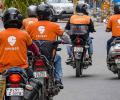
Food delivery app Swiggy on Wednesday launched a Rs 11,330-crore initial share sale, asking investors to take a pie of Indian middle class' rising propensity of online ordering. The company, which is present in over 650 cities and towns of the country, is launching the initial public offering (IPO) amid heightened concerns on urban demand slump, and the management stressed that it is unaffected by the broader trends in the economy. "We are also reading about it, but we are not seeing that yet in the business... So far, we have not seen the impact of demand on our business," its chief financial officer Rahul Bothra said.

Are you a first-time IPO investor? Even if IPOs appear attractive with expectations of high returns, they come with risks and complexities, cautions Sheetal Jhaveri and shares her checklist to help you navigate through the world of IPOs

The Securities and Exchange Board of India (Sebi) has intervened in the matter concerning alleged irregularities by Trafiksol ITS Technologies, which had come out with a Rs 45 crore initial public offering (IPO) last month. In an ex-parte order, the market regulator has said it will undertake a detailed examination into the disclosures made by the small and medium enterprise (SME) company in its draft offer document. BSE had halted the listing of Trafiksol, a software provider for traffic systems, amid complaints around use of the issue proceeds and wrongful disclosures.
