
India's wholesale price index (WPI) inflation surged to 9.68 per cent in May, up from 8.26 per cent in April, primarily due to significant increases in the prices of fuel and power, manufactured goods, and food items.

India's wholesale price inflation surged to 8.30 per cent in April, up from 3.88 per cent in March, primarily driven by a significant increase in the prices of fuel, power, and crude petroleum, according to data from the commerce and industry ministry.

Most members of the Reserve Bank of India's Monetary Policy Committee (MPC) expressed concerns about inflation becoming generalised and highlighted uncertainties surrounding both inflation and growth prospects due to the West Asia conflict, according to the recently released minutes.

Indian benchmark equity indices, Sensex and Nifty, closed lower due to investor caution over rising bond yields, a weaker rupee, and fresh fuel price hikes, which have revived inflation concerns.
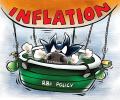
The Reserve Bank of India has increased its retail inflation projection for 2026-27 to 5.1 per cent, up from an earlier estimate of 4.6 per cent. This revision is primarily attributed to mounting input costs, driven by the pass-through of higher global energy prices to domestic petrol and diesel rates, which have seen significant increases since May.

Analysts predict that inflation data, the US Federal Reserve's interest rate decision, and crude oil price trends will be the primary factors influencing the movement of Indian stock markets. Geopolitical developments, particularly the US-Iran deal, and foreign investor activity will also play a crucial role.

Global oil prices fell on Thursday to their lowest levels since before the outbreak of the Iran conflict, offering a significant economic tailwind for India, the world's third-largest crude importer, by easing inflation risks, reducing the import bill and improving the government's fiscal position.
India's wholesale price inflation surged to 3.88 per cent in March, marking the fifth consecutive monthly increase, primarily driven by a sharp rise in crude petroleum, natural gas, and manufactured items amidst the West Asia crisis.

Indian stock market benchmark indices, Sensex and Nifty, experienced declines in early trade due to escalating tensions between the US and Iran, which led to a surge in crude oil prices and weak global equity trends.

Apple has increased the starting prices of MacBook and iPad models by 20-42 per cent compared to their launch prices across the globe, including India, mainly due to higher memory chip costs. The new price list on Apple India's website shows that the company has increased the price of the MacBook Pro built on the M5 series chip by about 20 per cent.

The Indian National Lok Dal (INLD) held protests across Haryana against the fuel price hike, stating that inflation has severely impacted the common man. Protests were led by various INLD leaders across the state, with demonstrations including symbolic acts and confrontations with local authorities.

The Reserve Bank of India (RBI) has kept its key lending rate, the repo rate, unchanged at 5.25 per cent for the second consecutive time, citing concerns over rising energy prices, supply disruptions from the West Asia crisis, and potential inflationary pressures.

Indian benchmark indices, Sensex and Nifty, extended their rally for the fourth consecutive day, driven by a significant drop in crude oil prices and strong performance from IT firms, despite mixed global cues.

India's consumption stocks, which have outperformed the broader market, are now facing significant pressure due to a gradual rise in fuel prices and the potential for higher inflation. Analysts warn that companies may be forced to pass on increased input costs to consumers, potentially hurting demand across both staples and discretionary categories, with a looming threat of deficient monsoon rainfall further exacerbating inflationary concerns.

Kerala is facing increased inflationary pressure due to recent hikes in petrol and diesel prices, according to Chief Minister V D Satheesan. The state's economy is also impacted by the decline in remittances from the Gulf and higher oil prices.

The reopening of the Strait of Hormuz, following a ceasefire agreement between the US and Iran, is expected to significantly ease India's crude oil supply risks, lower freight costs, and reduce inflationary pressures, as global oil prices have already dropped.

India's retail inflation, measured by the Consumer Price Index (CPI), increased to 3.48 per cent in April, up from 3.40 per cent in March, primarily due to a surge in prices of gold and silver jewellery, as well as certain kitchen staples like tomatoes and cauliflower.

Indian benchmark equity indices, Sensex and Nifty, extended their rally for a fifth consecutive session, driven by optimism surrounding a potential US-Iran peace deal and a significant drop in crude oil prices. Despite hawkish remarks from the US Fed, investors remain hopeful that easing energy prices could temper inflationary pressures.

'If the war continue for a longer period of time, it is just a matter of time before the government will pass on some of the price increases.'

India's wholesale price inflation (WPI) increased for the fourth consecutive month in February, reaching 2.13 per cent, primarily due to rising prices of food and manufactured goods, according to government data.

Petrol price has been increased by 87 paise in Delhi from Rs 98.64 to Rs 99.51 per litre. Diesel rates have gone up by 91 paise from Rs 91.58 to Rs 92.49.

Wholesale price inflation extended upward momentum for the third straight month, at 1.81 per cent in January, driven by an uptick in prices of food, non-food articles, and manufactured items on a month-on-month basis, government data showed on Monday.

Petrol and diesel prices in India have been increased by Rs 3 per litre each, marking the first rate hike in over four years. This decision follows a period of stable prices during recent state elections, despite rising global crude oil prices and significant losses for fuel retailers.

Analysts predict that the ongoing US-Iran conflict, fluctuations in crude oil prices, and foreign institutional investor (FII) flows will be the primary factors influencing Dalal Street this week, with inflation concerns adding to investor anxiety.

Indian benchmark indices Sensex and Nifty closed lower, snapping a two-day rally, as a spike in crude oil prices, triggered by reports of fresh US military operations in southern Iran, dampened investor sentiment and reignited fears of renewed energy supply disruptions.

Indian paint majors, including Asian Paints, Berger Paints, and Kansai Nerolac, reported better-than-expected performance in Q4FY26, driven by steady demand, improved product mix, and strategic price hikes. The sector is also benefiting from reduced competitive intensity as new players also increase prices, narrowing the gap with incumbents.

'With inflationary pressures now at elevated levels and the adverse cost environment persisting, the company has to pass on a portion of the increased costs to the market, while continuing to ensure that the impact on customers is kept to the minimum extent possible.'
Delhi Police have issued notices to two employees of the Delhi and District Cricket Association as part of an ongoing investigation into an IPL ticket black-marketing racket.

The Indian rupee plummeted to a new all-time closing low of 95.81 against the US dollar, driven by surging crude oil prices, persistent inflation concerns, and a strengthening dollar index.

Petrol and diesel prices in India have seen their fourth increase in less than two weeks, pushing cumulative hikes to nearly Rs 7.5 per litre since May 15, reaching their highest levels since May 2022. This surge, driven by global crude oil costs and the Iran conflict, is expected to exacerbate inflationary pressures and raise transportation costs across the economy.

The gems and jewellery industry anticipates challenging times following the government's decision to increase gold import duty to 15 per cent, a move that exporters warn could fuel the grey market and heighten smuggling risks.

A 49-year-old man has been arrested in Bengaluru for allegedly selling IPL match tickets illegally at inflated prices outside the M Chinnaswamy Stadium.

Petrol and diesel prices in India have been increased for the second time in a week, following a long freeze on revisions. The increase comes as global crude prices surge and state-run oil firms look to recoup losses.

S&P Global Ratings projects India's economic growth to slow to 6.6 per cent in FY27, down from 7.7 per cent in FY26, citing energy stress and a potential sub-par monsoon.
Delhi Police have arrested three individuals involved in a black-marketing racket selling IPL match tickets at inflated prices. The accused were caught selling complimentary passes and regular tickets near Delhi Gate.

Petrol and diesel prices have been increased by Rs 3 per litre each, marking the first hike in over four years, as state-run fuel retailers pass on some of the impact from surging global crude prices, which have been exacerbated by the Iran war.

Indian stock markets are expected to remain highly sensitive to geopolitical developments, particularly the US-Iran situation, and crude oil prices this week, with analysts also highlighting the influence of the rupee-dollar trend, foreign investor activity, and upcoming inflation data.

Amul and Mother Dairy, India's largest dairy product retailers, have increased milk prices by Rs 2 per litre, marking the second such hike in 13 months. This move is expected to intensify inflationary pressures, already fuelled by global conflicts, and will impact household budgets across the country.

Congress leader Rahul Gandhi on Monday launched a scathing attack on Prime Minister Narendra Modi over the latest fuel hike, saying mehangai manav has struck again and he has just one job of making promises during elections and attacking people's pockets at other times.

Hindustan Unilever (HUL) exceeded consensus estimates in Q4FY26, driven by lower overheads and 6 per cent consolidated volume growth. However, the company anticipates further price hikes to counter an expected 8-10 per cent material cost inflation, while maintaining a mid-term margin guidance of 22.5-23.5 per cent.
