
'I don't see any major setback for the Indian markets post the US Fed event.'
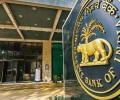
The Reserve Bank of India on Friday raised the benchmark lending rate by 50 basis points to 5.40 per cent to tame inflation.

We still have time for this government to take action.

Revising India's GDP upwards by 0.3 per cent to 6.3 per cent in 2015, Asian Development Bank (ADB) has said the economy shows a new promise of turnaround after the election brought a stable government in May.

Govt keen on reservation in private sector jobs

Any currency design change must be approved by the RBI central board and the central government.

Finance Minister Nirmala Sitharaman will have to do a tight-rope walk between staying fiscally prudent and general public expectations of lower taxes and a wider social security net, while at the same time firing the engines of the economy before general elections. Sitharaman will on Wednesday present her fifth straight Budget at a time when the economy is slowing due to global headwinds and specific sectors need attention. In the run-up to the Budget presentation, expectations are rife that she may tweak income-tax slabs to provide relief to the middle class and increase spending on the poor through programmes such as the rural job scheme while ramping up financial incentives for local manufacturing.

'If private capex has to kick in, there should at least be 2-3 years of visibility.'

International rating agency Fitch Ratings has pegged India's economic growth at 8 per cent for this fiscal, up from an estimated 7.2 per cent in the 2009-10 period.

The International Monetary Fund (IMF) has said India and China will account for half of the global economic growth in 2023, as the multilateral agency retained its growth forecast for Asia's third-largest economy for 2023-24 (FY24). "India remains a bright spot. Together with China, it will account for half of global growth this year, versus just a tenth for the US and euro area combined," the IMF said in its latest update to the biannual World Economic Outlook. Growth in India is set to decline from 6.8 per cent in 2022 (FY23) to 6.1 per cent in 2023 (FY24) before picking up to 6.8 per cent in 2024 (FY25), the global lender said while citing "resilient domestic demand despite external headwinds".

The International Monetary Fund (IMF) on Tuesday said it is expecting some slowdown in the Indian economy next fiscal year and projected the growth to 6.1 per cent from 6.8 per cent during the current fiscal ending March 31. The IMF on Tuesday released the January update of its World Economic Outlook, according to which the global growth is projected to fall from an estimated 3.4 per cent in 2022 to 2.9 per cent in 2023, then rise to 3.1 per cent in 2024. "Our growth projections actually for India are unchanged from our October Outlook.

Ahead of the 2023-24 Union Budget, the thinking at the top level of the central government is clear: Gross domestic product (GDP) growth of 6-6.5 per cent is a comfortable enough target for FY24 and the focus should be on fiscal consolidation to ensure that the sovereign cost of borrowing does not become prohibitively expensive in a high-interest rate environment, according to people in the know. Those aware of deliberations between the Prime Minister's Office (PMO) and the Ministry of Finance said while the Budget would look to strike a balance between infrastructure investment and welfare schemes, it is unlikely to be populist, though it will be the last full-year Budget before the 2024 Lok Sabha election. Incidentally, 6-6.5 per cent GDP growth is what the upcoming 2022-23 Economic Survey is expected to project for FY24.

'The Fed rate will peak in the range of 5.1-5.3 per cent during the second quarter of CY23 and will most likely stay there for a while before rate cuts start in CY24.'
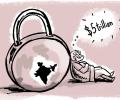
It would be a difficult task for the Indian economy to reach the $5-trillion mark a year before the International Monetary Fund (IMF) projection of 2026-27. Pankaj Chaudhary, minister of state for finance, said in the Rajya Sabha on Tuesday that the government is taking steps to make the country a $5-trillion economy at a date earlier than the IMF's projection. In that context, it would not be difficult to meet the projection in the third quarter of FY27.
A recent Outlook Money report stated that in the first two quarters of the current fiscal year, Indian companies successfully cut down costs. As a result, they managed to grow net profits. This positive change got reflected directly in the automobile sector with most of the auto majors registering positive sales figures in February.

Overall, this is a budget with a pro growth stance with an attempt at fiscal restraint and some initiatives with major long term implications. It stays within mid-on and mid-off but does score boundaries.
The delegation of Indian CEOs from Confederation of Indian Industry highlighted the growing sense of optimism in India following the recent election results.

'Continue with your SIPs to get the benefit of lower average prices in this challenging market environment.'

The Indian economy has witnessed the creation of 28 unicorns, or startups valued over $1 billion, this year on the back of a series of reforms unleashed by the government, Finance Minister Nirmala Sitharaman said. Addressing a virtual conference organised by the Indian Private Equity and Venture Capital Association (IVCA), the minister said the Indian economy has witnessed a spur of unprecedented growth in the form of startups in the last two decades. The Department for Promotion of Industry and Internal Trade (DPIIT) has recognised more than 56,630 startups across districts throughout India, IVCA said in a statement quoting the finance minister.

Seven of the meetings will be held in late November or early December at the finance ministry, as is the norm.

India's unemployment rate surged to a one-year high of 8.3 per cent in August as employment sequentially fell by 2 million to 394.6 million, according to data from the Centre for Monitoring Indian Economy (CMIE). During July, the unemployment rate was at 6.8 per cent and the employment was 397 million, the CMIE data added. "The urban unemployment rate is usually higher at about 8 per cent than the rural unemployment rate, which is usually around 7 per cent.

India's exports contracted 12.2 per cent to $34.48 billion in December 2022, mainly due to global headwinds, and the trade deficit widened to $23.76 billion during the same period, according to official data released on Monday. Imports in December 2022 also declined 3.5 per cent to $58.24 billion as against $60.33 billion in the year-ago period. In December 2021, exports stood at $39.27 billion and the trade deficit was at $21.06 billion.
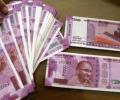
It is only after the government's nod that a particular design change come into effect.

The highlights of the RBI's fourth monetary policy review of fiscal year 2022-23 announced by Governor Shaktikanta Das.

Bengaluru ranks second after Beijing on the list of top technology hubs in the Asia Pacific region, according to property consultant Cushman & Wakefield. In its latest report 'Tech Cities: The Global Intersection of Talent and Real Estate', the consultant has identified tech markets based on 14 criteria across talent, real estate, and business environment metrics. The report has identified "Bengaluru, Chennai, Hyderabad, and Delhi as the top technology hubs in the APAC region after Beijing", the consultant said in a statement.

'They are not tom-tomming what a great thing the Supreme Court decision is.' 'If they say it was a great thing, the public will react because people suffered and are still suffering.'

Per capita income has more than doubled to Rs 1.97 lakh in around nine years. Indian economy has increased in size from being 10th to 5th largest in the world in the past nine years. Seven priorities of the Budget, 'Saptarishi', are inclusive development, reaching the last mile, infrastructure and investment, unleashing the potential, green growth, youth power and financial sector.

The RBI on Wednesday cautioned that while the Indian economy appears capable of weathering the deterioration in geopolitical conditions amid the ongoing Russia-Ukraine war, it faces headwinds from global spillovers from geopolitical tensions, elevated commodity prices and moderating external demand. The RBI, however, did not tinker with the GDP growth projection made in April. It had slashed the GDP growth projection for the fiscal 2022-23 to 7.2 per cent from its earlier forecast of 7.8 per cent.
After averaging at 8.8 per cent growth over the past four years, India's growth rate in 2009-10 is expected to slow down to 5.5 per cent mainly due to lower investment and declining external demand, the US Treasury Secretary Timothy Geithner has said.

As a percentage contributor to nominal GDP, PFCE's share was 60.1 per cent in FY23, compared with 59.6 per cent and 60.8 per cent in the two preceding fiscal years. "Although PFCE is expected to grow 7.7 per cent in FY23, we believe it is still short of a broad-based recovery. "The current consumption demand is highly skewed in favour of goods and services consumed largely by the households falling in the upper income bracket. "A broad-based consumption recovery, therefore, is still some distance away," said Sunil Kumar Sinha, principal economist with India Ratings.

An industry survey has showed that economic growth for the current fiscal may slip to 4.8 per cent from 5 per cent estimated earlier.
Whether this current rate of growth is likely to continue in the medium-term remains to be seen.

Indian economy is expected to grow by 10 per cent or more in the current fiscal, and 8 per cent plus in the next fiscal year, Niti Aayog Vice-Chairman Rajiv Kumar said on Tuesday. Addressing a book launch event, Kumar further said that seven years of the Modi government has laid a strong economic foundation for businesses to thrive in India. "There was a hiccup (in economic growth) for two years due to COVID-19 pandemic.

Those who worry that the Adani saga will turn the world off India are not looking at the entire picture, asserts Mihir S Sharma.

Former RBI governor D Subbarao has suggested that the government should come up with a 10-year road map for privatisation of all Public Sector Banks (PSBs) as it would provide much needed predictability to stakeholders. Subbarao further said that the big bang approach to privatisation of state-owned banks is not desirable but at the same time the issue should not be put on the back burner. "Ideally, we should have a road map, maybe over a 10 year timeframe, to privatise all PSBs. "That will give much needed predictability to all stakeholders," he told PTI.

India's goods and services exports have already crossed $675 billion in last fiscal year and the country is now aspiring to take international trade to $2 trillion by 2030, Commerce and Industry Minister Piyush Goyal has said. Interacting with faculty, researchers, and students at the Stanford University here, Goyal also said by the time India would celebrate the 100th anniversary of its independence, it would be a $30 trillion economy. "...by 2047-2050 period, when India would be completing 100 years of Independence, we will be at least a $30 trillion economy on a business as usual scenario and possibly a $35-45 trillion economy if some of the aggressive plans that the government is putting together work well.
The disconnect with the AAP is that its economic agenda sounds suspiciously like Indira Gandhi's of the early 1970s: more subsidies, higher taxes, regulation of private school fees, free water, et al.

'It will send a very strong signal that it is now our time to grow.'
The best part of the economy was its resilience, of course with a little help in the form of fiscal actions from the government to reverse the slow down, at a time when finance minister P Chidambaram was asked to take charge of the law and order machinery as home minister in the face of Mumbai terror attacks.

'It will be best for investors to have a systematic investment plan in mid-cap and small-cap funds with a three-/five-year horizon.'
 © 2026 Rediff.com - Advertise with us - Disclaimer - Privacy Policy - Sitemap - Feedback - About us - Terms of use - Grievances