Chinese import tariffs have unwittingly come to India's assistance to help boost imports of US liquefied petroleum gas (LPG) at rates cheaper than what it pays for supplies from West Asia, according to industry sources and shipping data.
They want more cash, forex, higher bond coupons and increase in market prices for petrol, diesel, LPG.

Getting compensated for at least 90 per cent of losses without government subsidy appears difficult.
Today, less than six weeks into the 2011-12 financial year, the government used up its entire budgetary provision of Rs 20,000 crore (Rs 200 billion) for petroleum subsidy.

State-run Indian Oil Corporation, Hindustan Petroleum and Bharat Petroleum currently sell petrol, a commodity which the government freed from its control in June last year, at a discount of about Rs 4.50 a litre to its imported cost.
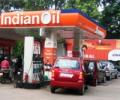
IOC and its sister PSUs, Hindustan Petroleum and Bharat Petroleum, sell diesel, domestic LPG and kerosene at rates way lower than their imported cost to help government keep general price inflation under check.
IOC and other state retailers had on September 16 raised jet fuel price by 2.5 per cent.

Though the government had earlier this fiscal explicitly decided to compensate Indian Oil, Hindustan Petroleum and Bharat Petroleum for the losses they incur on selling domestic LPG and kerosene through PDS by way of oil bonds, the finance ministry has not issued any bonds for the three quarters.

The basket of crude oil India buys from overseas markets averaged $68.07 per barrel in September as against the August average of $71.98 a barrel.
State-owned Indian Oil Corp (IOC) today said it is losing Rs 189 crore per day on selling auto and cooking fuel below cost as global crude oil prices shot up to USD 102 per barrel.
The Finance Ministry will give Rs 12,000 crore in cash to Indian Oil, Hindustan Petroleum and Bharat Petroleum to cover for less than half of the losses they incurred on selling LPG and kerosene this fiscal.
The three firms had planned to jointly buy or lease plantations and related units for producing ethanol, a by-product of sugarcane that is doped in petrol to reduce dependence on imported oil. The three firms have suffered a Rs 14,700-crore (Rs 147 billion) net loss in the first-half of the current fiscal and were living on borrowed money as they lost heavily on retail fuel sales domestically.
State-run oil marketing companies Indian Oil, Hindustan Petroleum and Bharat Petroleum are likely to lose Rs 45,478 crore (Rs 454.78 billion) this fiscal on selling fuel below cost, Petroleum Minister Murli Deora said.
The oil marketing companies are driving credit growth. The banking sector -- which typically sees credit contraction in the initial months -- has managed to buck the trend and has added nearly Rs 16,000 crore (Rs 160 billion) of advances in the first seven weeks of the current financial year thanks to the demand from the two sectors.

The country's biggest fuel retailer Indian Oil Corporation on Wednesday said it is losing Rs 107 crore (Rs 1.07 billion) a day on selling auto and cooking fuel below cost even as it awaits the government to announce clear compensation package.
With Indian Oil, Hindustan Petroleum and Bharat Petroleum projected to lose Rs 200,000 crore (Rs 2,000 billion) in revenues on sale of petrol, diesel, domestic LPG and kerosene below import cost, industry sources said a hike in the range of Rs 2 to 5 per litre appears on the cards.
India imports 73 per cent of its crude oil import needs and the cost of imports would spiral after crude inched closer to a record $125 per barrel, while rupee touched its 13-month low, official sources said. The basket of crude oil India imports was at $120.65 per barrel on Thursday, a 91 per cent jump over the last fiscal's lowest price of 62.91 dollars recorded on May 9, 2007, official sources said.
Government had last week issued bonds worth Rs 11,256.92 crore (Rs 112.56 billion) to three PSU oil marketing companies to compensate them for under-recoveries on selling petrol, diesel, domestic LPG and PDS kerosene in April-September 2007 period.
The employees unions of Hindustan Petroleum and Bharat Petroleum said on Tuesday that they will strike work for three days starting March 25 in protest against the proposed privatisation of two oil majors.
In an apparent bid to resolve the row over divestment in public sector units including the one involving HPCL and BPCL, Prime Minister Atal Bihari Vajpayee held an informal meeting of senior Cabinet ministers.\n\n
The government on Wednesday said there was no proposal to either merge Hindustan Petroleum and Bharat Petroleum with Oil and Natural Gas Corp or Oil India Ltd with Indian Oil Corporation.
Indian Oil Corporation is India's only Fortune 500 company.
The government is keen on getting global oil majors like Saudi Aramco and National Iranian Oil Corp on board Hindustan Petroleum and Bharat Petroleum through the market route even though privatisation of the state-run oil refining and marketing compa
A decision on sale of government equity in HPCL, BPCL could be delayed beyond the Dec 7 deadline with PetroMin Naik stating he has no idea about the next CCD meet.\n\n\n\n

Aviation turbine fuel or jet fuel price was on Wednesday hiked by a steep 9.2 per cent, while that of non-subsidised cooking gas was raised by Rs 21 per cylinder.
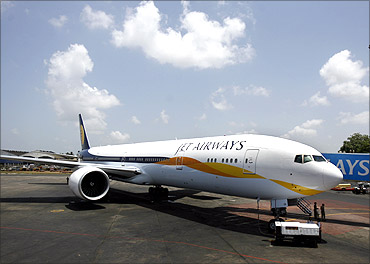
ATF price in Delhi was reduced by Rs 4,765.5 per kilolitre (kl), or 11.9 per cent.
ATF or jet fuel price has been cut marginally while rate of non-subsidised cooking gas LPG has been hiked by Rs 27.50 a cylinder.

Jet fuel or ATF prices were on Thursday were cut by a steep 4.5 per cent, the first reduction in rates in six months.
Jet fuel constitutes over 40 per cent of an airline's operating costs and the price cut will bring relief to the cash-strapped carriers.

Jet fuel (ATF) prices have been hiked by a steep 6.9 per cent, taking the rates to lifetime high of Rs 75,031 per kilolitre.
While LPG price was raised by Rs 18, kerosene saw a hike of Rs 3 per litre

Jet fuel constitutes over 40 per cent of an airline's operating costs and the price increase will raise the financial burden on cash-strapped carriers.

The 30-share Sensex ended down 538 points at 26,781 and 50-share Nifty ended down 152 points at 8,067.

It may be the season for corporate matchmaking but India Inc's record of managing partnerships is far from impressive, says Shailesh Dobhal.

According to estimates, if the companies are not allowed to raise petrol rates at least Rs 5 a litre by the first fortnight of September, they might begin to suffer underrecoveries on this decontrolled auto fuel, too -- for the first time this financial year.
 © 2026 Rediff.com - Advertise with us - Disclaimer - Privacy Policy - Sitemap - Feedback - About us - Terms of use - Grievances