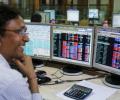
Among the Sensex constituents, 20 stocks ended the session in green with HDFC Bank, Titan, Tech Mahindra, and Asian Paints being the major gainers. TCS, Maruti, Kotak Mahindra Bank and Bajaj Finserve were the other gainers. In contrast, SBI, Bharti Airtel, JSW Steel, PowerGrid, ITC and Reliance closed the trading with losses.

Eight of the 10 most valued firms faced a combined erosion of Rs 1,17,493.78 crore in market valuation in an overall weak trend in equities last week, with Infosys taking the biggest hit. Reliance Industries, Tata Consultancy Services (TCS), HDFC Bank and ICICI Bank were among the eight companies that suffered a decline in their valuation. ITC and State Bank of India were the only gainers. Last week, the 30-share BSE Sensex fell by 775.94 points or 1.28 per cent.

Among the Sensex firms, State Bank of India rose the most by 3.78 per cent after the bank announced the acquisition of SBI CAPS subsidiary for Rs 708.07 crore. Nestle India gained 1.68 per cent after it reported around 9 per cent growth in sales. JSW Steel, Bajaj Finance, Axis Bank and Asian Paints were among the gainers.
ICICI Bank share price hits record high, ICICI Bank m-cap tops $100 billion: Shares of ICICI Bank have been on a steady uptrend, rising 30 per cent over the past one year; not far behind Axis Bank stock that surged over 34 per cent during the period. The BSE Sensex, meanwhile, is up 25 per cent, and the BSE BANKEX 22 per cent in the last one year, ACE Equity data shows. On Wednesday, June 26, ICICI Bank shares hit a fresh record high for the third consecutive day, rising 2 per cent on the BSE in the intraday trade.

Benchmark equity indices climbed nearly 1 per cent on Wednesday on buying in HDFC Bank and Reliance Industries. Investors are eyeing the two important events lined up ahead -- the interim budget and the US Fed interest rate decision -- to derive further cues from. Recovering all the early lost ground, the 30-share BSE Sensex jumped 612.21 points or 0.86 per cent to settle at 71,752.11.
Among the Sensex firms, Larsen & Toubro, Tata Consultancy Services, Infosys, HCL Technologies, Hindustan Unilever, Axis Bank, ICICI Bank and Wipro were the major gainers. Nestle India, Asian Paints, JSW Steel, Kotak Mahindra Bank and HDFC Bank were among the losers.
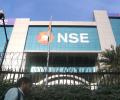
After a sharp fall in the share prices of HDFC Bank and other private sector lenders in the past three days, the BFSI (banking, financial services and insurance) sector weighting in the Nifty50 has slipped to a seven-year low of 32.03 per cent, down from nearly 36.6 per cent at the end of March 2023 and 34.5 per cent at the end of December 2023.

In May, MFs were the net sellers in several PSUs, as they deployed Rs 47,600 crore in equities during the month.
Among the Sensex firms, Mahindra & Mahindra, Bharti Airtel, ICICI Bank, IndusInd Bank, Reliance Industries, Axis Bank and HDFC Bank were among the major laggards. Titan, Kotak Mahindra Bank, Asian Paints, HCL Technologies, Tech Mahindra, NTPC, Nestle and Power Grid were the major gainers.
The April-June quarter (Q1) of the current financial year (FY25) may be soft for banks with loan growth moderation, net interest margin (NIM) pressures, and higher staff and credit costs inching up, according to analysts. Credit growth could ease due to the lagged impact of the Reserve Bank of India (RBI) tightening and deposit growth has weakened, and the current account and savings account (CASA) ratio has declined 10-370 basis points (bps) quarter-on-quarter (Q-o-Q) for many banks.

Nine of the 10 most valued firms faced a combined erosion of Rs 1,87,808.26 crore in market valuation last week, with HDFC Bank and Reliance Industries taking the biggest hit amid an overall weak trend in equities. Last week, the BSE benchmark tumbled 1,538.64 points or 2.52 per cent amid concerns that the US Federal Reserve might raise interest rates further to curb inflation. Fresh foreign fund outflows also dented investor sentiments. Barring ITC, all 10 firms, including Tata Consultancy Services (TCS), Infosys, ICICI Bank and Hindustan Unilever, were the laggards.

Christopher Wood, global head of equity strategy at Jefferies has rejigged his equity portfolios. In his Asia ex-Japan long-only portfolio, he has added Axis Bank (5 per cent weightage) and increased holding in Larsen & Toubro (L&T) by one percentage point. This, Wood said, will be paid for by removing the investment in ICICI Lombard General Insurance and reducing the investments in HDFC Bank and Reliance Industries (RIL) by one percentage point each.

Highly-rated finance firms and housing finance companies are expected to benefit from the absence of Housing Development Finance Corp (HDFC) from the bond market once it merges with the HDFC Bank in early FY24. Post merger, the bond market is expected to become less crowded, which will ease fund raising conditions for other players in the field. It may perhaps also compress the spread for debt instruments floated by housing finance companies (HFCs) over 10-year government bonds, subject to demand and supply conditions.
Among the Sensex firms, Wipro jumped over 6 per cent, the most among the frontline companies. HCL Technologies, Tata Motors, Maruti, Tata Steel, Infosys, Tech Mahindra, Larsen & Toubro and JSW Steel were the other major winners. State Bank of India, Bajaj Finance, ICICI Bank, HDFC Bank, Axis Bank and IndusInd Bank were among the laggards.

Reliance Industries was the biggest gainer in the Sensex pack, rising 2.69 per cent, followed by HCL Tech, ICICI Bank, Tata Motors, Wipro, IndusInd Bank, JSW Steel, Wipro, Tata Consultancy Services and Titan. In contrast, NTPC, Power Grid, UltraTech Cement, Axis Bank, Infosys and Nestle were the major laggards.
Among Sensex gainers, Power Grid jumped the most by 4.16 per cent after its board approved an investment of Rs 656 crore in transmission projects. Private lenders HDFC Bank, Axis Bank, Kotak Bank, IndusInd Bank and ICICI Bank were also among lead gainers. NTPC, Nestle and Hindustan Unilever also ended the session with gains.

Among the Sensex firms, Larsen & Toubro, Bharti Airtel, HCL Tech, Tata Motors, Sun Pharma and Tata Steel were the major gainers. On the other hand, Nestle, Asian Paints, Bajaj Finserv, HDFC Bank and Axis Bank were among the laggards.

From the Sensex basket, Tech Mahindra, Tata Steel, JSW Steel, HCL Technologies, Tata Consultancy Services, Larsen & Toubro and Kotak Mahindra Bank were the biggest laggards. Mahindra & Mahindra, Power Grid, Bajaj Finance, IndusInd Bank and Maruti were the major gainers.

The market capitalisation of BSE-listed companies soared to an all-time high of Rs 406.52 lakh crore on Monday thanks to a rally in equities where the BSE Sensex climbed over 1 per cent. The 30-share BSE Sensex rallied 941.12 points or 1.28 per cent to finish at 74,671.28. During the day, it zoomed 990.99 points or 1.34 per cent to 74,721.15.

From the Sensex pack, NTPC, Tata Motors, Larsen & Toubro, Bajaj Finserv, Bharti Airtel, HDFC Bank, Reliance Industries, Titan, Power Grid and State Bank of India were the major gainers. ITC, UltraTech Cement, Tech Mahindra, Tata Steel, Wipro, Tata Consultancy Services and JSW Steel were among the laggards.

Among the Sensex firms, IndusInd Bank, Power Grid, Tata Motors, Bajaj Finance, NTPC, HDFC Bank, Reliance Industries, Nestle and Kotak Mahindra Bank were the major gainers. Infosys, State Bank of India, Tata Steel, Hindustan Unilever and Titan were the major laggards.

Equity benchmark indices Sensex and Nifty ended almost flat in highly volatile trade on Thursday amid the lack of any immediate trigger. The 30-share BSE Sensex dipped 5.43 points or 0.01 per cent to settle at 66,017.81. During the day, it hit a high of 66,235.24 and a low of 65,980.50.

Among the Sensex firms, Bajaj Finance fell by nearly 3 per cent, the most among the 30 frontline companies. Bajaj Finserv, Axis Bank, HDFC Bank, Reliance Industries, NTPC, ICICI Bank and IndusInd Bank were the other major laggards. In contrast, Tata Motors, Sun Pharma, Maruti and Mahindra & Mahindra were the gainers.

India's corporate sector is likely to report a slowdown in revenue growth and earnings for the July-September 2023 period (Q2FY24), according to earnings estimates by brokerages, after the country's top listed companies posted higher than expected profits for the first quarter. The combined net profit of Nifty50 companies, based on brokerage estimates, is expected to have grown by 19.6 per cent year-on-year (Y-o-Y) to Rs 1.75 trillion in Q2FY24 - a sharp deceleration from 37.6 per cent Y-o-Y growth in the combined earnings of index companies in the April-June 2023 period. According to estimates, the combined earnings in the second quarter would be down 8.8 per cent on a quarter-on-quarter (Q-o-Q) basis and the lowest in the past three quarters.

Benchmark equity index Sensex and Nifty gave up early gains and ended lower on Monday as investor sentiment was hit due to unabated foreign fund outflows and losses in index heavyweights Reliance Industries and HDFC Bank. The 30-share BSE Sensex declined 168.21 points or 0.28 per cent to settle at 60,092.97 as 15 of its constituents dropped. The barometer opened higher and touched a high of 60,586.77 in morning session. Later in the day, it fell 297.35 points or 0.49 per cent to 59,963.83.

Market benchmarks Sensex and Nifty tumbled 1 per cent on Wednesday amid continuous foreign fund outflows and a weak trend in index majors Reliance Industries and HDFC Bank. The 30-share BSE Sensex slumped 636.75 points or 1.04 per cent to settle at 60,657.45. During the day, it declined 700.64 points or 1.14 per cent to 60,593.56.

The post-Covid pandemic boom in corporate revenues appeared to have faded away in 2023-24. Yet, companies have reported a sharp recovery in their profits in FY24, driven by high margins. Their combined net sales, including gross interest income for lenders, rose by a modest 4.8 per cent year-on-year (Y-o-Y) in FY24.

With high credit growth and healthy asset quality, listed commercial banks are expected to report steady growth in earnings during the fourth quarter ended March 2024 (Q4 FY24). Profits are expected to grow at 9.6 per cent year-on-year (Y-o-Y) and net interest income (NII) by 8.7 per cent in Q4 FY24, according to Bloomberg analysts' estimates. According to Motilal Oswal Securities, while bank credit growth has been robust, deposit growth has also gathered pace.
Among Sensex shares, Tech Mahindra, Infosys, Asian Paints, ICICI Bank, Kotak Mahindra Bank, Titan, IndusInd Bank and Bajaj Finserv were the major laggards. Nestle, Tata Steel, Mahindra & Mahindra, Bajaj Finance, HDFC Bank and Tata Consultancy Services were among the gainers.

Investors' wealth soared by Rs 10.58 lakh crore in three days of the market rally, where the BSE benchmark jumped over 2 per cent, and hit an all-time high on Monday. Extending its winning momentum to the third day running, the 30-share BSE Sensex jumped 363.20 points or 0.49 per cent to settle at 74,014.55. During the day, it zoomed 603.27 points or 0.81 per cent to hit its record high of 74,254.62.
Among the Sensex firms, Power Grid, UltraTech Cement, Titan, Reliance Industries, Bajaj Finance, Mahindra & Mahindra, ICICI Bank, Tata Consultancy Services, Tech Mahindra, ITC and HDFC Bank were the major laggards. HCL Technologies, IndusInd Bank, Wipro, Nestle, Maruti, Larsen & Toubro and Asian Paints were among the gainers.
The value of FPIs (Foreign Portfolio Investors) holding in Indian equities reached $738 billion in the three months ended December 2023, marking a surge of 13 per cent from the preceding quarter, driven by the strong performance of the domestic stock market, according to a report by Morningstar. The value of FPIs investment was at $651 billion in the September quarter of the current fiscal. On a year-on-year basis, the value of such investments rose 26 per cent from $584 billion in December 2022.

Among the Sensex firms, Axis Bank fell over 4 per cent, emerging as the biggest laggard. State Bank of India, IndusInd Bank, NTPC, UltraTech Cement, Bajaj Finserv, Tata Steel, JSW Steel, Maruti and Larsen & Toubro were the other major laggards. Nestle, Hindustan Unilever, HDFC Bank, Tata Consultancy Services, Infosys, HCL Technologies, and Asian Paints were among the gainers.

The National Payments Corporation of India on Thursday granted approval to Paytm-owner One97 Communications Ltd to participate in UPI as a Third-Party Application Provider (TPAP) under the multi-bank model. Axis Bank, HDFC Bank, State Bank of India, and YES Bank will act as Payment System Provider (PSP) banks to Paytm.

Analysts say domestic banks' dependence on local depositors insulates them from the crisis.

Investors' wealth grew by Rs 3.24 lakh crore on Thursday as the BSE Sensex jumped nearly 1 per cent after a two-day slide. The 30-share BSE Sensex jumped 490.97 points or 0.69 per cent to settle at 71,847.57. During the day, it rallied 598.19 points or 0.83 per cent to 71,954.79.

To increase the adoption of credit on United Payments Interface (UPI), National Payments Corporation of India (NPCI) is looking at an interchange fee for transactions lower than that for a credit-card transaction. Sources in the know said these charges could be 1-1.2 per cent. Fintech participants concur with the view that the interchange fee is expected to be lower than that for a credit-card transaction.
Among the Sensex firms, Kotak Bank, PowerGrid, ICICI Bank, HDFC Bank, PowerGrid were the major gainers. HUL, TCS, M&M, IndusInd Bank, HCL Tech were among the losers.

HDFC Bank, Reliance Industries and ICICI Bank remained among the top mutual fund (MF) buys for the second consecutive month in September. MFs deployed a net of Rs 15,000 crore into these stocks during the two-month period (August-September), revealed Nuvama Alternative & Quantitative Research reports.
In the Sensex pack, HCLTech rose the maximum by 3.12 per cent, followed by ITC which gained 2.73 per cent and M&M went up 2.61 per cent. TCS climbed 2.44 per cent. Tech Mahindra, Wipro, L&T and Maruti were among the other major gainers.
