
The exclusive characteristic of Babur is that it can fly at a very low height and is designed to elude any kind of radar system.
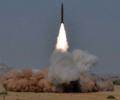
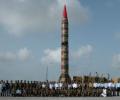
Pakistan on Thursday successfully test-fired a ballistic missile capable of carrying nuclear and conventional warheads to targets as far as 1,500 kilometres, bringing many Indian cities under its range.
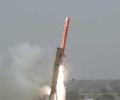
The flight test of the Air Launched Cruise Missile, Ra'ad, which is also known as Hatf VIII, was the seventh since it was first tested in 2007.
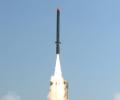
'So far, Pakistan leads India in subsonic cruise missile development, having tested and operationally deployed the Babur cruise missile that has a range of 700 km, significantly less than the Nirbhay's.'

'Any conventional conflict could trigger a nuclear war with results that neither India nor Pakistan could survive easily.' >A revealing excerpt from Shuja Nawaz's The Battle For Pakistan: The Bitter US Friendship And A Tough Neighbourhood.
'Fearful of losing strategic advantage, the only option for Pakistan is to rattle its nuclear sabre!' 'Pakistan thereby hopes to play on the worldwide fear of an outbreak of nuclear war in South Asia,' says Colonel Anil A Athale (retd).

With Pakistan moving towards tactical nuclear weapons, there is an increasingly higher risk of nuclear theft, a US think-tank report has warned ahead of the Nuclear Security Summit in Washington later this month.
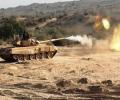
'It is ironic that General Rawat, an infantry officer who the government chose because of his expertise in counter-insurgency, has made his first bold statement in the realm of warfighting and mechanised operations,' points out Colonel Ajai Shukla (retd).

'With two nuclear neighbours, how likely is it for our armed forces to battle in a contaminated environment that could include nuclear, biological or chemical attacks by the adversary?' 'Are we prepared for the threat?' Brigadier S K Chatterji (retd) explains the meaning and significance of Operation Vijay Prahar.
Saudi Arabia has invested in Pakistani nuclear weapons projects and believes it could acquire atomic bombs "at will", the BBC reported on Thursday.

One thing Beijing must understand is that India is not obsessed with being a threat to China but only wants a rightful place for itself in the world, says Sanjeev Nayyar.

The Saudi-Pakistan nuclear weapons cooperation is meant to sound alarm bells in Washington, reminding the Obama administration that its overtures to Iran would have serious negative consequences in terms of its ties with its closest allies in the region, says Ambassador Talmiz Ahmad. Exclusive to Rediff.com

'Whether it's investments in Kashmir, building naval facilities, or selling top-of-the-range military equipment, Pakistan could well benefit more under Xi's watch.' 'Do Chinese concerns about the 'Islamisation' of Pakistan give it pause about how quickly to move forward with security and economic projects? At the moment the indication is quite the opposite: China is doubling down on its support to Pakistan, partly because of its fears about where the country is headed.'
 © 2026 Rediff.com - Investor Information - Advertise with us - Disclaimer - Privacy Policy - Sitemap - Feedback - About us - Terms of use - Grievances