
The full bench of the Australian Federal Court on Thursday will hear a government appeal against a judge's decision to reinstate the visa of Indian doctor Mohamed Haneef, who was cleared of terrorism charges after being arrested in connection with the foiled United Kingdom bombings. Prosecution lawyers lodged the appeal in September after Federal Court Justice Jeffery Spender quashed Immigration Minister Kevin Andrews' decision to cancel Haneef's visa.
In an interview to The Australian published on Monday, Haneef said the inquiry should be given powers to ensure all documents are released, and witnesses, including Australian Federal Police Chief Mick Keelty and former immigration minister Kevin Andrews -- as well as investigators, prosecutors and bureaucrats -- are compelled to give evidence and face cross-examination.
The Australian police spent a whopping $ 7.5 million probing Mohammed Haneef, who was wrongly accused of terror charges, the country's police chief said on Monday while claiming that the Indian doctor did not have a case for compensation.
The Courier-Mail newspaper reported Ali had been suspended after it was discovered his resume included up to 12 months of hospital work in India that he never performed.
"I did not know that the Australian police is so stupid and are charging on something so senseless," she said in an emotionally-choked voice.
The AFP has provided Haneef's lawyers with the transcript of the 12 hours they interrogated the Indian doctor before charging him on July 14 with providing resources to a terrorist organisation.
It was Haneef's decision to give his mobile phone SIM card to Ahmed (with whom he once lived in Britain) that led to him being charged with recklessly providing resources to a terrorist organisation.
Haneef's lawyers today argued that Andrews acted improperly in canceling the visa because he wanted to keep the Indian doctor in jail rather than deport him and this aspect should have been taken into consideration. Solicitor General David Bennett, on behalf of Andrews, told the full bench that changes to the Migration Act set a 'deliberately low bar' for the minister to decide if a person is not of good character because of his associations.
Australian police have admitted they had a secret "contingency" plan to keep Indian doctor Mohamed Haneef, then a terror suspect in the failed terror plots in London and Glasgow, behind bars if he was bailed by a Brisbane court.
Warning of the impact of politics on the legal system, Barrister Stephen Keim said success in the high court may not be enough to guarantee his client's return to Australia.
He is being investigated over possible connections to people with terrorist associations.
The immigration officials arm twisted Haneef and his lawyer with 'strong request'
Australia's former Immigration Minister Kevin Andrews remains defiant in the face of a lawsuit filed by Mohammad Haneef and defends the cancelling of the Indian doctor's visa in a bungled terror probe, contending that he acted upon the advice of his department and the police.
Indian doctor Mohamed Haneef, who was wrongly accused of links to the failed UK terror plot, may try to re-register in Australia and apply for a job at Queensland's Gold Coast Hospital, his lawyer has said.
"The distinguishing factor in relation to Haneef from the others was that he was intent on leaving Australia... he had a one-way ticket," Philip Ruddock, the Attorney General said.
Asking the details of the probe, Greens Senator Kerry Nettle, in a pointed question, to AFP wondered whether the police was on a 'witch-hunt' to justify its handling of the Haneef case and said the Bangalore doctor should be left alone.
Indian doctor Mohammad Haneef, who was detained in Australia in connection with the failed London bombings, was today cleared by a special inquiry which said he was 'wrongly charged' in the case, prompting the government to admit that lapses occurred in the handling of the episode.
Attorney General Robert McClelland confirmed that the government would consider any requests from the inquiry to subpoena witnesses, including former Immigration Minister Kevin Andrews. It was also likely that the Indian doctor would be part of the inquiry, The Australian quoted him as saying. The inquiry would examine how authorities handled the case against Dr Haneef, who was held in jail for 25 days on suspicion of being linked to a car bomb plot in London and Glasgow.
Prosecutors in the Mohamed Haneef probe were under 'extreme pressure' from the Australian Federal Police to charge the Indian doctor and had no access to vital evidence to judge the strength of the case against him, a public inquiry commission has been told.In a submission to the John Clarke inquiry into the bungled case of the 28-year-old medic accused of terrorism, Commonwealth Director of Public Prosecutions has disclosed how its officers were not supplied with evidence.
However, it's understood the intelligence does not contain information about a terrorist attack in Australia and only believes Haneef to be on the outer edge of a large group of like-minded people.
Mohammed Asif Ali, detained in connection with Indian doctor Mohamed Haneef's case, is believed to be trying to leave Australia as early as Thursday.
The 28-year-old medic wants to resume his studies at a Queensland hospital, but his lawyer Peter Russo would not advise him to return while the Australian Federal Police maintained it was continuing the investigations.
Haneef, who was working in Gold Coast Hospital in Australia, returned to India in July last year after being cleared of terror charges in the botched Glasgow airport suicide attack in the UK. The Australian government withdrew all the charges and restored his visa a few days ago.
The AFP was under pressure to make public some of its submissions to the inquiry since the Australian Security Intelligence Organisation had allowed the public release of an abridged version of its submission in July.
In a formal submission to the John Clarke inquiry, the Queensland Police Service said it did not believe there was enough evidence to charge the 28-year-old Gold Coast doctor, who was forced to spend nearly three weeks in detention, and that it advised the federal police accordingly.

Agrahari said the case against the eight men was filed at the complaint of Umesh Pal's wife Jaya Pal.
Federal Opposition Leader Kevin Rudd said he is pleased with the way Australian Federal Police handled the case.
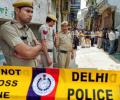
According to the police, Hanif Sheikh was declared a proclaimed offender in 2002 and has been absconding for the last 22 years.
The truth behind the bungled case of Indian doctor Mohammad Haneef, wrongly accused on terror charges in Australia, may never come to light as the head of a government-ordered inquiry said on Monday that much of the sensitive evidence before it cannot be made public as it could harm diplomatic ties with the United Kingdom.
The DPP review follows concerns about inconsistencies in the case against Haneef.
Haneef, who has been in custody for 11 days, is yet to be charged with any offence.
'If I had known anything, definitely, I would have let the authorities know, let their parents know first -- who are the main sufferers now I suppose,' he said.

'I want him to come back with the reputation he had left India with,' says Firdous Ashriya.
A Federal court spokesman said Chief Justice Michael Black will hand down his decision on Friday.
Indian doctor Mohamed Haneef, who was wrongly accused of having links with the failed United Kingdom terror plot, on Monday said that the Australian authorities might have targeted him because of his race and religion. "It might be just because I am an Asian Muslim," the 27-year-old Bangalore medico was quoted as saying on ABC radio.
Immigration and citizenship minister Chris Evans said he would not proceed with an appeal to the high court in light of advice from the solicitor-general in the case of the 27-year-old Bangalore medico, who was wrongly accused of links to the failed United Kingdom terror plot in 2007 and forced to leave the country.

The scientists explained that patients are recommended an EEG test when they have a slowed reaction to stimuli, followed by seizure-like events, speech issues, confusion, or an inability to wake up after sedation.

Atmar briefed Jaishankar about the situation in the war-torn country amid growing security concerns over the Taliban fighters rapidly seizing control of a large number of areas, forcing many countries to scale down their presence there.

An engineering graduate from Hyderabad, who joined the terror group Islamic State of Iraq and the Levant, has died "while fighting in Syria".

The case pertains to hatching a conspiracy, both on physical as well as cyberspace, for undertaking violent terrorist acts in Jammu and Kashmir and other parts of the country, by cadres of Pakistan-based proscribed terrorist organisations.
 © 2026 Rediff.com - Investor Information - Advertise with us - Disclaimer - Privacy Policy - Sitemap - Feedback - About us - Terms of use - Grievances