
India's indigenous fighter jet programme reached a key milestone on Friday, October 17, 2025, as the Tejas Mk1A made its maiden flight at Hindustan Aeronautics Limited's Nashik facility.
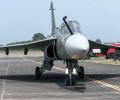
HAL executives said deliveries of the Tejas Mk1A to the IAF would begin within this year, but only after the successful completion of the weapons-firing trials currently underway.

The MiG-21's sharp silhouette and supersonic roar will live on in the memories of those who flew it, those who maintained it, and those who watched it streak across the sky as a symbol of India's strength, asserts IAF veteran Air Commodore Nitin Sathe (retd).
Top HAL sources say the AMCA, which is being developed as the IAF's next-generation stealth fighter, is slated to be assembled at HAL Nashik.

HAL's sustained, long-term income will come from the design, development, manufacture, overhaul, and upgrade of a family of helicopters designed for deployment on India's 21,000-foot-high Himalayan frontier with Pakistan and China.

In the event of a war with China, AMCA deep strikes would target China's rail and road links with Tibet, isolating PLA divisions there.

If the new request for 18 more fighters translates into a contract, the Sukhoi-30MKI fleet size will go up to 14 squadrons, or 290 fighters.
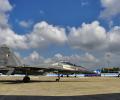
Sukhoi-30MKI fighters will be based in Thanjavur. Tejas Mark 1 aircraft will be based in Sulur. The Rafale squadron will be based in Ambala.

There were no casualties, police said, adding both the pilots ejected safely before the plane hit ground.

HAL will build each Su-30 at just Rs 4.25 billion. The IAF is paying Rs 11.25 billion per Rafale, excluding the price of weapons and logistics.
 © 2026 Rediff.com - Advertise with us - Disclaimer - Privacy Policy - Sitemap - Feedback - About us - Terms of use - Grievances