
Automobile retail sales rose nearly 18 per cent year-on-year to over 27 lakh units in January, led by continued post-GST momentum, healthy rural cash flows on the back of harvest and weddings, and sustained demand visibility across freight, dealer's body FADA said on Tuesday.

The reduction in goods & services tax (GST) on individual life and health insurance premiums has been called a "landmark step" for making insurance affordable and inclusive. In a panel discussion at the Business Standard BFSI Insight Summit 2025, Anup Bagchi, managing director (MD) & chief executive officer (CEO) of ICICI Prudential Life Insurance; Mahesh Balasubramanian, MD & CEO of Kotak Life Insurance; Tarun Chugh, MD & CEO of Bajaj Life Insurance; and Ratnakar Patnaik, MD of Life Insurance Corporation of India (LIC), listed what else the industry needs to reach more people.

'In the January-August period, the share of hatchback in the overall PV industry sales was about 22.4 per cent. In the September-October period, the share of hatchbacks has come down to 20.4 per cent. In just October, their share was just 20 per cent. This is simple wholesale data from industry body SIAM.'

These changes certainly bring India's GST a lot closer to what an ideal GST would look like, points out Karan Bhasin.

'The market is still very bullish. The demand is so strong that for eight models, we have no units in our factories to dispatch to dealers,' said Partho Banerjee, senior executive officer, marketing & sales, Maruti Suzuki India (MSIL).

Two-wheeler (2W) major Bajaj Auto on Friday posted its highest ever quarterly revenue and profit during the third quarter of 2025-26 (Q3FY26). Bajaj Auto's consolidated net profit for the quarter grew by 25 per cent year-on-year (Y-o-Y) to Rs 2,749 crore, with the revenue also growing 23 per cent to Rs 16,204 crore.

Since the Indian government reduced GST on small cars on September 22, the small car segment's share in Maruti's overall sales has risen to more than 25 per cent, up from 16.6 per cent earlier in FY26.

Wholesale price inflation (WPI) fell to (-) 1 .21 per cent in October, driven by a decline in prices of food articles like pulses and vegetables, as well as lower fuel and manufactured items' prices, government data showed on Friday.

Opposition-ruled states warn of steep annual losses; Centre assures higher consumption will offset revenue hit.

The demand for passenger vehicles (PVs) is expected to sustain even beyond the ongoing festival season as a new set of customers, those who gained confidence to buy cars following the recent GST rate cuts, will begin to visit dealerships now, said Shailesh Chandra, president of the Society of Indian Automobile Manufacturers (Siam), on Wednesday.

Finance Minister Nirmala Sitharaman's biggest challenge will be to find a new growth driver, particularly against the backdrop of a global economy ravaged by heightened uncertainty and fragmentation, financial markets on a precipice, and global commodity prices on a continued uptrend.

'In case a particular industry has not passed on the benefits and if we receive complaints, we will take up the matter with the industry body concerned.'

India's two-wheeler industry is seen growing 6-9% in 2026, though a proposed ABS mandate for sub-125cc models could push up prices and temper volumes.
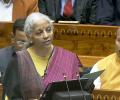
Budget 2026 sticks to fiscal discipline, shuns populist measures despite five key state elections coming up, but ends up rattling stock markets with a higher transaction tax on derivatives trading.
Gross GST collections rose 6.1 per cent to over Rs 1.74 lakh crore in December 2025, even as sweeping tax cuts slowed down growth in revenues from domestic transactions, according to government data released on Thursday.

The small sports utility vehicle (SUV) segment - comprising models less than 4 metres in length - could witness the "maximum" growth among all categories in the coming months following the recent goods and services tax (GST) rate rationalisation, Tarun Garg, chief operating officer of Hyundai Motor India (HMIL), said.

The government's move to cut GST on medicines and medical devices while exempting lifesaving drugs from the levy is a bold step that will bring direct relief to patients and families while significantly reducing financial strain on them, pharmaceuticals and healthcare industry players said on Thursday.

The stock of automative major Eicher Motors hit its all-time high on Wednesday, capping the year with gains of about 52.7 per cent. It has comfortably outperformed its sector index, the Nifty Auto, which jumped 22.7 per cent, as well as the benchmark Nifty, which rose 10 per cent during this period.

The operating performance of the country's largest passenger carmakers, Maruti Suzuki India (MSIL) and Hyundai Motor India (HMIL), in the July-September quarter (Q2) of 2025-26 (FY26) outpaced brokerage expectations.

The rationalisation of goods and services tax (GST), announced on Wednesday, directly lowers the cost of everyday medical consumables, and also high-end therapies in oncology and rare diseases, helping reduce out-of-pocket patient expenditure and better adherence to medication.

India, the world's fourth largest economy, is set to maintain the 'goldilocks' phase with tailwinds of good growth, low inflation and robust banking performance as well as reform initiatives poised to sustain the economic pace witnessed during 2025.

Consumer durables makers are hopeful that the government's proposal to reduce goods and services tax (GST) on air conditioners and television panels above 32 inches to 18 per cent would help revive the sector.

Finance Minister Nirmala Sitharaman on Tuesday said that raising the FDI limit to 100 per cent in the insurance sector will help attract more capital, improve competition and increase insurance penetration by making policies more affordable.

'If a common man wants to buy an air purifier for Rs 10,000, then he will have to shell out Rs 11,800 with 18 percent GST.' 'If he is charged GST at 5 percent the same air purifier will cost Rs 10,500.' 'This saves a one time amount of Rs 1,300 -- and that too just to breathe clean air.'

The appliance makers expect a good churn in the festive season, led by the government's proposal to reduce the GST slab on air-conditioners from the current 28 per cent to 18 per cent, which will reduce the price from Rs 1,500 to Rs 2,500 depending on the models.

The exemption of individual life and health insurance premiums from the Goods and Services Tax (GST) enables the insurance industry to make products affordable and attractive, said Ajay Seth, chairman of Insurance Regulatory and Development Authority of India (Irdai) at the Business Standard BFSI Insight Summit 2025.
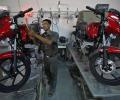
Pune-based two-wheeler major Bajaj Auto posted its highest ever quarterly revenue and profit after tax (PAT) in Q2FY26. Even as consolidated revenues were up 18.8 per cent year-on-year (Y-o-Y) to Rs 15,734.7 crore, PAT zoomed 53.2 per cent to Rs 2,122 crore.

Brokerages expect the company to continue outperforming in the auto segment, driven by launches and the strong trajectory of healthy bookings.

'High taxes have kept away art collectors who will now embrace the new GST.'

In absolute terms, both types of cars must cut emissions by about 28-29 g/km. But in percentage terms, the lighter 900-kg car must reduce emissions by 27 per cent, while the 1,500-kg car needs a 22 per cent cut. And the target becomes progressively stringent for both -- but, once again, the tightening is sharper for the 900-kg car than for the 1500-kg car.

Automotive (auto) stocks have been among the best performers in the BSE 200 index in recent months. More than half of the top 15 gainers over the past one, two, and three months have come from the sector.
The country's largest carmaker Maruti Suzuki India expects auto sales to bounce back to the glory days of 7 per cent growth by FY 27, helped by the proposed GST rate cut which is expected to bring down car prices by 3.5 to 8.5 per cent.

The passenger vehicle (PV) business of Tata Motors, which also includes the electric vehicle and Jaguar Land Rover businesses, post-demerger is now valued at Rs 1.45 trillion.

After a subdued first quarter of 2025-26 (Q1FY26), banks are now betting big on the festive season, rolling out attractive loan offers to boost credit growth in the second half of the current financial year (H2FY26) - a trend likely to be further accentuated by the second-order effects of the good services tax (GST) cuts.

Among Sensex firms, Trent, Tech Mahindra, Hindustan Unilever, UltraTech Cement, Asian Paints, Eternal and ITC were the major laggards. Selling in HDFC Bank and ICICI Bank also dragged the key indices. However, Axis Bank, Bajaj Finance, Maruti and State Bank of India were among the gainers.

While participants in the domestic financial market are expecting a 25 basis-point policy repo rate cut in the December meeting of the Monetary Policy Committee (MPC) of the Reserve Bank of India (RBI), economists remain torn between a reduction in rate cut and a pause.

Hindustan Unilever Ltd's (HUL's) second quarter 2025-26 (Q2FY26) consolidated revenue rose 2 per cent to Rs 16,250 crore, with low or flat volume growth. Demand remained stable but goods and services tax (GST) transition and prolonged monsoon hurt offtake.

Top Indian cement firms are expected to report a strong earnings growth for the second quarter of the financial year 2025-26 (Q2FY26) on a year-on-year (Y-o-Y) basis, amid improved realisations, prices, and steady volume growth, but on a low base.
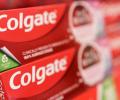
Colgate-Palmolive India's September quarter (Q2FY26) performance has reinforced concerns among brokerages about the company's continued market challenges.

'GST reduction will help larger and high-end cars too.'
 © 2026 Rediff.com - Advertise with us - Disclaimer - Privacy Policy - Sitemap - Feedback - About us - Terms of use - Grievances