
'Allocating 5 to 10 per cent of one's portfolio and staying disciplined through market cycles helps in having a positive investment experience.'

Domestic gold exchange-traded funds (ETFs) saw their holdings jump 65 per cent to 95 tonnes in 2025, elevating Indian ETFs to sixth place globally, going by holdings of the yellow metal. At the end of 2024, they ranked eighth with 57.5 tonnes of holding, according to an analysis of data from the World Gold Council (WGC).

'Increasingly, they treat gold as a financial asset in their portfolio rather than just as jewellery.'

The highlight in January, with no surprise, has been flows into gold and silver ETFs.

Gold ETFs attracted around Rs 11,700 crore, the highest in a calendar month.

All investors should ideally have a 10 to 15 per cent allocation to gold. Whether they invest in gold ETFs or SGBs should depend on their investment horizon.

Inflows into gold exchange-traded funds (ETFs), which manage a total of Rs 37,390 crore, have surged sharply in recent months. This trend is likely to continue, especially after the reintroduction of long-term capital gains tax (LTCG), which is likely to attract smart money into mutual fund offerings amid a robust outlook for the yellow metal. Smart money, also known as opportunistic flows, refers to strategic investments that are generally of a short-term horizon.
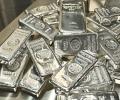
ilver continues to outperform the yellow metal, with the gold-to-silver price ratio declining to its lowest level since 2013. The ratio fell to around 57 on Wednesday in the international market, from a five-year high of 100.8 at the end of April 2025.

The Indian metal market is a promising sector to invest in as it provides a good balance between the prospects of growth and stability in dynamic economic conditions and a changing geopolitical environment. Metals such as gold, silver, copper, etc, have gained renewed significance in 2025, amidst growing inflation and India's push towards infrastructural growth and green energy initiatives.
The Indian metal market is a promising sector to invest in as it provides a good balance between the prospects of growth and stability in dynamic economic conditions and a changing geopolitical environment. Metals such as gold, silver, copper, etc, have gained renewed significance in 2025, amidst growing inflation and India's push towards infrastructural growth and green energy initiatives.

Passive funds have resumed gaining ground in the mutual fund (MF) industry after a slowdown in 2024, with their share of assets under management (AUM) reaching an all-time high in 2025. The surge has been driven largely by robust inflows into gold and silver exchange-traded funds (ETFs).

Rediff explains why the system, not the Budget, is the problem.

'We expect modest returns in 2026 versus the steep gains seen over the past few years.'

From Rs 73k to over Rs 1.2L between January-December 2025 -- is buying gold in 2026 still sensible?

The gold and silver holdings of domestic mutual funds (MFs) crossed the Rs 1 trillion mark for the first time in September, powered by a blistering commodity rally that lifted precious metal prices and drew fresh inflows into dedicated MF schemes.

'The pace of gold's ascent is striking, with prices rising from $3,500/oz to $4,000/oz in just 36 days -- far quicker than the historical average of 1,036 days taken to achieve similar $500/oz gains.'

Net inflows into equity mutual funds (MFs) moderated for the second straight month in September, declining 9 per cent during the month to Rs 30,422 crore. The slowdown came as redemptions from active equity schemes rose 30 per cent month-on-month (M-o-M) to a one-year high of around Rs 36,000 crore.

When we talk about Exchange-Traded Funds (ETFs), a few of their features that strike our mind are their low cost, easy-to-understand composition, and simple trading. While Index ETFs have always been popular among investors, Gold ETFs have garnered interest in recent years due to gold prices fluctuating near their all-time highs. But from a long-term investing context, do these ETFs really deliver?

'AUM reached an all-time high of Rs 79.9 trillion in October 2025, driven by strong retail participation and record SIP inflows of Rs 29,529 crore from over 94.5 million contributing accounts.'

Gold exchange traded funds (ETFs) witnessed a net outflow of Rs 199 crore in January, making it the third monthly withdrawal in a row, with investors preferring equities over other segments on buoyant record SIP flow. This was in comparison to a net outflow of Rs 273 crore registered in the segment in December and Rs 195 crore in November. Prior to that, Gold ETFs attracted Rs 147 crore in October, data with Association of Mutual Funds in India (Amfi) showed.

Ask rediffGURU Reetika Sharma your insurance, mutual fund and personal finance-related questions.

Gold exchange traded funds (ETFs) witnessed a net outflow of Rs 248 crore in February, making it the second consecutive month of withdrawals as investors preferred equities over other segments on record SIP flows. Net outflows from the gold ETFs were at Rs 452 crore in the month of January. Prior to that, the asset class had seen a net investment of Rs 313 crore, according to the data of Association of Mutual Funds in India (Amfi). Despite the outflows, the category witnessed an increase in net assets under management (AUM) of gold ETFs to Rs 18,727 crore at the end of February from Rs 17,839 crore in January-end.
Gold burnished its image as the go-to asset class during turbulent times. However, investors seemed to have missed the bus. Net inflows into gold exchange-traded funds (ETFs) plunged to a four-year low of Rs 653 crore in 2022-23 (FY23), even as gold emerged as the top-performing asset class.

Gold and silver prices are expected to maintain their upward trajectory this week, but may see late profit-booking amid the release of a series of crucial global economic indicators, analysts said. On the economic front, traders will closely monitor the manufacturing/ services PMI data from across regions and the US non-farm payrolls/ employment data along with consumer confidence for the month of September and speeches from several Federal Reserve officials, they added.

Ask rediffGURU Naveenn Kummar your insurance mutual fund and personal finance-related questions.

This translates into an annual return of 40 per cent, suggests a recent note by the World Gold Council.

Ask rediffGURU and PF expert Nitin Narkhede your mutual fund and personal finance-related questions.

Investors pumped Rs 491 crore in gold exchange traded funds (ETFs) in February as they seem be taking advantage of the lower domestic prices caused due to declining international rates, appreciating rupee and reduction in custom duty. This came following a net investment of Rs 625 crore in January and Rs 431 crore in December. Prior to this, gold ETFs had seen an outflow of Rs 141 crore in November, data available with Association of Mutual Funds in India showed.

Ask rediffGURU Reetika Sharma your insurance mutual fund and personal finance-related questions.

Indian retail investors continue to sell gold ETFs.

Apart from the emotional value attached to buying gold, the yellow metal offers protection against inflation, interest rate spikes, currency and geopolitical risks, says Anamika Pareek.

In their short history, Gold ETFs have been quite successful in capturing investors' fancy. It must be noted that while ETFs as investment avenues may not be very popular among investors, it is the Gold ETFs segment wherein the interest is palpable. The fact remains that Gold ETFs are like any other investment avenues and have their fair share of pros and cons. This in turn highlights the need for investors to properly evaluate the Gold ETF option.
The net inflow into equity mutual funds surged 24 per cent to Rs 23,587 crore in June, reversing the declining trend of the last five months, driven by strong equity market performance across segments, data released by the Association of Mutual Funds in India (AMFI) showed on Wednesday. Also, the latest fund infusion by investors marks the 52nd consecutive month of net inflows into the segment.
Experts attributed the inflows to sudden rally in gold prices, mainly due to uneasy trade negotiations between the US and China and lower than expected global GDP growth.

Ask rediffGURU and PF expert Nitin Narkhede your mutual fund and personal finance-related questions.

Data from the Association of Mutual Funds in India show that in 2010-11 till date, gold ETFs have seen net inflows rise by close to four times, to Rs 1,169 crore (Rs 11.69 billion), compared with Rs 312 crore (Rs 3.12 billion) during the same period last year.

'Investors' decisions should reflect their financial goals, risk tolerance, and the amount of gold already present in their portfolio.'

Ask rediffGURU and PF expert Nitin Narkhede your mutual fund and personal finance-related questions.

This is the first time Reliance MF has crossed Rs 1,000 crore mark in its ETF in a single day.
Though gold ETFs are traded on stock exchanges, they are taxed at a higher rate.
 © 2026 Rediff.com - Advertise with us - Disclaimer - Privacy Policy - Sitemap - Feedback - About us - Terms of use - Grievances