
Developing countries lost nearly $1 trillion to fraud, corruption and shady business transactions in 2011, vastly outpacing the foreign aid they received and the pace of dirty money leaving emerging nations is accelerating, a new report found.
The developing world lost $859 billion in illicit outflows in 2010, an increase of 11% over 2009, according to Global Financial Integrity.
Report also stated that some 68 per cent of India's aggregate illicit capital loss occurred after India's economic reforms in 1991.
India is Asia's fourth largest exporter of illicit capital with an estimated outflow of a whopping $104 billion between 2000 and 2008.
The KPMG report said, strict enforcement of existing provisions under law, both for the taker and giver, is believed to be the need of the hour to prevent further erosion of trust and credibility of India's economic success.
Sukumar Mukhopadhyay, former member, Central Board of Excise and Customs, and Govindrao Adik, MP and General Secretary, NCP, debate the pros and cons of offering amnesty to tax evaders.
These illicit financial flows were generally the product of: tax evasion, corruption, bribery and kickbacks, and criminal activities.
The growth of corruption and India's underground economy contributes significantly to illicit financial flows from the country.
The recent financial crisis and prospects of a prolonged downturn in global economic activity have once again invigorated the critiques of global financial integration and free trade.

Lot of money is now being withdrawn from the Swiss banks and transferred to Singapore.

G20 summit noticeably lacked in responses to illicit financial flows, one of the largest drags on development worldwide
Though there are different views on the Global Financial Integrity numbers that the BJP cites, getting the money back to India is not going to be an easy task

Replying to an RTI query, the PMO said a Special Investigation Team (SIT) has already been formed and its investigation is underway.
Reserve Bank of India Governor Y V Reddy has said the country needs to put in place 'special defences' to face the prospect of volatile capital flows.

China also had the largest illicit outflows of any country in 2013.
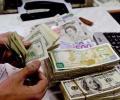
The Budget has proposed a Benami Transactions (Prohibition) Bill.
The illicit financial inflow of $770 billion was 14 per cent of India's total trade of $5,500,744 million, the report said.
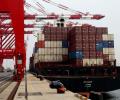
In 2016, almost two-thirds of Indian imports that appear to be most at risk for some degree of potential revenues losses are imports from just one country, China, which was by far India's largest source of imports in that year

Citing national security and confidentiality clauses, the Finance Ministry has declined to disclose information on exchange of correspondence among India, Swiss and German authorities in connection with the black money probe.
.jpg)
The Finance Ministry had set a time period of 18 months, which expired last year on August 21, for completion of the study.

An estimated $344 billion has been illegally removed from the Indian economy between 2002 and 2011

The cumulative illicit money moving out of India over a ten-year period rose to $439.59 billion

The SIT on black money has widened its probe.

A major criticism of the new law is that it can become an instrument of abuse as it confers the tax enforcement authorities with strong discretionary powers, says Paranjoy Guha Thakurta.

'The difference between black money in India and the black money out of India is, in India, it is tax evaded money and Indian money outside India is not only tax evaded money, but money which has been taken out of India's capital resources needed for India. So it is not only tax evasion, but treason too.'
 © 2026 Rediff.com - Advertise with us - Disclaimer - Privacy Policy - Sitemap - Feedback - About us - Terms of use - Grievances