
The apparel and engineering sectors have already witnessed the trend in the past one week. If this continues, it can have an impact on the overall export demand in the coming months, considering that Europe is the largest national export market for India.

The country's gross domestic product (GDP) is expected to grow at around 18.5 per cent with an upward bias in the first quarter of the current financial year, according to SBI research report Ecowrap. This estimate is lower than the Reserve Bank of India's GDP growth projection of 21.4 per cent for the April-June quarter. "Based on our 'Nowcasting' model, the forecasted GDP growth for Q1 FY22 would be around 18.5 per cent (with upward bias)," the report said. Higher growth in Q1 FY22 is mainly on account of a low base.

In his statement while chairing the debate on "Enhancing Maritime Security - A Case for International Cooperation" via video conferencing, Modi highlighted that maritime routes were being misused for terrorism and piracy.

India is looking at near close to double-digit growth this year and the country will be one of the fastest-growing economies, Finance Minister Nirmala Sitharaman has said. The minister also emphasised that she expects the economic growth next year to be in the range of 7.5-8.5 per cent, which will be sustained for the next decade.

Swiss brokerage Credit Suisse expects the economy to continue to show positive surprises and record up to 9 per cent growth in the next fiscal. For the current financial year too, the brokerage anticipates growth to be higher than the consensus forecast of 8.4-9.5 per cent, and printing in at around 10.5 per cent. As a policy, Credit Suisse does not provide absolute growth numbers in its forecast.
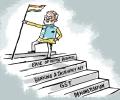
As the Ukraine conflict impacts the global GDP, India is projected to grow by 6.4 per cent in 2022, slower than the last year's 8.8 per cent but still the fastest-growing major economy, with higher inflationary pressures and uneven recovery of the labour market curbing private consumption and investment, according to a UN report. The UN Department of Economic and Social Affairs said in its World Economic Situation and Prospects (WESP) report released on Wednesday that the war in Ukraine has upended the fragile economic recovery from the pandemic, triggering a devastating humanitarian crisis in Europe, increasing food and commodity prices and globally exacerbating inflationary pressures. The global economy is now projected to grow by only 3.1 per cent in 2022, down from the 4.0 per cent growth forecast released in January 2022.
These sweeping financial sanctions follow the action earlier this week to cut off Russia's frozen funds in the United States to make debt payments.

The G-20 leaders under the chairmanship of Saudi Arabia's King Salman held an extraordinary video conference in which they resolved to use all available policy tools to minimise the economic and social damage from the pandemic that has killed over 21,000 people and infected more than 470,000 globally.

India believes no country would emerge victorious in the Russia-Ukraine war as all will suffer losses and there will be a "more serious" impact on developing and poor countries, Prime Minister Narendra Modi said on Monday after holding talks with German Chancellor Olaf Scholz as both leaders reiterated the need for an immediate cessation of hostilities.

International oil prices retreated from an over seven-year high but was still above $100 a barrel and continue to pose threat to India's inflation rate and current account deficit. While there are no supply concerns as the oil route remained open, consumers will feel the pinch when PSU oil firms start passing on the increase in international rates through a revision in petrol and diesel prices, which have been on a pause for over three-and-a-half-months in view of elections in Uttar Pradesh and four other states. The government is "closely monitoring the situation" and will "take appropriate steps as and when required", a top official said. Brent crude oil surged past $105 per barrel on Thursday for the first time since August 2014, following Russia's invasion of Ukraine.


Jaishankar also met his Iranian counterpart H Amirabdollahian and held productive discussions on bilateral economic cooperation, Afghanistan and the joint comprehensive plan of action, also known as the Iran nuclear deal.

After a stellar run in 2021 that saw the S&P BSE Sensex and the Nifty50 clock gains of 20 per cent and 22 per cent respectively, global equity markets, including India, are gearing up to welcome 2022 on a cautious note. For one, new variants of the Covid -19 infection that make current vaccines less effective is one of the key risks worth flagging, analysts said. Inflation was also a risk for this asset class in 2021, although most market participants expect that the current elevated inflation levels will be transitory.

Harris slammed President Donald Trump and pledged to 'rejoin' the Paris agreement on Climate Change and 'strengthen and re-enter' the Iran nuclear deal. "Joe Biden and our administration is gonna have a massive job to repair the damage done by Donald Trump and his administration, and to restore our place in the world," she said.

Recovery from the second wave of the pandemic in April-May is expected to be swifter as compared to the first wave in 2020, according to the Confederation of Indian Industries (CII) chief executive officers (CEOs) poll of 119 top corporate. During the second wave, the lockdowns were largely designed to limit social gatherings and impact on economic activities was restricted. This helped arrest the impact of the second wave on economic growth, according to a survey conducted by the industry lobby group Confederation of Indian Industries (CII). About 59 per cent of the CEOs polled expect the recovery in sales to be better than in the first wave for their companies, while 46 per cent of them expressed a similar trend for their respective industry sectors.
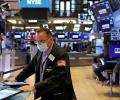
From March 3, investors in India will be able to trade in select US stocks through the NSE International Exchange (NSE IFSC), a wholly owned subsidiary of the National Stock Exchange (NSE). Investors can invest in NSE IFSC receipts on US stocks, which will be in the form of unsponsored depository receipts (DRs). For a start, this will include DRs of 50 US stocks such as Apple, Alphabet, Amazon, Tesla, Microsoft, Morgan Stanley, Nike, P&G, Coca-Cola, and Exxon Mobil. Indian retail investors will be able to transact on the NSE IFSC platform under the Liberalised Remittance Scheme (LRS) limits prescribed by the Reserve Bank of India (RBI), which currently stand at $250,000 per year.

There is so much liquidity in the system, in the global economy, and that's why the stock market is very buoyant. It will certainly witness correction in the future: RBI's Das.

As COVID-19 infections spike in the country resulting in restrictions in various states and impacting the fragile recovery, many economists are expecting RBI to delay the policy normalisation move, which is expected in the February review. The country has reported a single-day rise of 58,097 new Covid-19 cases as of Wednesday morning--the highest in around 199 days -- of which 2,135 are Omicron cases and later in the day, the first confirmed Omicron-related death has also been reported. Maharashtra recorded the maximum number of 653 Omicron cases followed by Delhi at 464, Kerala 185, Rajasthan 174, Gujarat 154 and Tamil Nadu 121 cases, taking the total tally of cases to 3,50,18,358.

As the coronavirus pandemic is triggering fears of a global recession, foreign investors have started rowing back from the Indian capital markets by withdrawing a massive over Rs 1 lakh crore in March after remaining net buyers for six consecutive months. In order to contain the spread of coronavirus, lockdowns have become a norm the world over and have led the FPIs to adopt a cautious stance, market experts said.

'Over the next two quarters, markets will be guided by observing the earnings resilience of corporates during the second lockdown, progress of the monsoon and the damage, if any, to rural spending power due to the second wave.'
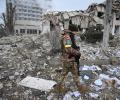
Reconstruction efforts after the Russia-Ukraine war will be dominated by the heft of the membership of major nations across international organisations. India is hamstrung because it does not play host to any major global institution nor does it hold positions of significant influence in the ones in which it has membership. As a result, the world's sixth largest economy is obliged to follow the rules set by most of them.

IndusInd Bank was the top loser in the Sensex pack, plummeting over 23 per cent. PowerGrid, Kotak Bank, Bajaj Finance, HDFC Bank and NTPC also finished significantly lower. ONGC and ITC were the only stocks in the index that ended with gains. US President Donald Trump has proposed an economic package which could approach $1 trillion, a rescue initiative not seen since the great recession of 2008.
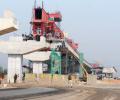
'We will likely be buffeted by tailwinds from the global economy, geopolitical shifts and robust domestic demand.'

The employment situation remains dire. Whatever can be done to promote greater low-skill employment should be pursued aggressively, advises former chief economic adviser Shankar Acharya.
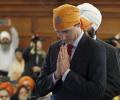
Canadian Prime Minister Justin Trudeau has said that he held a "good discussion" with his Indian counterpart Narendra Modi on many important issues, including on the two nations' commitment to democratic principles, recent protests, and the importance of resolving issues through dialogue.

After his wide-ranging talks with Modi on the second and final day of his India visit, Johnson said the new defence and security partnership will enable India to strengthen its domestic defence industry as well as help the two countries protect vital shared interests in the Indo-Pacific.

Asserting that the self reliant India programme will help revive the global economy, Prime Minister Narendra Modi on Thursday told global business community that his government aims to transform the country through access, inclusion and empowerment while also ensuring complete data security. Addressing the World Economic Forum's online Davos Agenda Summit, where he also interacted with global business leaders, Modi also said India offers a predictable and friendly environment from tax regime to FDI norms. He said Aatmanirbhar Bharat movement is committed to global good and global supply chain while the country's digital profile has been completely transformed.

Maruti was the top gainer in the Sensex pack, rising around 6 per cent, followed by Tech Mahindra, Infosys, UltraTech Cement, PowerGrid and NTPC. On the other hand, IndusInd Bank, Bharti Airtel, SBI, ITC and HDFC were the laggards.

The report said the global economy will lose $12 trillion or more by the end of 2021 despite spending of $18 trillion in trying to stimulate growth around the world.

The Reserve Bank's rate-setting panel began its three-day deliberations on Monday to decide the next monetary policy amid expectations that the central bank will maintain status quo on the benchmark interest rate in the backdrop of global scare due to the new coronavirus variant Omicron. Reserve Bank Governor Shaktikanta Das headed six-member Monetary Policy Committee (MPC) is scheduled to announce the policy resolution on Wednesday. If the RBI maintains status quo in policy rates on Wednesday, it would be the ninth consecutive time since the rate remains unchanged.

The country's GDP is likely to grow at 1.3 per cent in the fourth quarter of 2020-21 and may see a contraction of around 7.3 per cent for the full financial year, according to an SBI research report 'Ecowrap'. The e-National Statistical Office (NSO) will release the GDP estimates for the March 2021 quarter and provisional annual estimates for the year 2020-21 on May 31. "Based on our 'nowcasting model', the forecasted GDP growth for Q4 would be around 1.3 per cent (with downward bias) as against NSO (National Statistical Office) projection of a negative (-)1 per cent," the research report said.

S&P Global Ratings on Wednesday lowered India's economic growth forecast to 5.2 per cent for 2020, saying the global economy is entering a recession amid the coronavirus pandemic. The agency had earlier projected a growth rate of 5.7 per cent during the 2020 calendar.
The Reserve Bank on Monday asked all banks and financial institutions to assess the impact on their balance sheet, asset quality, liquidity, among others, in the wake of the potential threat arising out of the spread of coronavirus disease in India. Several confirmed cases have also been detected in India, which highlight the need of a co-ordinated strategy for handling the emerging situations to protect the resilience of the Indian financial system, RBI said in a notification addressed to banks, urban cooperative banks, NBFCs, payment and small finance banks.

The pressure on India to take a hostile attitude towards Russia and China was not subtle, but it was guarded, observes Ambassador T P Sreenivasan after Monday's 2+2 ministerial meeting in Washington, DC.
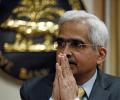
Uncertainty is emerging as the only certainty, said RBI Governor Shaktikanta Das as he emphasised on continued policy support at the December MPC meet during which members expressed concerns over spread of the Omicron variant of coronavirus, as per the minutes of the rate-setting panel released on Wednesday. After three days of deliberations, the six members of the Monetary Policy Committee (MPC) on December 8 unanimously voted for status quo on policy rates for the ninth consecutive time. At the meeting, the RBI Governor said risks stalking the global economy have amplified with rapid spread of the virus mutations, including the Omicron variant, leading to countries scrambling for restrictions.
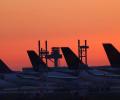
Jet fuel prices on Monday were hiked by a steep 6.5 per cent on the back of a rally in international oil prices. Aviation turbine fuel or ATF price was hiked by Rs 3,663 per kilolitre, or 6.5 per cent, to Rs 59,400.91 per kl in the national capital, according to a price notification of state-owned fuel retailers. This is the third increase in jet fuel prices since February. Rates were increased by 3.6 per cent on February 16, and by Rs 3,246.75 per kl on February 1. The increase in rates will add to the margin woes of airlines who continue to operate flights at less than capacity, amid pandemic-driven travel restrictions.
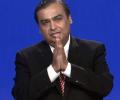
Billionaire Mukesh Ambani's Reliance Industries on Friday reported a 43 per cent jump in its September quarter net profit as its businesses from oil to retail fired on all cylinders, growing both sequentially and on a year-on-year basis. Net profit of Rs 13,680 crore, or Rs 20.88 per share, in July-September compared with Rs 9,567 crore, or Rs 14.84 a share, in the same period a year back, the company said in a statement. While better realisation and a sharp rise in crude oil prices benefited the old-economy business, retail saw footfalls at stores reach pre-Covid levels and per user earning from telecom business rose.

Researchers said outbreaks of such an illness have the potential to wreak economic havoc in many countries across the globe that rely on the pork industry.

Within two days, the business school had 108 recruiters making 370 domestic and international offers, including 23 new final recruiters with an average salary of Rs 25.08 lakh.

Equity benchmark Sensex rallied 487 points on Monday to close at a fresh lifetime peak, tracking gains in Infosys, HDFC twins and HCL Tech amid massive foreign fund inflows.
 © 2026 Rediff.com - Investor Information - Advertise with us - Disclaimer - Privacy Policy - Sitemap - Feedback - About us - Terms of use - Grievances