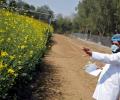
The Genetic Engineering Appraisal Committee (GEAC) has recommended the environmental release of the genetically modified (GM) mustard variety DMH (Dhara Mustard Hybrid)-11, paving the way for the commercialisation of the country's first GM food crop. The GEAC said the recommendation was valid for four years from the date the approval letter was issued. Further studies and coordinated trials will have to be conducted jointly with the Indian Council of Agriculture Research (ICAR) within two years, according to the minutes of the GEAC meeting held on October 18, which was released on Wednesday.

The varieties will take at least 4 to 5 years to reach farmers after they complete the usual cycle of breeder, foundation and certified seeds.

The prime minister's scientific advisory council had advocated introduction of GM crops in India, but under strict regulatory mechanism.

Companies with any seeds of Bt brinjal, the genetically modified version of the vegetable, will have to register the details with the government, to ensure none of it is sowed or otherwise gets into the market.

The Swadeshi Jagran Manch (SJM) on Friday opposed a regulatory body's recommendation for environmental release of genetically modified mustard, calling it "dangerous" and urged the Centre to ensure that the crop's seed is not allowed to be planted "now or ever". In a letter to Union Environment Minister Bhupender Yadav, the RSS-affiliated organisation accused the Genetic Engineering Appraisal Committee (GEAC) of functioning in an "irresponsible fashion" and said the claims made in support of genetically modified (GM) mustard were "completely untrue, unsubstantiated and wrongly projected". "Swadeshi Jagran Manch has all along been opposing this dangerous and unneeded GM mustard being brought in through the backdoor as a public sector genetically modified organism (GMO)," organisation co-convenor Ashwani Mahajan said in the letter.

The Supreme Court observed on Tuesday it is more concerned about the risk factors than anything else when it comes to the conditional approval granted by the Centre for environmental release of genetically modified (GM) mustard. On October 25 last year, the Genetic Engineering Appraisal Committee (GEAC) under the Union environment ministry had approved the environmental release of transgenic mustard hybrid DMH-11 and the parental lines containing barnase, barstar and bar genes so they can be used for developing new hybrids. The apex court is hearing separate pleas by activist Aruna Rodrigues and NGO 'Gene Campaign' seeking a moratorium on the release of any genetically modified organisms (GMOs) into the environment pending a comprehensive, transparent and rigorous bio-safety protocol in the public domain conducted by agencies of independent expert bodies the results of which are made public.
There has been strong opposition from organisations influential with the government against approval to GM foods.
The environment ministry is likely to allow generic modification of food crops.

The current testing norms to rule out harmful effects of genetically modified crops like Bt-brinjal are far from being fool proof, a member of biotech regulator GEAC said.

The moratorium on commercial cultivation of Bt brinjal, the genetically-modified form of the vegetable, is not likely to end anytime soon.

Centre for Sustainable Agriculture has leveled serious charges against Genetic Engineering Approval Committee for allowing large-scale field trials of Bt Brinjal.
Cotton farmers in India are going to get a bountiful of hybrids to select from this year onwards.

The groups, including those associated with the ruling Bharatiya Janata Party's parent organisation the Rashtriya Swayamsevak Sangh, have also threatened a big nationwide agitation if growth of illegal GM crops isn't checked.

A survey conducted by Business Standard reveals that a majority of the country's states are still firmly against the move, while a few are open to considering only conditionally.

The moratorium imposed on Bt brinjal last year is likely to continue, despite the expert committee, set up by the environment ministry, favouring "limited release" of the crop.
The approval to genetically modified (Bt) brinjal seems to have been been given without adequately assessing long-term health risks, although with a stipulation that surveillance and long-term follow up should be conducted two conditions that experts are aware have not been fulfilled even in the case of some critical drugs.

The decision marks first successful policy intervention.

Union Agriculture Minister Sharad Pawar on Thursday brushed off all allegations and reiterated his support for the introduction of Bt brinjal. He asserted that the introduction of the genetically modified brinjal can take place as it has been recommended by Genetic Engineering Approval Committee (GEAC), a scientific body, after carrying out a series of trials and tests on its impact on nature.

Amid a raging debate over release of Bt brinjal for commercial use, Science and Technology Minister Prithviraj Chavan on Tuesday said genetically-tweaked variety of the vegetable was 'safe for all'.

'Ultimately, do we want sustainable agriculture that's relevant to our climate, resources and food security? Or do we want corporate farming based on high-risk GM seeds and high chemical inputs?'

This comes despite sharp criticism received from various RSS affiliated organisations
The field trials of GM crops, which was on the agenda for the discussion included six Bt rice hybrids, three Bt okra hybrids, two GM corn crops, eight Bt eggplant hybrids.

Modi government is pushing GM food crops without adequate safety assessment and transparency, claim activists.

Chand pointed out that the government is willing to discuss the three farm laws clause by clause, and farmer leaders should consider this offer.

BMS, BKS and SJM are trying to forge common cause with outfits on the other side of the ideological divide over the government's policies they are not in agreement with.

If people can lobby me for making changes in policies that goes against the country's interest, I won't keep myself in this position, says the vice chairman of NITI Aayog.

MPs will first attend a 'Farm Progress Show' in Iowa, then visit the Monsanto headquarters in St Louis, Missouri.
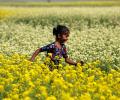
GM is already in our food chain for years. The approval for indigenous GM mustard should put fake fear-mongering to rest, says Shekhar Gupta
 © 2026 Rediff.com - Investor Information - Advertise with us - Disclaimer - Privacy Policy - Sitemap - Feedback - About us - Terms of use - Grievances