
'We face the risk of remaining a low-income country for a very long time unless something changes in the next few years.' 'Instead of constantly talking about becoming a developed economy, we need to start fixing the problems of the economy one by one.' 'There is so much potential, and we are squandering away the opportunity.'
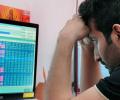
From the Sensex pack, Tata Consultancy Services and Infosys fell over 2 per cent each. Hindustan Unilever, Bharti Airtel, Sun Pharma, Power Grid, Bajaj Finserv, HCL Tech, Mahindra & Mahindra, and Tech Mahindra were also among the laggards. Among the gainers, Zomato jumped nearly 5 per cent. Larsen & Toubro, Axis Bank, ICICI Bank, IndusInd Bank and Kotak Mahindra Bank were also among the gainers.

From the 30-share blue-chip pack, Zomato surged over 7 per cent. Maruti, ITC Hotels, ITC, Mahindra & Mahindra, Asian Paints, Titan and IndusInd Bank were among the biggest gainers. Power Grid, Larsen & Toubro, NTPC, UltraTech Cement, HCL Tech, Tech Mahindra, Infosys and Adani Ports were among the laggards.

Households are likely to remain the primary net lenders to the economy in the coming decades.

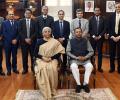
These are the highlights of the Union Budget 2025-26 presented by Finance Minister Nirmala Sitharaman in Parliament on Saturday.

If Beijing succeeds in this multipronged effort to challenge the current dominant power, it will have not just economic but political and security consequences. There is no let-up in the South China Sea nor any de-escalation moves on the India-China border. This portends to ominous signalling from Beijing, observes China expert Srikanth Kondapalli.

India's economy grew by 6.3 per cent in the second quarter of the current fiscal, official data released on Wednesday showed.

The RBI under new Governor Sanjay Malhotra on Friday cut interest rate for the first time in nearly five years as the central bank pivoted the policy stance to support a shuttering economy. The 25 basis points rate cut to 6.25 per cent comes after last rate reduction in May 2020. The last revision of rates happened in February 2023 when the policy rate was hiked by 25 basis points to 6.5 per cent.
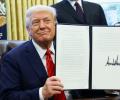
The Trump trade shock is a chance to push long-overdue reforms, rather than tinker with tariffs to appease the US, suggests M Govinda Rao.
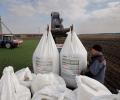
For the first time, the government is likely to dip into the Oil Industry Development Fund (OIDF) to finance part of its fertiliser subsidy programme for 2025-26, according to official sources. The finance ministry has accounted for Rs 23,000 crore in the FY26 Budget as net additional resources to be drawn from dedicated reserve funds, including the OIDF, the Agriculture Infrastructure and Development Fund, and the Universal Service Obligation Fund.
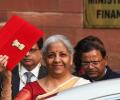
'... that it once again shies away from renewing its commitment to strategic divestment,' points out A K Bhattacharya.

Trading sentiment in the equity market this week will be guided by global trends, foreign fund movement, macroeconomic data announcements and RBI's interest rate decision, analysts said. The monthly auto sales data announcement would also be tracked by investors this week.

After cement, billionaire Gautam Adani's group and Kumar Mangalam Birla's Aditya Birla Group are set for a face-off in the wires and cable business with both conglomerates announcing forays into the high double-digit growth sector.

Equity markets will take cues from the US tariff related developments, global trends and trading activity of foreign investors this week, analysts said.

Global rating agency Fitch on Thursday affirmed India's 'BBB-' rating with a stable outlook on strong growth outlook and fiscal credibility. Fitch said India is set to remain among the fastest-growing sovereigns globally with GDP growth of 7.2 per cent in the current fiscal year and 6.5 per cent in FY26, down from 8.2 per cent in FY24. "Fitch Ratings has affirmed India's Long-Term Foreign-Currency Issuer Default Rating (IDR) at 'BBB-' with a Stable Outlook," the global rating agency said in a statement.

In a continued push to spiritual tourism, there will be a focus on destinations related to the life and times of Lord Buddha.
'We are not incentivising the old tax scheme. These taxpayers will also shift to the new regime after comparison.'

The finance minister, in her Budget speech, should focus more on what she is directly responsible for, rather than on programmes where her role is largely supportive, notes Nitin Desai.
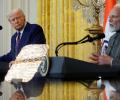
'But I don't think the government is in a great hurry to sign the BTA.'

The Reserve Bank of India on Thursday opted for a pause second time in a row, maintaining key benchmark policy rate at 6.5 per cent as inflation moderates. The rate increase cycle was paused in April after six consecutive rate hikes aggregating to 250 basis points since May 2022. Announcing the bi-monthly monetary policy, RBI Governor Shaktikanta Das said the Monetary Policy Committee (MPC) unanimously decided to keep the rate unchanged at 6.5 per cent.

RBI cuts GDP growth projection to 6.6 per cent for current financial year, from earlier forecast of 7.2 per cent.

'Retail investors have to stick to their asset allocation plans and continuously do portfolio reviews.'

China has announced a 7.2 percent increase in its national defence budget, bringing the total to USD 249 billion for the year. This rise comes amidst China's ongoing efforts to modernize its armed forces, including the development of new warships and fighter jets. The budget increase, exceeding last year's 7.2 percent rise, reflects China's commitment to bolstering its military capabilities. Chinese Premier Li Qiang emphasized the importance of the Communist Party's leadership in guiding the military, with President Xi Jinping at the helm of the Central Military Commission. China's defence spending is now three times that of India's and is viewed by critics as a sign of the country's growing military ambitions.

'2025 is the year to build a portfolio for the future. Focus this year should be on valuations and visible growth.'
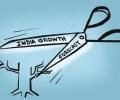
Fitch Ratings on Thursday slashed India's GDP growth projection for FY23 to 7 per cent, saying the economy is expected to slow against the backdrop of global economy, elevated inflation and high interest rate. In June, it had forecast 7.8 per cent growth for India. "We expect the economy to slow given the global economic backdrop, elevated inflation and tighter monetary policy. "We now expect the economy to grow 7 per cent in the financial year to end-March 2023 (FY23) from 7.8 per cent previously, with FY24 also slowing to 6.7 per cent from 7.4 per cent before," Fitch said in its September edition of the Global Economic Outlook.

The AAP chief stressed the need for an increase in healthcare spending, suggesting a rise to 10 percent of the GDP, along with the removal of taxes on health insurance premiums.

The ideal time to invest in sector funds, is during a downturn so that investors can capitalise on a turnaround in 1.5 to 2 years.

During his inauguration on Monday, President Trump declared a national emergency at the US southern border.
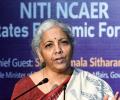
'Each state is unique, but when it comes to finance, the fundamentals cannot be different.'

India will need to grow at an average 7.8 per cent to become a high-income country by 2047, a World Bank report said on Friday. To achieve this goal India would require reforms in financial sector as well as in land and labour market, the World Bank said in its India Country Memorandum titled 'Becoming a High-Income Economy in a generation'.
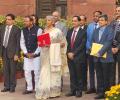
With this, Prime Minister Narendra Modi has also sent a strong message to ally, Janata Dal-United President and Chief Minister Nitish Kumar, that their partnership remains intact and that they will be formidable partners at the hustings.
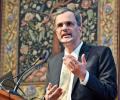
There is a "misperception" among the administration around deregulation, wherein digitisation is confused with deregulation, Chief Economic Advisor V Anantha Nageswaran said on Tuesday. Speaking at an event organised by alternative investment industry's lobby grouping IVCA in Mumbai, Nageswaran stressed that what is essential is to do away with needless regulations, whether they are to be complied with online or offline.

'This debate is going on all over the world and everybody is saying that only GDP cannot estimate the real (economic) situation of a country.'

Foreign investors have withdrawn Rs 22,194 crore from Indian equities this month, driven by expectations of a weak earnings season, a steady rise in the US dollar, and concerns over tariff war during Donald Trump's presidency. This came following an investment of Rs 15,446 crore in the month of December, data with the depositories showed.

India's services sector activity expanded at the slowest pace in over two years in January amid softer increases in sales and output, a monthly survey said on Wednesday. The seasonally adjusted HSBC India Services PMI Business Activity Index fell from 59.3 in December to 56.5 in January -- its lowest level since November. In the Purchasing Managers' Index (PMI) parlance, a print above 50 means expansion, while a score below 50 denotes contraction.

The Reserve Bank should focus on making liquidity easier rather than cutting rates if the intent is to drive growth, Axis Bank's chief economist Neelkanth Mishra said on Tuesday. Mishra, who is also a part-time member of the Economic Advisory Council to the PM, said the rate cut announced earlier this month or even the subsequent ones if they were to come will not end up increasing borrowings as the scarce liquidity will hamper transmission.

With the fiscal deficit target staring at the government, the FY25 Budget has limited expenditure options, points out A K Bhattacharya.

Following the eviction of protesting farmers from the Shambhu border, Haryana security personnel began removing cemented barricades erected to prevent Punjab farmers from reaching Delhi. The Shambhu-Ambala road, closed for over a year, is being cleared with JCBs and other machinery. Meanwhile, the Samyukta Kisan Morcha (Non-Political) and the Kisan Mazdoor Morcha announced dharnas outside deputy commissioners' offices in protest against the Punjab Police crackdown. The groups criticized the Aam Aadmi Party (AAP) government in Punjab for evicting the protesters and detaining farmer leaders on Wednesday. The police action was justified by Punjab Finance Minister Harpal Singh Cheema, who said industries and businesses were hit hard due to the prolonged closure of the highways. The protesting farmers, led by the Samyukta Kisan Morcha and the Kisan Mazdoor Morcha, had been camping at the Shambhu and Khanauri border points since February 13, 2022.

There is a reason this 11 year phenomenon is a rule as much as it is an observation. It speaks to the nature of man and what humans are like, explains Aakar Patel.

Under capital expenditure, Rs 48,614 crore has been set aside for aircraft and aero engines while Rs 24,390 crore has been allocated for the naval fleet.
