
Shares of Yes Bank may face selling pressure as the Reserve Bank-mandated three-year lock-in period for individual investors and exchange-traded funds is ending on Monday, according to analysts. The analysts expect distress on the bank counter on Monday as they expect investors, primarily the nine banks led by State Bank, which picked up almost 49 per cent of its stocks in March 2020 for Rs 10 per share -- at a premium of Rs 8 on the face value as part of the RBI bailout, making an exit. Exchange-traded funds are also likely to press the exit button.

Some states are taking a legal view on the state GST rate and the compensation rules ahead of the Goods and Services Tax (GST) Council meeting, which is likely to be held in mid-June, said people in the know. While the agenda is still being finalised, several states are likely to take up the matter related to GST compensation and may pitch for its continuation beyond the June 30 deadline. States would like to know how they would divide the compensation collected after June 2022 for payment of principal and interest of compensation shortfall borrowing and arrears to states, sources said.

Shortages of chips will impact the car market

Days after Moody's cut its gross domestic product (GDP) forecast for financial year 2022-23 (FY23) after the official GDP print for the June quarter came in lower than expectations, the global ratings agency said it would maintain its long-term sovereign debt credit rating and outlook on Asia's third-largest economy. "The credit profile of India reflects key strengths, including its large and diversified economy with high growth potential, a relatively strong external position, and a stable domestic financing base for government debt," Moody's said on Tuesday. "We do not expect rising challenges to the global economy, including the impact of the Russia-Ukraine military conflict, higher inflation, and the tightening financial conditions on the back of policy tightening, to derail India's ongoing recovery from the pandemic in 2022 and 2023," it said.

'Q1 is going to bear the brunt of the second wave, exposing full-year GDP forecasts to downward revisions, unless phase-3 of vaccination is executed quickly.'

Investors have become poorer by over Rs 10.36 lakh crore in the last four trading sessions as the domestic equity benchmarks extended their losses amid weak global trends. The Sensex and Nifty closed in the red for the fourth straight session on Friday amid continued selling by foreign institutional investors. The BSE Sensex ended 427.44 points or 0.72 per cent lower at 59,037.18.

Re-rating of Bharat Petroleum Corporation, Container Corporation, Shipping Corporation, SAIL, and Hindustan Copper, for which the government has already shown intent to divest its stake, possible now, say analysts.

The Tata group flagship has sold more sport utility vehicles (SUVs) in the domestic PV market in the past four months than any other automotive manufacturer, cementing its no.1 spot. It first grabbed pole position in the SUV segment in October 2021 after the launch of the Punch - a sub-compact SUV offering.

The hospitality sector has been hit very hard by the pandemic. In the past 18 months, it has lost business, first because of the harsh lockdowns and after that because of lack of demand due to the ensuing economic slowdown. Most hospitality businesses have sustained low revenues and losses since April 2020. Is this the classic case of a beaten-down cyclical sector that may be close to bottoming out?

Its production declined for the third consecutive year in financial year 2020-21 (FY21) to an 11-year low, while sales volume contracted for the second year to the lowest since FY15. The company manufactured around 1.08 million vehicles last fiscal, a decline from 1.17 million the previous year, and a steeper fall from its all-time high tally of 1.62 million reported in FY18.

The government's move to freely supply coronavirus vaccines to the states for universal inoculation and extend free rations to help the poor tide over the pandemic will only add an additional 40 bps of GDP to fiscal deficit, says a report, which also called for more transparent vaccine distribution plan for efficient vaccine allocation to the states.

Domestic macroeconomic data, RBI policy and developments related to the Russia-Ukraine war would be major driving factors for the stock market this week, analysts said. Moreover, FPI investment and trends in crude oil would also influence the trading sentiment, they added. "This week, the RBI credit policy will be a critical factor for Indian markets.

The government expects to realise Rs 35,100 crore from the partial sale of Bharatnet fibre assets and around 13,500 mobile towers owned by state-run telecom firms as part of its national monetisation pipeline released on Monday. Government think tank Niti Aayog has valued over 2.86 lakh kilometre of optical fibre assets laid by BBNL and BSNL under rural broadband project Bharatnet at Rs 26,300 crore, according to the National Monetisation Pipeline (NMP) document. According to the document, BSNL's 13,567 mobile tower assets and MTNL's 1,350 towers have been valued at Rs 8,800 crore.

Agriculture activity, according to recent channel checks by Prabhudas Lilladher, is expected to continue at a strong pace in FY22.

'Let's not get carried away by stocks like D-Mart, Jubilant Foods and all those companies that are trading at an expensive valuations.'

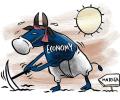
Around 31 million households have demanded work under the flagship MGNREGA in the month of May this year, which is almost 11 per cent more than the same period last year and much higher than the corresponding pre-Covid period, data sourced from the website showed today. In April 2022, around 23.26 million households have sought work under the scheme which as per the provisional data for May has risen to almost 31 million households. The April 2022 work demand was almost 11.15 per cent less than the corresponding period of April 2021.
Shares of HCL Tech hit a fresh record high of Rs 1,118.55 on Friday, up 2 per cent on the BSE in intra-day trade, surpassing its previous high of Rs 1,101 touched on Thursday in intra-day deals.

Of $90 billion remittances that India is expected to receive in 2022, only $27.4 billion has come in the first half of the year.

Leading FMCG companies in the country are expecting their sales growth numbers in high double digit in the April-June quarter, a period when the broader market was severely impacted by the second wave of the COVID-19 pandemic. FMCG companies such as Godrej Consumer Products Ltd (GCPL) and Marico, in their quarterly updates to bourses, informed about double-digit sales growth. While Tata Consumer Products Ltd (TCPL) MD and CEO Sunil D'Souza in an interview had told PTI, the Tata Group FMCG firm expects higher growth in the Q1/FY'22 over Q4/FY'21.

Mihir Tanna, Associate Director, S K Patodia & Associates, answers your tax queries.

India Inc resorted to salary cuts to protect their profits in the June quarter, as revenues came under pressure due to the second pandemic wave that affected nearly the entire country, a report said on Wednesday. The "weak" wage growth will prove to be a drag on the overall economic recovery in the medium term as it will affect household consumption, the report by India Ratings and Research said. An environment of pandemic-led uncertainty and elevated inflation could impact the level of spending and hence the overall demand, it said.
ITC has been one of the best performing large-cap stock at the bourses thus far in calendar year 2022 (CY22), rallying nearly 52 per cent during this period and outperforming the sector benchmark - the S&P BSE FMCG index - by a wide margin that moved up around 17 per cent during this period. However, the counter has lost over 5 per cent from its recent high of Rs 346.25 hit on September 23, 2022 and has underperformed the S&P BSE Sensex, which has lost nearly 2 per cent since then. So, is the rally in the stock coming to an end, and is this a good time to book profit?

Shobha Kapoor and Ekta Kapoor, managing director (MD) and joint MD of media firm Balaji Telefilms have failed to obtain requisite votes on resolutions pertaining to their remuneration. According to stock exchange disclosure made by the company, the two separate special resolutions on setting their salaries for the next years got 56.77 per cent and 55.45 per cent 'against' vote.
Defying trends, the country's largest private sector lender, HDFC Bank, has shifted its asset mix significantly towards high-rated segments. As a result, its wholesale-to-retail mix has tilted heavily in favour of wholesale, even at the cost of margins. Further, it is even looking to ramp up its branch network, with an aim to service clients within a 1-2 km radius rather than the current 5-6 km radius.

Unified Payments Interface (UPI) clocked over 6 billion transactions in July: the highest ever by India's flagship digital payments platform since its inception in 2016. UPI reported 6.28 billion transactions amounting to Rs 10.62 trillion, according to data released by the National Payments Corporation of India (NPCI), which operates the platform. Month-on-month, the volume of transactions was up 7.16 per cent and value increased 4.76 per cent.

RBI Governor Shaktikanta Das on Tuesday launched a new service, which will enable over 40 crore feature phone users to undertake digital payments in a secure way. The service christened UPI (unified payments interface) '123PAY' is a three-step method to initiate and execute services for users which will work on simple phones which do not have an internet connection. Das said, as of now, the multifaceted features of UPI are mostly available only on smartphones, which excludes people from the lower rung of the society from an economic perspective, especially in the rural areas, from accessing the popular service, even though the smartphone prices are going down.

'The inflection point that really happened in the sector was during the pandemic when buyers' perception changed towards consumption and that gave a trigger to pent-up demand with the increased affordability.'

'...to address the serious faultlines that had got exposed during the pandemic.' 'If the economy is looking up this year, we could have been allocated an increase of at least 20%.'

Fitch Ratings on Friday said it has revised the outlook on India's sovereign rating to 'stable' from 'negative' as downside risks to medium-term growth have diminished on rapid economic recovery. Fitch Ratings kept the rating unchanged at 'BBB-'.

'We suggest investors with suitable risk appetite to consider allocating 40-50 per cent in large-caps, 25-30 per cent of funds in quality mid and small-caps and the rest in debt and high yield products.'

Ehile the Centre had projected tax revenues to touch 12.1 per cent of GDP in FY19, Revised Estimates peg the collections at 11.9 per cent, owing to a shortfall in the goods and service tax (GST) collections, reports Ishan Bakshi.

With increased consumer awareness and government support in place, it is the opportune time to enter the electric passenger vehicle segment, Mahindra Group Chairman Anand Mahindra said on Monday. With an eye on gaining leadership in the electric four-wheeler segment, the Indian auto major announced that it will launch five new electric Sports Utility Vehicles (SUVs) for both domestic and international markets, with the first four expected to hit the road between 2024 and 2026. The company would introduce the first of the five e-SUVs towards the end of 2024, starting with the Indian market.

Surplus liquidity in the banking system as measured by absorption of excess funds by the Reserve Bank of India (RBI) fell sharply at the end of the last week due to outflows on account of advance tax payments. According to the RBI data, the net liquidity absorbed by the central bank on September 16 was at Rs 3,243.57 crore, much lower than the average of Rs 56,809.92 crore in the preceding four days of the week. The average absorption of funds by the RBI so far in September is at Rs 1.13 trillion, against the average of Rs 1.2 trillion in the previous month, the data showed.

Public sector banks have raked in more profits in the three months ended June on the back of a persistent decline in bad loans and the trend may have a positive bearing on their balance sheets in the coming quarters. In the June quarter, Bank of Maharashtra (BoM) and State Bank of India (SBI) were in the lowest quartile as far as Gross Non Performing Assets (NPAs) and net NPAs were concerned, according to an analysis of the quarterly financial numbers published by the public sector lenders. Cumulatively, all the 12 public sector banks reported a profit of about Rs 15,306 crore in the three months ended June, registering an annual growth of 9.2 per cent. However, leading public sector lenders -- SBI and PNB -- posted lower profits in the June quarter.

Tata Consultancy Services (TCS) on Friday reported a 14.1 per cent rise in consolidated net profit to Rs 9,624 crore in the September 2021 quarter, aided by broad-based growth across geographies and verticals. The Mumbai-based company had logged a net profit of Rs 8,433 crore (excluding adjustment towards a legal claim) in the year-ago period. Its revenue grew 16.7 per cent to Rs 46,867 crore for the September 2021 quarter from Rs 40,135 crore in the year-ago period.

Adani Wilmar (AWL) joined the elite group of companies with market capitalisation (m-cap) of Rs 1 trillion after the stock of Gautam Adani-led edible oil company hit a new high of Rs 802.80, up 5 per cent on the BSE in Tuesday's trade.

Edtech giant Byju's is set to lay off nearly 2,500, or 5 per cent, of its employees as part of an "optimisation" plan. The move by India's most valuable start-up comes amid a funding winter and steep losses. "To avoid redundancies and duplication of roles, and by leveraging technology better, around 5 per cent of Byju's 50,000-strong workforce is expected to be rationalised across product, content, media, and technology teams in a phased manner," said the company in a statement. In June, Byju's laid off about 600 employees at its group companies -WhiteHat Jr and Toppr.

Could it have been more reformist? Of course, but this is an election year Budget, observes Akash Prakash.
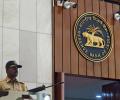
Describing the recent two consecutive spikes in retail inflation beyond the 6 per cent as a 'transitory hump', a Wall Street brokerage on Monday said it expects the RBI to overlook it and unanimously stick to the dovish stance at the forthcoming policy review, even though a further upward revision of its already-revised inflation target is more likely. The Reserve Bank-led monetary policy panel is scheduled to announce the third monetary policy review on August 6, amidst the continuing spike in retail inflation that has breached the 6 per cent upper tolerance level for the past two consecutive months.
 © 2026 Rediff.com - Advertise with us - Disclaimer - Privacy Policy - Sitemap - Feedback - About us - Terms of use - Grievances