
The government is likely to file draft papers for the mega initial public offering of LIC with market regulator Sebi by next week, while a portion of the issue would be reserved for anchor investors, a top official said on Wednesday.

Investors continue to back-up equity mutual funds in June as such schemes attracted a net inflow of Rs 15,498 crore on strong flows from systematic investment plans despite volatility in the stock market and relentless selling by Foreign Portfolio Investors (FPIs). This also marked the 16th straight month of positive inflow in equity schemes. Inflows into equity mutual funds in June was lower compared to the net inflow of Rs 18,529 crore seen in May, data from the Association of Mutual Funds in India (AMFI) showed on Friday.

Experts say companies wanting to launch IPOs will have to scale back their expectations given the fall in valuations.

At interactions last week with senior officials from the Reserve Bank of India, select banks gave feedback on two key bond market concerns, namely, recent volatility in the rupee-dollar exchange rate and heavy losses incurred on floating rate government bonds due to a demand-supply mismatch, sources told Business Standard. The discussions were held ahead of the RBI's next monetary policy statement, scheduled on August 5. Indian banks are large holders of government securities because of a regulatory mandate to set aside a certain percentage of deposits in sovereign bonds.

Billionaire Mukesh Ambani on Monday laid bare the succession plan at India's most valuable company, identifying twins children Akash and Isha for telecom and retail leadership, and youngest son Anant for new energy unit. He, however, insisted he isn't retiring yet and will "continue to provide hands-on leadership as before". At the annual shareholders' meeting of Reliance Industries Ltd, he said the robust architecture that he has announced will ensure the firm remains "a unit, well-integrated and secure institution even as it develops existing businesses and adds new growth engines."

Stock markets will focus on global trends for further direction in this holiday-shortened week as the earnings season is largely over, analysts said. Trade experts expect the key benchmark indices to move sideways as investors are trying to decode the impact of rising inflation on foreign portfolio investments. Inflation data released by the US and China last week have fanned fears of earlier than expected rate hike and boosted US bond yields.

In 2020-2021, the amount of foreign direct investment into India from China and Hong Kong plummeted to just $200 million -- its lowest in the recent past. In the first half of 2021-2022, FDI investments through these two nations stood at just $36 million.

SBI rose 2.43 per cent, Maruti gained 2.38 per cent, Sun Pharma 1.87 per cent and HUL was up by 1.78 per cent.

The Centre should privatise all public sector banks (PSBs), except the State Bank of India (SBI). This is because private banks have emerged as a credible alternative to PSBs with substantial market share. Also, government ownership hinders the ability of the Reserve Bank of India (RBI) to regulate the sector, according to a report by the National Council of Applied Economic Research (NCAER).

Earlier this year, the Union Cabinet gave the management of state-run companies the freedom to decide on divesting their subsidiaries. However, the very next day a meeting was held at the top level of the Government of India, for the presentation of proposals for more autonomy for state-run companies. Interestingly, no chiefs of any of these companies were invited. It is a problem that will stare the government in the face with the state-owned banks too, as talks have again begun for inviting strategic investments in these companies.

Market regulator Sebi on Tuesday said foreign investors from Mauritius will continue to be eligible for FPI registration with increased monitoring as per international norms. The announcement comes after the tax haven was put on the "grey list" of Financial Action Task Force (FATF) -- an inter-governmental policy making body that sets anti-money laundering standards.

'Markets are not prepared for a slowdown as the current expectation is of the continuation in earnings momentum.'

A lot of mid and small-caps are in the bubble zone and command high valuation and have corrected sharply.

June was a memorable month for the 101-year-old Tamilnad Mercantile Bank (TMB). Last month, the Thoothukudi-based bank witnessed two new landmarks in a history in which the last three decades could easily qualify for a Kollywood blockbuster.

'At current valuations, we believe large-caps offer better downside support.' 'Hence, we are suggesting a small tilt towards them.'

The sudden movement of the rupee - post the monetary policy - is not a reason to panic, said currency dealers. According to them, a correction was overdue for the rupee that remained the best performing currency in the region for well over a month. The rupee closed at 74.72 a dollar on Friday from its previous close of 74.60. It had dropped 1.52 per cent against the dollar on April 7 after the Reserve Bank of India (RBI) announced its monetary policy, committing to buy Rs 1 trillion of bonds in the June quarter. A weak rupee goes well with the export narrative of the government, and is consistent with the RBI's intervention strategy that prevented an appreciation.

'Valuations are very attractive, and most companies are cash-rich with strong dividend yields.'

Why does the world's fastest-growing major consumer of energy fail to attract investments in oil and gas? This is a question worth pondering after private sector conglomerate Reliance Industries Ltd (RIL) failed to close a $15-billion downstream asset deal with Saudi Arabia's national oil company, Aramco. It's understandable if multi-billion dollar investments in oil and gas projects or deals involving state companies that need to traverse a complex bureaucracy at state and federal levels and the corridors of ministries unravel. However, Mukesh Ambani-run RIL, India's most successful energy company, is not typically known to fumble on closing deals (Ambani closed deals worth around Rs 2 trillion early last year in telecom and retail with blue chip investors).

The faster-than-expected rise in interest rates by the US Federal Reserve (US Fed) shook global financial markets in early 2022. And now the ongoing war between Russia and Ukraine has lifted commodity prices, with Brent crude oil hitting a 14-year high of $139 a barrel in intraday trade. All these developments have sent the equity markets across the world into a tailspin.

Mukesh Ambani has resigned from the board of his group's telecom arm, Reliance Jio and handed over the reins of the company to elder son Akash, a step seen as succession planning by the 65-year old billionaire. In a stock exchange filing, Reliance Jio Infocomm said the company's board at a meeting on June 27, "approved the appointment of Akash M Ambani, non-executive director, as chairman of the board of directors of the company." This comes after his father resigned with effect from close of working hours on June 27, it said.

Amid domestic traders continuously complaining alleged violations of FDI norms by foreign online players, Commerce and Industry Minister Piyush Goyal on Friday said the ministry will "very shortly" come out with certain clarifications on the e-commerce sector. Goyal said the ministry is not changing any policy on e-commerce for foreign direct investment as the policy is crystal clear. "We will also come out with the e-commerce policy and whatever clarifications... Certain instances have come to our notice where the policy is not being followed in letter and spirit, we will obviously be clarifying that very shortly," he told reporters in New Delhi.

The government on Tuesday said it will allow setting up of world-class foreign universities in Gandhinagar's GIFT City, free from domestic regulations, to facilitate availability of skilled manpower in the financial services space. In addition, an international arbitration centre will be set up in the GIFT City for timely settlement of disputes under international jurisprudence, Finance Minister Nirmala Sitharaman said while presenting the Union Budget for 2022-23. The centre could be on the lines of the Singapore International Arbitration Centre, or the London Commercial Arbitration Centre.

Experts believe FPIs will keep a close watch on coronavirus pandemic, its spread and likely impact on the economy while making decisions about investment into India.

In February, FPIs sold $421 mn in debt; in March they have sold $133 mn so far
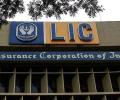
The government is mulling allowing foreign direct investment (FDI) in the country's largest insurer LIC, a move which would help overseas investors take part in the company's proposed mega IPO, sources said. The proposal is under discussion between the Department of Financial Services and Department of Investment and Public Asset Management (DIPAM). "Discussions have been going on for the proposal for the last few weeks. "It would also go for inter-ministerial discussions and would also require Cabinet nod," a source said.

This follows an investigation into alleged violations of foreign exchange rules involving foreign direct investment of Rs 85 crore and Rs 140 crore by JP Morgan India and Amrapali Group firms.

Foreign portfolio investors (FPIs) remained net buyers for the third month in a row by investing Rs 68,558 crore in Indian markets as global investors continued betting on emerging markets. For the equity segment, this is the highest quantum of money invested ever since the FPI data has been made available by the National Securities Depository Ltd. The second highest amount into equities was invested by FPIs in November, when they had pumped in Rs 60,358 crore.

Foreign institutional investors (FIIs) have raised stake in billionaire Mukesh Ambani-led Reliance Industries to a record 25.2 per cent in the quarter ended September 30, according to the company's regulatory filing. Reliance Industries (RIL) on Thursday filed a statement showing the shareholding pattern for the quarter ended September 30.

This could be attributed to the attractive valuation of the Indian equities after the sharp correction during the first quarter of calendar year 2020 and significant depreciation of the Indian rupee against USD, which provided them a rather good entry point.

Aditya Birla group chairman Kumar Mangalam Birla has offered to hand over his stake in debt-laden Vodafone Idea Ltd (VIL) to the government or any other entity that the government may consider worthy to keep the company operational. The billionaire businessman made the offer in June in a letter to Cabinet secretary Rajiv Gauba. According to official data, VIL had an adjusted gross revenue (AGR) liability of Rs 58,254 crore out of which the company has paid Rs 7,854.37 crore and Rs 50,399.63 crore is outstanding.

With the Russia-Ukraine war roiling financial markets globally, the government may defer the mega IPO of LIC and wait for an opportune time to get the maximum value of its holding in the state-owned insurance behemoth, sources said. "It's a full blown war now so we will have to assess the situation for going ahead with the LIC IPO," a government source said. Finance Minister Nirmala Sitharaman, too, had indicated review of the IPO in view of the evolving geopolitical situation.

On the Sensex chart, L&T, ONGC, HCL Tech, NTPC, Axis Bank and Infosys were major gainers. NSE Nifty ended with a gain of 18.10 points at 14,956.20.
The board also approved a proposal to tighten the rules for participatory notes through imposition of a regulatory fee on issuers of such instruments.

Titan was the top laggard in the Sensex pack, shedding 1.39 per cent, followed by HDFC, Axis Bank, Kotak Bank, HCL Tech and Tech Mahindra. On the other hand, Asian Paints, SBI, M&M, TCS, Bajaj Finserv and ICICI Bank were among the winners, spurting as much as 3.25 per cent.

Foreign portfolio investors (FPIs) have pulled out Rs 4,515 crore from the equities segment in the first half of July as they turn cautious towards the Indian market. "With markets trading near all-time high, FPIs would have chosen to book profits. "They have also been staying on the sidelines given high valuations and most likely on the back of the risk of a potential third wave of the coronavirus pandemic," said Morningstar India associate director (manager research) Himanshu Srivastava. Though the continuing firmness in the dollar and the possibility of rising bond yields in the US do not augur well for capital flows into emerging markets like India, there is no immediate worry at the moment, he said.

'The prospects for both India and the global economy is that we are headed towards a very difficult time.' 'I see very uncertain at least 8-10 months for both India and the rest of the world.'

'There will be massive differences in sectors and stocks over the next few years.'

Resolution professional, Ashish Chhawchharia, had informed the bankruptcy tribunal that two new investors had shown early interest for investing in Jet. One of them is a foreign investor from West Asia and the other is an Indian-entity-backed by a UK investor.

The expected interest rate hike in the US and the resultant volatility in the domestic secondary market could play a dampener to the over Rs 2-trillion initial public offering (IPO) pipeline in 2022. IPOs in 2022 look promising, with as many as 35 companies holding the Securities and Exchange Board of India's approval to raise roughly Rs 50,000 crore. Another 33 companies are waiting for the regulator's nod to raise around Rs 60,000 crore next year.

Energy's exit is a cautionary tale for several foreign investors in India as close to 16 Gw of solar and wind power projects languish without any power purchase agreement, 24 Gw without transmission connectivity and around 2 Gw unilaterally cancelled by project developers.
 © 2026 Rediff.com - Advertise with us - Disclaimer - Privacy Policy - Sitemap - Feedback - About us - Terms of use - Grievances