
Global trends and trading activity of foreign investors would largely dictate terms in the equity markets this week amid a lack of major domestic triggers, analysts said. Markets may face near-term consolidation due to elevated valuations, they noted. "While the previous week was predominantly shaped by developments in the US Federal Reserve policy, attention will now shift to the Bank of Japan's policy decision on December 19," Santosh Meena, Head of Research, Swastika Investmart Ltd, said.

Among the Sensex firms, Infosys, Tech Mahindra, HCL Technologies, Tata Consultancy Services, Wipro and JSW Steel were the major gainers during the morning deals. Nestle, Bharti Airtel, Axis Bank ITC were among the laggards.
Riding on a bull run, equity investors became richer by Rs 128.77 lakh crore in the 2023-24 fiscal, driven by robust fundamentals of the Indian economy, increased investment inflows and promising corporate earnings. After a muted performance in 2022-23, equity markets made a remarkable recovery in FY24, giving handsome returns to investors. The 30-share BSE Sensex climbed 14,659.83 points or 24.85 per cent in 2023-24.

Movement in the equity market this week will largely be dictated by quarterly earnings of blue-chip firms HDFC Bank and Hindustan Unilever, along with the announcement of WPI inflation data and global trends, analysts said. Trading activity of foreign investors, global oil benchmark Brent crude and rupee-dollar trend would also guide the movement.

Foreign portfolio investors (FPIs) sold shares worth Rs 20,170 crore ($2.4 billion) recently. This marked the fifth-highest weekly outflow from overseas funds since the beginning of 2008 and the largest since the last week of March 2020. Due to the Covid scare, FPIs had sold shares worth Rs 21,951 crore during that week, causing the market to decline by nearly 20 per cent.

India on Monday assured top CEOs of simplifying investment procedures, even as it portrayed infrastructure hiccups like bad roads and ports as an opportunity for wealth creation.

One of the key factors contributing to the decline in the value of the rupee against the US dollar is the tightening yield spread between the 10-year India government bond and the US government bond. The yield on 10-year Indian government bonds is now only 295 basis points higher than that of US 10-year treasury bonds, the lowest since January 2007. Lower spread means lower incentive for foreign investors to invest in rupee assets, which adversely affects foreign capital inflows into the country and weighs on the rupee-dollar exchange rate.

India's inclusion in JP Morgan's bond index can channel billions of dollars into India. How will the government securities market handle it?

Stock markets will be largely driven by global trends and macroeconomic data announcements in a holiday-shortened week which may see volatility amid monthly derivatives expiry, say analysts. Equity markets will remain closed on Monday for Gurunanak Jayanti. Trading activity of foreign investors and the movement of the rupee against the dollar will also be tracked by investors.

Equity markets would take cues from domestic inflation data announcement, global trends and trading activity of foreign investors in a holiday-shortened week ahead, analysts said. Markets would remain closed on Tuesday for 'Diwali Balipratipada'. "As we enter a truncated week with Muhurat trading on Sunday, global cues will play a pivotal role in shaping the market direction.

Foreign portfolio investors (FPIs) pumped in Rs 1.7 trillion into domestic stocks in 2023, one of the highest net inflows ever witnessed during a calendar year, of which 25 per cent went into the direct buying of stocks. Data provided by depository NSDL revealed that Rs 44,950 crore of the total FPI flows last year went into primary issuances. A large portion of the FPI investments through the stock exchange route went into block deals, thereby reducing the actual investments made via direct buying of stocks. Last year saw selldowns or block deals worth Rs 2 trillion.

Stock markets will be largely driven by global trends in the absence of any major domestic triggers this week, say analysts. The trading activity of foreign investors, global crude oil prices and rupee-dollar movement will also influence market movement, they said. "Anticipating a period of consolidation in the absence of clear global cues, the market's trajectory will likely hinge on the movement of the US bond yields, the dollar index, and crude oil prices, as well as institutional flows.

Mutual funds (MFs) turned net sellers of equities in April amid a run up in stock prices on sustained inflows from foreign portfolio investors (FPI). The benchmark indices, Sensex and Nifty50, logged their biggest monthly advance since November last year, gaining 3.6 per cent and 4.1 per cent last month. Data from the Securities and Exchange Board of India (Sebi) shows that MFs sold equities worth over Rs 5,100 crore in April, the highest since February 2021.

There has been a decent growth in FDI proposals and new announcements in India to attract foreign investment.
Foreign institutional investors (FIIs) have continued to remain bullish on the Narayana Murthy-led Infosys, taking their holdings to record levels.

Private equity (PE) investment in real estate declined 5 per cent year-on-year in April-June to $1.9 billion because of high interest rates, according to Anarock. PE inflows stood at $2 billion in the year-ago period. Real estate consultant Anarock has come out with a report titled 'FLUX Q1 FY24 Market Monitor for Capital Flows in Indian Real Estate'.
Global trends, trading activity of foreign investors, outcome of state elections and RBI's interest rate decision are the major factors that will drive the movement in the domestic equity markets this week, analysts said. "Global markets are currently in a fabulous mood. The US 10-year bond yield and the dollar index are also cooling off, which gives strength to the market. These factors will be closely monitored, as they have the potential to influence market sentiment," said Pravesh Gour, senior technical analyst, Swastika Investmart Ltd. On the political front, the results of assembly elections in five states are eagerly anticipated, Gour said.

Non-resident Indians (NRIs) are very positive about India

Newly-formed Ascent Capital, which is a separate investment entity carved out of UTI Ventures, recently raised $350 million (Rs 1,575 crore) for its first fund.

South Korean auto giant Hyundai Motor Company is considering tax implications of listing its Indian unit before taking a final call, according to sources privy to the development. Hyundai Motor is mulling an initial public offering (IPO) for its Indian arm to raise around $3 billion (at a valuation of up to $30 billion), and talks are in the early stages between the company and bankers, banking sources revealed. Hyundai Motor India Ltd (HMIL), however, declined to comment on the development.

Foreign Portfolio Investors (FPIs) have pumped Rs 47,148 crore in the Indian equities in June, making it the highest inflow in 10 months, enthused by the country's steadily improving macroeconomic fundamentals. However, inflows in July may be subdued as FPIs might adopt cautious stance due to the recent comments from the US Federal Reserve, Mayank Mehraa, Smallcase manager and principal partner at financial consultancy Craving Alpha, said. Besides, VK Vijayakumar, Chief Investment Strategist at Geojit Financial Services, said FPIs are likely to turn a bit cautious going forward as valuations in the country are rich from a short-term perspective.

Foreign portfolio investors' (FPIs') net investments in the domestic debt market surged in December, marking a 77-month high, that is, since July 2017. According to market participants, this significant uptick in FPI inflows can be attributed to the post-domestic policy outcome and the US Federal Reserve's dovish stance at the December policy. FPI inflows into debt stood at Rs 18,393 crore in December against Rs 14,106 crore in November, according to data on the National Securities Depository Limited.

Among the Sensex firms, ICICI Bank and SBI led the index with the maximum gains of 4.68 per cent and 3.99 per cent, respectively. Other major gainers were Larsen & Toubro, Kotak Mahindra Bank and HDFC Bank. On the other hand, Wipro and Tata Motors defied the trend and traded in negative.
The US Federal Reserve's interest rate decision, global cues, macroeconomic data announcements and the ongoing quarterly earnings are the major triggers that will dictate trends in stock markets this week, analysts said. Besides, the trading activity of foreign investors and the movement of global oil benchmark Brent crude will also be tracked. "All eyes are on the outcome of the US Federal Reserve meeting scheduled for November 1, particularly due to the multi-year high levels of the US bond yields.
Cases such as Vodafone and E*Trade are scaring foreign investors away, says Nishith M Desai.

Foreign investors are betting top dollar on the country as growth is likely to recover at a time when other emerging markets are battling macroeconomic adjustments.

Global trends, trading activity of foreign investors and movement of oil benchmark Brent crude would dictate terms in the domestic markets this week, analysts said. Equity markets, which fell nearly 3 per cent last week, may face volatile trends amid the monthly derivatives expiry on Thursday. "This week marks the September month Futures and Options (F&O) expiry, which is expected to bring about volatility in the market," said Santosh Meena, Head of Research, Swastika Investmart Ltd.

Quarterly earnings from IT majors Tata Consultancy Services (TCS), Infosys, macroeconomic data announcements, global trends and trading activity of foreign investors would guide the movement in the equity market this week, analysts said. Movement of global oil benchmark Brent crude and the rupee will also influence trading in the markets. "All eyes will be on the beginning of corporate performance for the second quarter of the current fiscal year. TCS is slated to unveil its Q2 results on October 11, with HCL Technologies and Infosys following suit on October 12.

Domestic equity markets will be driven mainly by quarterly earnings, global trends, and the movement in crude oil prices in this holiday-shortened week, analysts said. Investors would also keep an eye on the Middle East amid the ongoing Hamas-Israel conflict and the trading activity of foreign investors. Markets will remain closed on Tuesday for Dussehra.

Investors should view any bounce-back in bank stocks as an opportunity to exit the pack, analysts suggested, as the worst may not be over yet. The recent quarterly results of HDFC Bank and Axis Bank disappointed the Street, triggering a marketwide selloff by foreign institutional investors, especially in banking counters. While HDFC Bank, which was the anchor for the market correction during the past week, ended 2 per cent higher amid short covering on Wednesday, Axis Bank's shares settled 3 per cent lower.

Putin made these remarks on Thursday at a forum in Moscow organised by Russia's Agency for Strategic Initiatives (ASI).

Foreign Portfolio Investors (FPIs) selling spree continued as they dumped Indian equity worth over Rs 5,800 crore this month so far on rising interest rates and geopolitical tensions in the Middle East. This came after such investors withdrew Rs 24,548 crore in October and Rs 14,767 crore in September, data with the depositories showed. Before the outflow, FPIs were incessantly buying Indian equities in the last six months from March to August and brought in Rs 1.74 lakh crore during the period.

Mutual funds' equity buying remained elevated for the fifth consecutive month in December, taking the net equity purchase past Rs 1.7 trillion in 2023. The aggressive buying in December indicates that flows into equity funds are likely to have remained unaffected by the sharp run-up in the market last month. Mutual funds (MFs) bought equities worth Rs 23,000 crore last month (until December 28) compared to Rs 18,000 crore in November, shows data from the Securities and Exchange Board of India (Sebi).
The ongoing second quarter earnings, movement of oil benchmark Brent crude and the uncertainty in the Middle East would dictate terms in the domestic markets this week, analysts said. Furthermore, the activities of Foreign Institutional Investors (FIIs) will also influence trading in the markets. "A slew of earnings reports from heavyweights expected this week will significantly impact market direction.

Sun Pharma, Bajaj Finserv, Tata Consultancy Services, Infosys, Hindustan Unilever, JSW Steel, Wipro, Maruti, HCL Technologies, Tech Mahindra and ICICI Bank were the other major gainers. State Bank of India, Tata Motors, Axis Bank, Kotak Mahindra Bank, Bajaj Finance, Tata Steel, Nestle and HDFC Bank were the laggards.

'With China falling out of favour, India is where investors see the demographic and digital dividend apart from the benefits of reforms playing out.' 'Your prime minister has also done a great job of sharing this story with the world.'

The recovering valuations, will lead to enhanced optimism among investors about funding startups.

The Delhi high court on Tuesday imposed Rs 2 lakh as costs on BharatPe co-founder Ashneer Grover in the matter related to his alleged defamatory social media posts against the fintech company. Justice Rekha Palli took on record the apology and the undertaking given by Grover but proceeded to impose costs on him, saying the "court cannot be taken for granted". The judge, while dealing with a plea by Resilient Innovations Pvt Ltd - which owns BharatPe - against its former MD, said the court was "appalled" to note the "persistent" and "blatant" violation of the earlier orders and assurances given by Grover in this regard.

During March, FPIs were net buyers to the tune of over Rs 21,000 crore (Rs 210 billion) in equities.
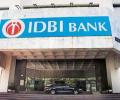
The strategic sale of government and state-owned Life Insurance Corporation (LIC) of India stakes in IDBI Bank might encounter procedural delays, potentially pushing the timeline for expected financial bids to the third quarter of the current financial year (2023-24, or FY24), according to sources familiar with the development. Financial bids constitute the second significant step in the divestment process, following expressions of interest (EoIs) from potential bidders. In this phase, bidders are required to quote transactional fee as a percentage of the divestment proceeds, which are then added to the government's kitty after completion of the transaction.
 © 2026 Rediff.com - Advertise with us - Disclaimer - Privacy Policy - Sitemap - Feedback - About us - Terms of use - Grievances